Can you really condense over half a century in the life of a family — or the life of this city — into a single evening? This is the trick that Living, a new Sheffield-set play currently showing at the Tanya Moiseiwitsch Playhouse, pulls off with both speed and grace. It follows its central character Kathy through 55 years of life, from an optimistic 20-year-old newlywed all the way into old age. It’s an ambitious concept from the Sheffield-born playwright Leo Butler who, at 51, has not quite yet lived as many years as his play aims to traverse. And if it wasn’t a tight enough squeeze, he also gave himself two further challenges. Every single year between 1969 and 2024 would get at least one scene, if only fleeting, and every scene would be set in Kathy’s living room.
During a chat in the Crucible’s café one morning, snatched between rehearsals, Leo tells me the idea for Living came to him on a visit over a decade ago to his parents’ home on Burngreave Road, the house where he grew up and where his dad still lives to this day. Three generations of Butlers had gathered together: Leo and his brother, their kids, as well as Leo’s mum and dad. He was struck by how much had changed for the family, while the living room stayed the same. “I thought, well, that'd be quite a fun play, seeing how life changes personally for a family and for the world around them, all through the prism of the living room.”
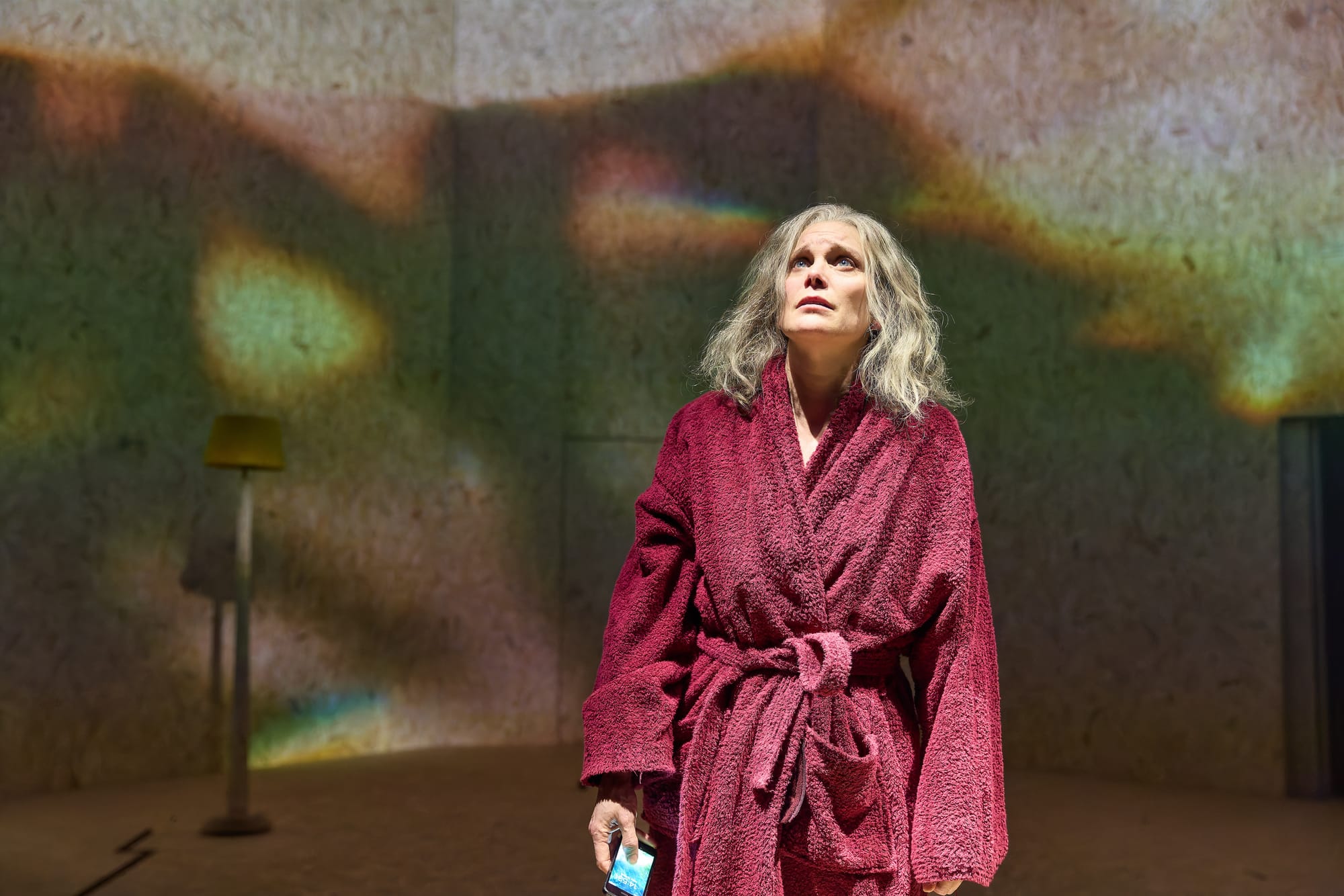
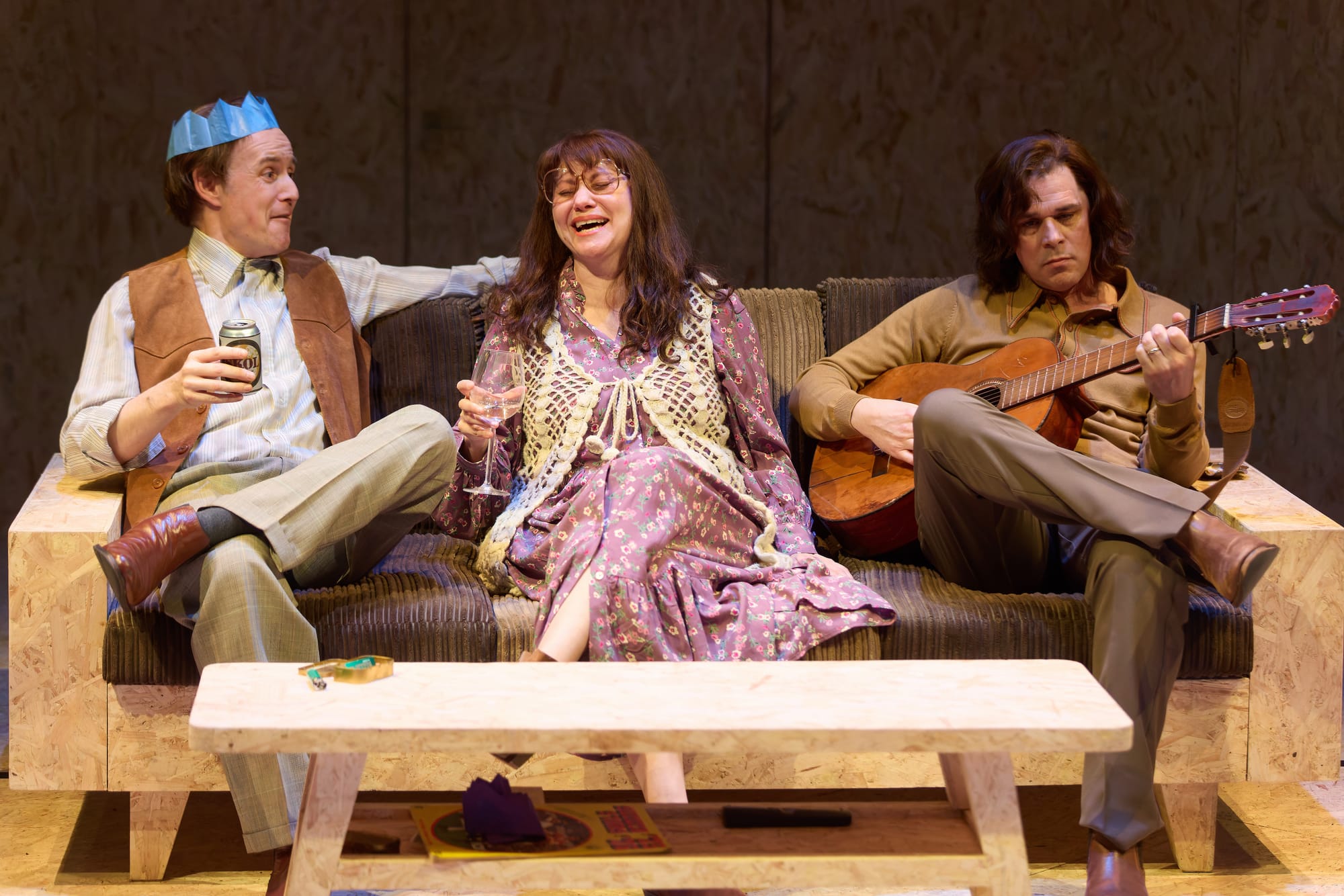
The result is a narrative that tumbles at breakneck pace through the years, every scene flowing into the next, characters catapulted a few months or a year into the future while still mid-sentence. Against chipboard walls, the ever-changing date is projected in giant numbers and letters, to help us keep track of the relentless forward march of time. Living captures the rhythms of family life – children born and partners lost, estrangements and reunions, times of hope and times of struggle – but also keeps one eye on the world outside, delivering flickering snapshots of global events and shifting politics down the decades. We see how major news stories play out in the backgrounds of ordinary lives and, at times, profoundly shape them: watching as Brian, Kathy’s husband, goes from a strike-supporting hippie to a manager at a timber company in Thatcher’s Britain, getting excited by the idea of a company car (a Vauxhall Astra, natch) and Right to Buy. Or, more gloomily, seeing how their son Mike becomes increasingly bitter after losing his job following the 2008 financial crisis, struggling to have the life he’d hoped for.
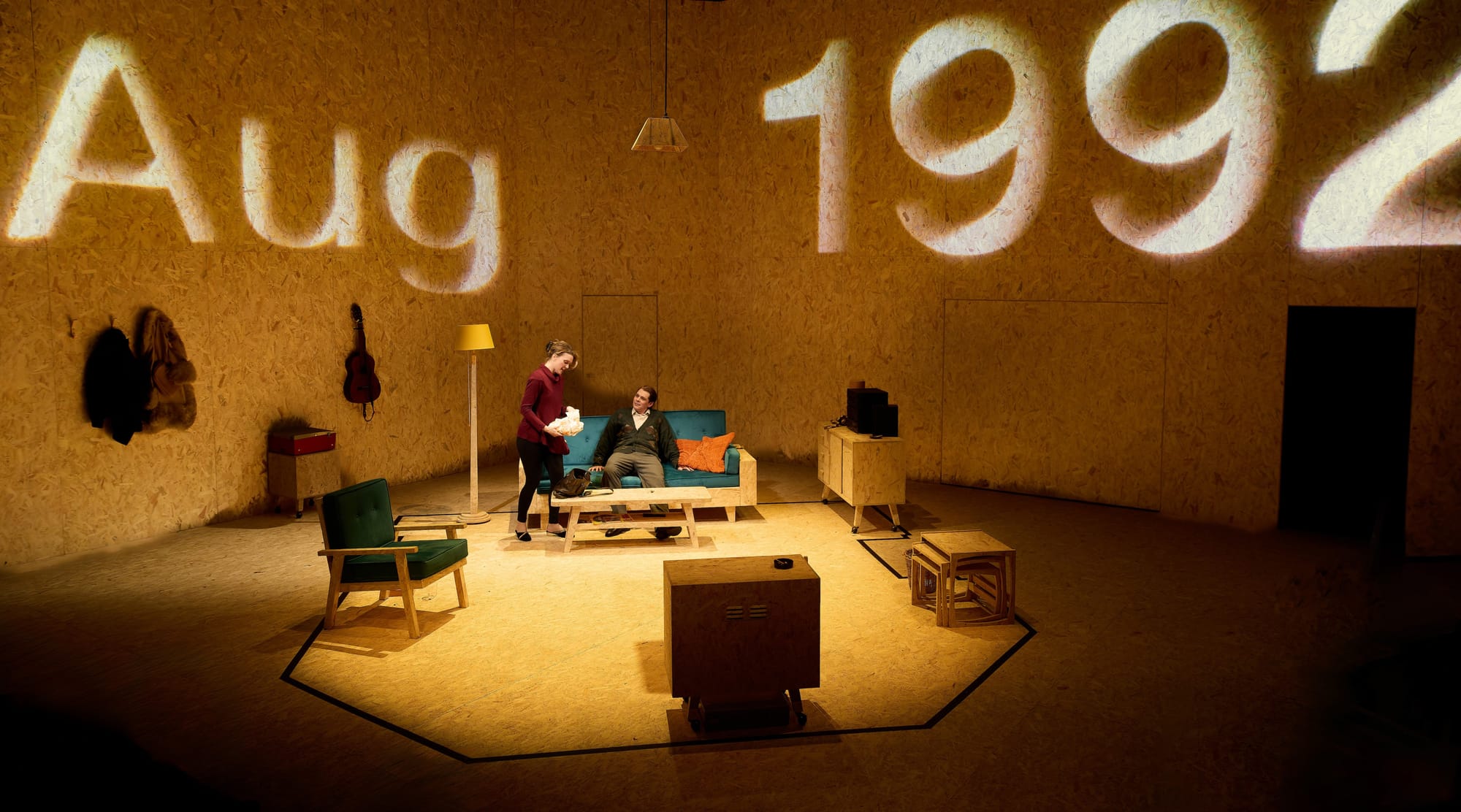
Like the family, even the text of Leo’s play was pushed and pulled by the unstoppable rush of current affairs. His first draft was completed in 2016, at a time when some of the major events the finished play depicts, such as lockdown, were not even prospects on the horizon. Living was originally intended to go on at a theatre in London, where Leo now lives but this fell through, for reasons he won’t elaborate on. A few years later, Covid happened and it began to seem like the play might never find an audience. Its staging now is only possible because the play’s director Abigail Graham, keen to find it a home, got the script into the hands of Elizabeth Newman, Sheffield Theatres’ new artistic director, as she was scheduling her first season.
“Things worked out for the best,” says Leo, sounding gently but genuinely pleased at the outcome. “This is exactly where it should be produced.” It certainly feels like a long-overdue homecoming for this Sheffield writer. Despite having had his plays, which are often set in this city, produced by the Royal Court, the Royal Shakespeare Company and the National Theatre over his 26-year career, this is bafflingly the first time any of them have been staged in the city where he grew up. Or indeed at the venue where he first fell in love with theatre. Leo was a member of the Crucible’s youth theatre as a teenager, setting him on course for a career as a playwright. “It still feels very much like home,” Leo says of Sheffield, the city he left a long time ago, when he moved to London to study theatre as a student. “Though it has that ghostly quality, because things aren't there that used to be.”
Once Leo knew his play was going to be staged in Sheffield, he felt free to really let rip with the kind of local references that might not land with a Southern audience. The play is written and performed in a distinct South Yorkshire dialect and, at times, veers towards the kind of phrasing that might appear on a Luke Horton poster. (Sample line of dialogue: “why don’t yer put the kettle on or somert?”) Leo is clearly well aware of the nostalgic darts of pleasure that can come from hearing the names of long-gone shops, clubs and local legends referenced onstage. Or, for that matter, the names of local villains – one of the biggest laughs on press night comes when Kathy slags off Nick Clegg, “the swine”. There are nods to Atkinsons department store, Candytown Chinese and Occasions nightclub. There’s even the “new Asda up in Handsworth,” which a character likens to Battlestar Galactica when it opens in 1977.

As we approach The Tribune’s fifth birthday, I find myself thinking a lot about our journey so far. The fact that we’re now able to call on theatre experts like Holly Williams to produce great pieces about important new productions like Living is testament to how far we've come since we launched in 2021. But none of that would have been possible without your support. If you value the great theatre reviews, political analysis, nature writing and investigative journalism that we produce, sign up for free to The Tribune today.
Dan Hayes
Founder, The Tribune
If all this is starting to sound a tad familiar, however, it might be because Living does indeed share certain DNA with another epic tale of ordinary folk from Sheffield: Chris Bush’s hugely successful musical Standing at the Sky’s Edge. Both shows put a compassionate focus on ordinary lives and span several decades, charting the changing fortunes of the city through its people. But comparisons may be unfair; knowing how theatres work, I suspect such similarities are far more likely to have prevented Living being staged sooner, rather than being evidence of cynical, success-chasing programming from Sheffield Theatres. Lacking Richard Hawley's stirring songs, it seems unlikely this play will become a shiny West End transfer. That said, the run is sold out, so perhaps the theatre was smart to once more tap into a local appetite for local stories.
Living isn’t just a playwright looking over his shoulder at the city where he grew up – it’s also an ode to one much-maligned neighbourhood in particular. Let's be frank: Pitsmoor and Burngreave don’t have much of a footprint in popular culture, or a glowing reputation in the city. But Leo wanted to show a different side to the area where his family have lived for half a century. “It’s taken a lot of knocks, in that there hasn't been much investment in the area, but it feels like there's a really strong and diverse community,” he says. “It's a real mix of solid people who care for each other, which is great.”
Though certainly not a straight-forward autobiography – Leo’s own life has followed a wildly different trajectory than that of his counterpart in the play, Kathy’s son Mike – Living is still a highly personal piece of art. “In the writing of it, things would change in my own life and that would inevitably seep into the play as well,” says Leo. “Getting a little bit older – and my own daughter growing up, becoming a teenager, seeing how the world has changed for her…”
Perhaps the most seismic event, however, was the death of Leo’s mother during the process of redrafting last year. It seems a shame that she didn’t get to see this moving tribute to a normal working-class Sheffield woman like herself. She was “always a big fan” of his writing, Leo says, softly-spoken, with a smile. The process of grieving for a parent also found its way into the script – or rather, got worked out through in the writing of it. “The play is a work of imagination,” Leo insists, “but there are definitely things that you pour into it. It becomes quite cathartic, the writing process, as a way of dealing with certain things.”
The fact that life kept handing Leo more personal and global events to incorporate as Living worked its way from the page to the stage means the finished product clocks in at a slightly endurance-testing three hours long. This is unusual for a Playhouse show, but Abigail Graham’s fleet-footed production largely justifies it. In the first half, the time really does fly – there’s something about the driving forward motion of the scenes, the way they never finish but slam into the next chapter, that keeps the energy propulsive, pulling you along. It reminded me of Christian Marclay's The Clock, a 24-hour-long film made up of collaged clips from films that feature a clock showing every minute of the day. Viewers often report watching for hours, oddly addicted, and initially Living pulls off a similar temporal trick.
However, during the play’s more recently-written, and much sadder, second half, time’s march becomes more of a stumble; the final few scenes could use a further trim. But there is something about being with these characters over decades, watching them growing up and growing old, that becomes quietly very moving. Living, thankfully, swerves the sort of cloying sentimentality that could so easily have been poured over this story. There are still moments of tenderness between bickering children or Kathy and a kind neighbour, but they wring the heart all the tighter for being underplayed.
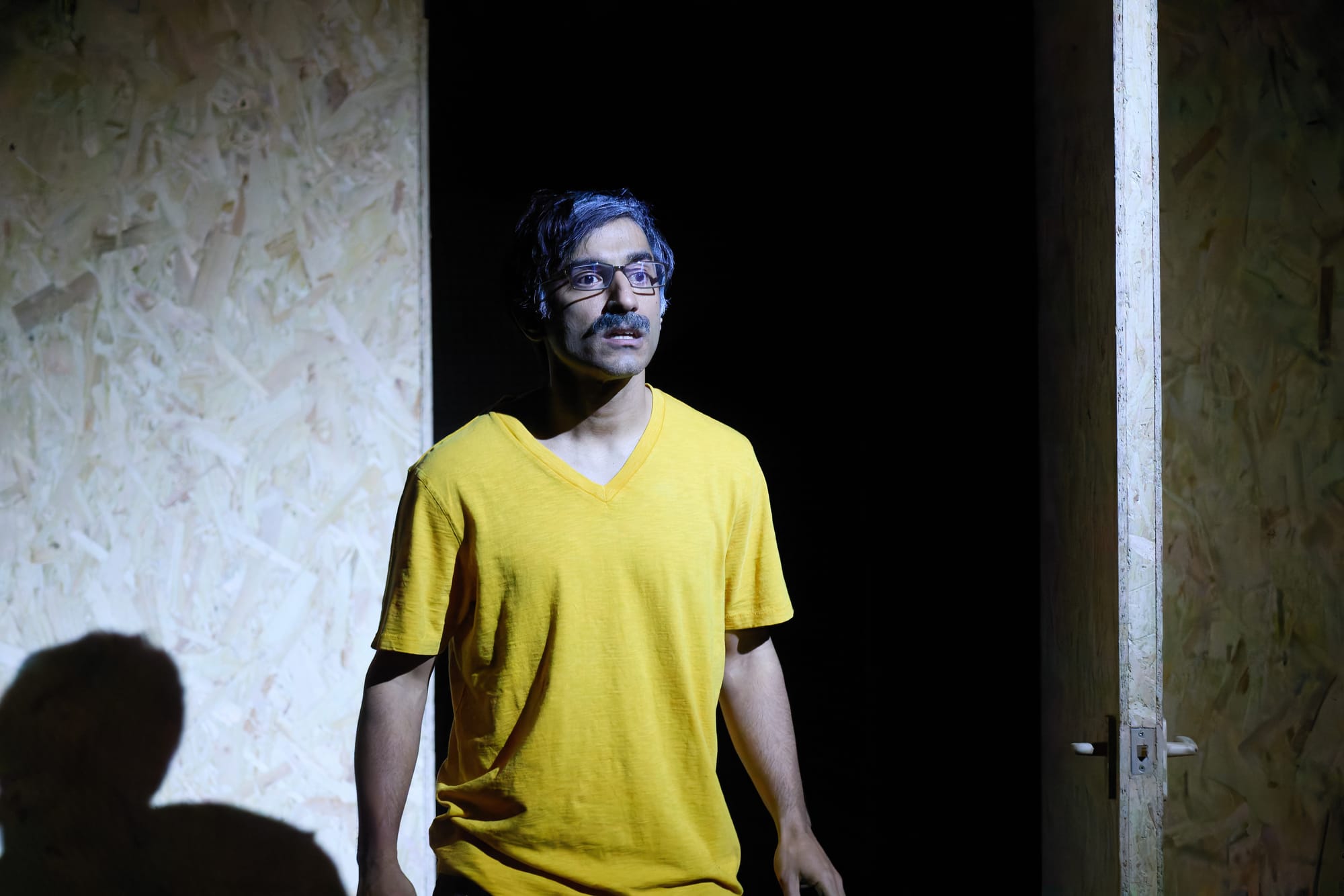
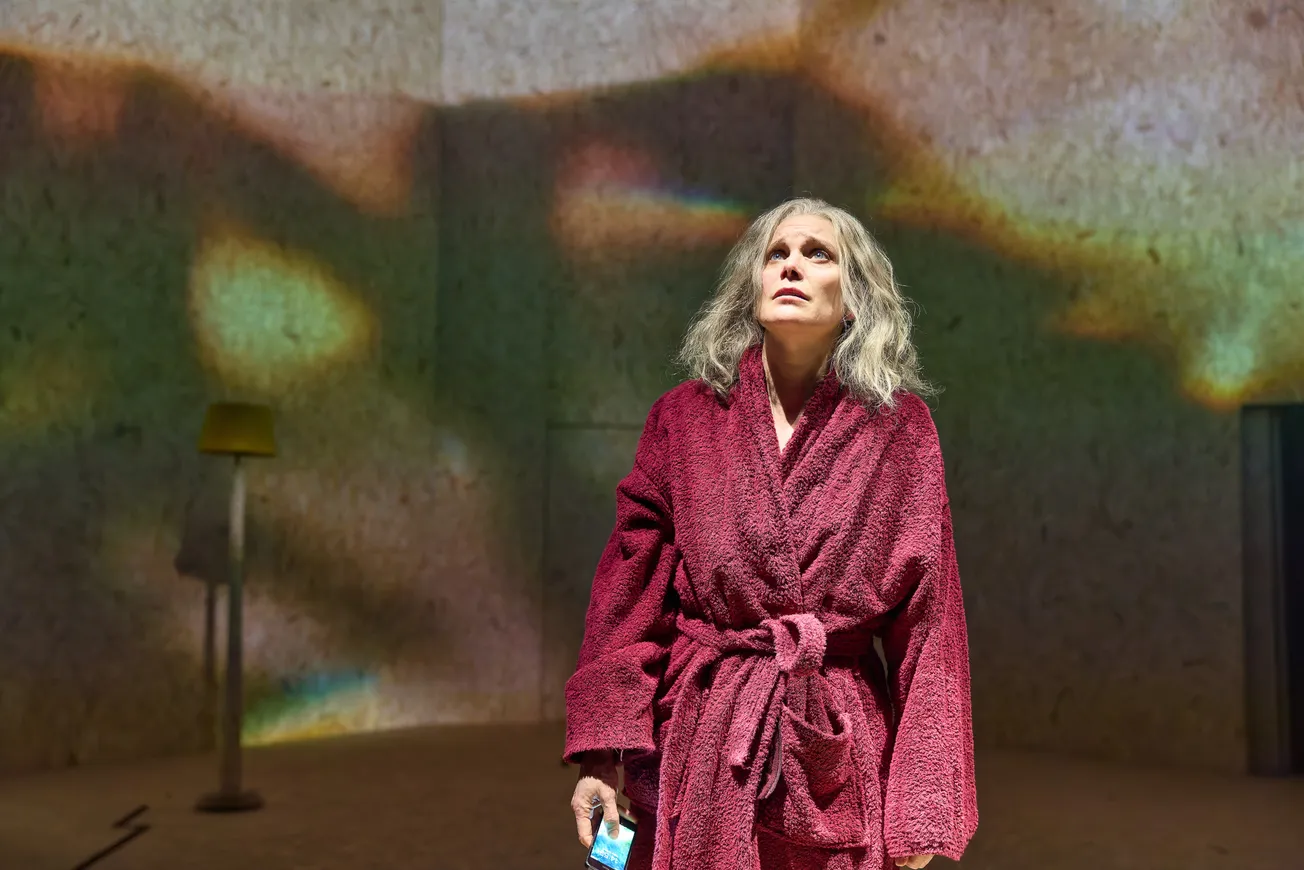
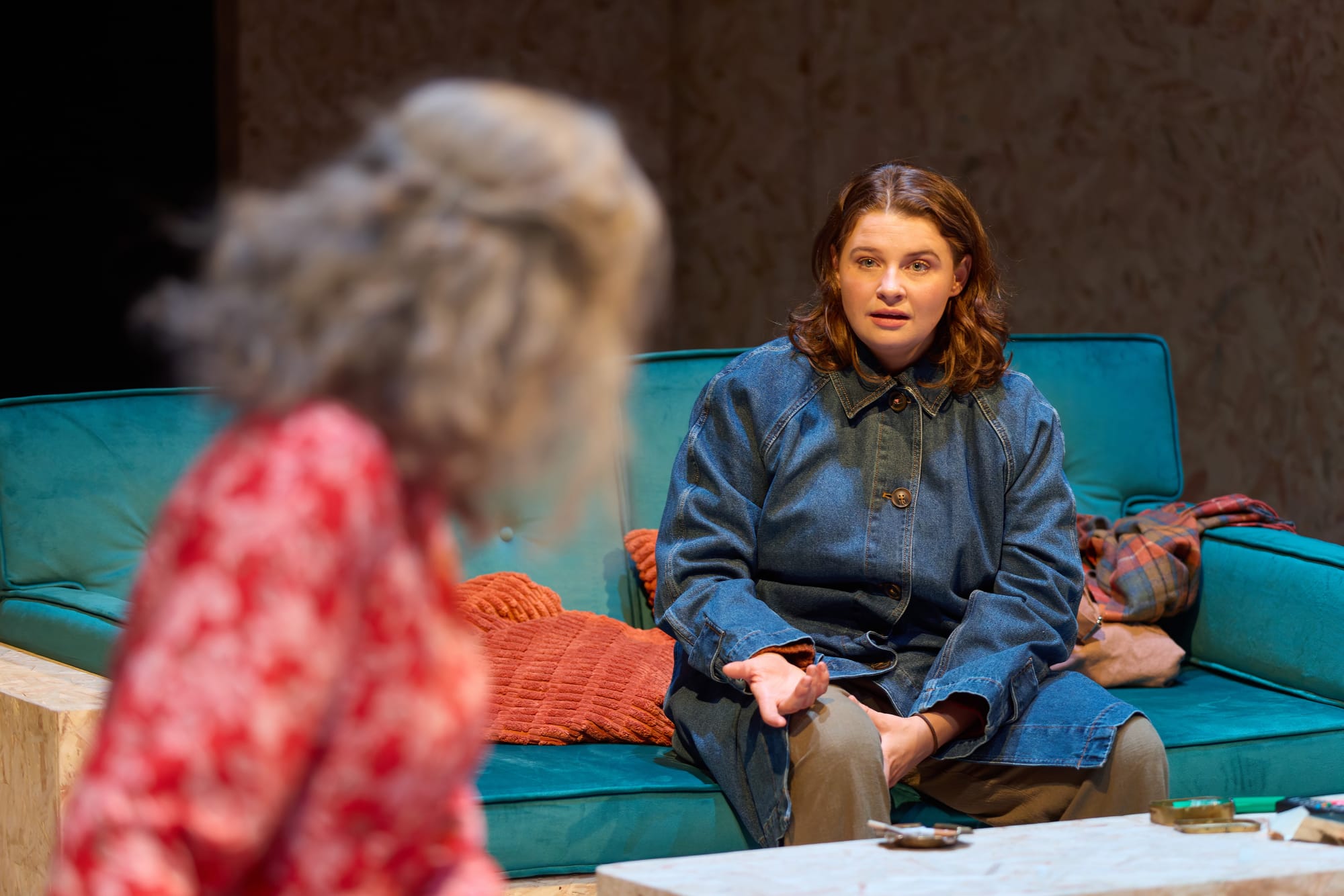
The play presents some obvious challenges for the actors, who all rise to the occasion. Many of the uniformly strong cast have to play different parts at different ages down the decades; Andrew Macklin, Harki Bhambra and Melina Sinadinou prove particularly chameleonic. Samuel Creasey and Abby Vicky-Russell do a superb job as Kathy’s kids, Mike and Rebecca, from toddling around the stage as chaotic, oversized infants to becoming very funny teenagers to growing into adults with their own frustrations and disappointments. Kenny Doughty plays Kathy’s husband Brian with an appealingly dry Sheffield wit, but the biggest test is surely for Liz White (Life on Mars, Ackley Bridge) as Kathy – who is barely off-stage and who must age 55 years before our eyes. She pulls this off brilliantly, with the tiniest subtle changes to her performance scene by scene (as well as costume and wig swaps), physically charting a course from a bold, open young woman to a confused, cadaverous figure.
It is an astonishing performance – a life lived in front of us. Or perhaps, a life remembered, recalled. At the end, it feels like the play might be Kathy’s jumbling memories, making this a life looked back on, at its end.
Living is on at the Playhouse until 4 April. Holly Williams is the editor of the theatre Substack Exeunt.

As we approach The Tribune’s fifth birthday, I find myself thinking a lot about our journey so far. The fact that we’re now able to call on theatre experts like Holly Williams to produce great pieces about important new productions like Living is testament to how far we've come since we launched in 2021. But none of that would have been possible without the support of our paying members. We know that lots of you enjoy our journalism, but only around 10% of you actually pay for it. If you value the great theatre reviews, political analysis, nature writing and investigative journalism we produce, please become a member of The Tribune today.
Dan Hayes
Founder, The Tribune
If someone forwarded you this newsletter, click here to sign up to get quality local journalism in your inbox.
If you’d like to sponsor editions of The Tribune and reach over 30,000 readers, you can get in touch or visit our advertising page below for more information