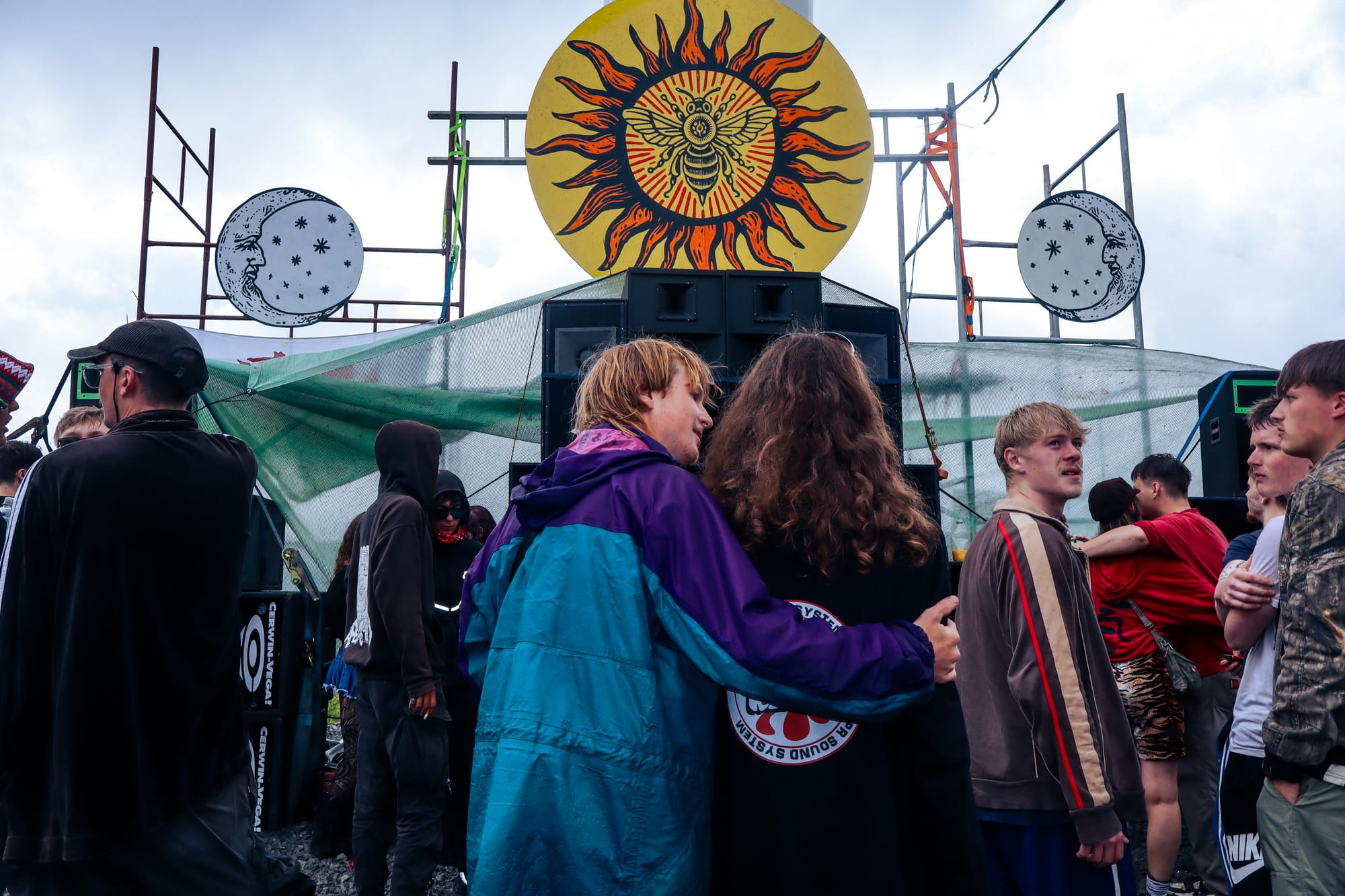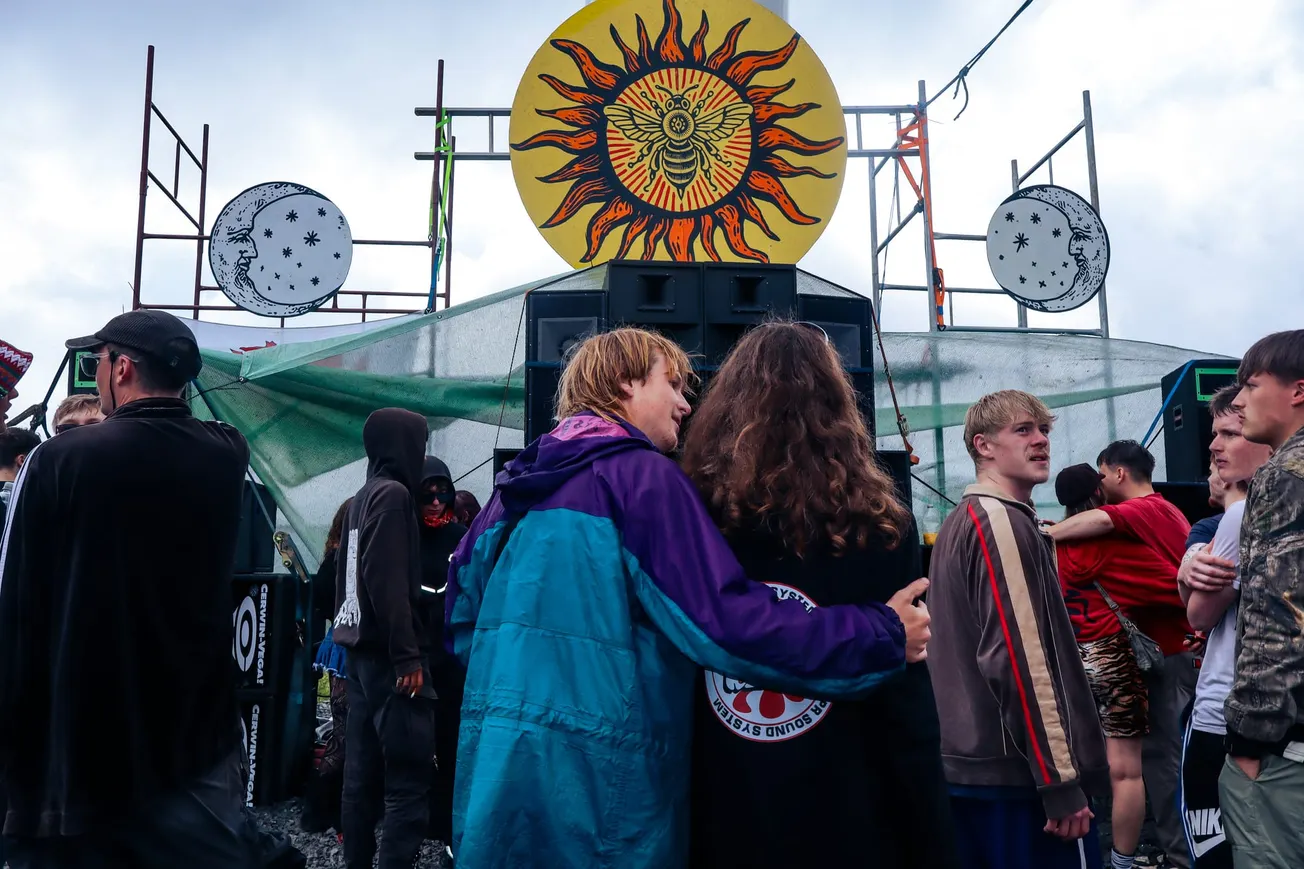
For Sophie*, a “full-time lifeguard, part-time partier,” one of the highlights of each free party has little to do with the music, the drugs or the crowd. There’s something uniquely exhilarating about stepping out of a (very expensive) taxi in the dead of night and hearing the distant thumping bass that confirms she’s in the right spot. After a few seconds getting her bearings, she’ll follow the music and the odd direction from partygoers taking a breather until she stumbles upon it. A hidden clearing, filled with dizzying lights, speaker towers up to ten-feet tall, surrounded by a writhing mass of revellers. As she points out, “everyone can go clubbing, but not everyone can go to free parties, so you do feel a little bit superior.”
If an unwitting pedestrian stumbled on such an event, unlikely as that would be, they might fear they’d interrupted some kind of maniacal, Dionysian bacchanal. “It’s one of the weirdest places ever,” says 19-year-old DJ Martin. “So many different walks of life are there partying together, from forty-year-olds down to school kids.” Despite this, Martin worries the community has been changing — for the worse — in recent years. Sophie, who also admits the parties have begun to lose their allure, describes the essential experience as almost bittersweet: intense euphoria as she dances the night away, then frantically booking a taxi as the sun rises and heading home to parents who haven’t been able to contact her all night.
Free parties — so-called because they are free from the usual rules and regulations of legitimate club nights — first emerged in England in the 1980s. At first, they weren’t inherently illegal. However, in 1992, a week-long free party in Worcestershire prompted the government to create a new law in the hopes of snuffing them out. The Criminal Justice and Public Order Act 1994 gave police the power to crack down on outdoor gatherings of 100 or more people playing amplified music with a “succession of repetitive beats,” transforming free parties from a counter-cultural movement to an illegal, underground scene. This did nothing to put a dent in their popularity.
The average party lasts from 10pm until noon the next day, although they can sometimes stretch to 20 or 30 hours, since the limiting factor is largely how long the generator powering the speakers lasts. As a result, heavy drug use is an inevitable part of the scene. “There’s not an average person on earth who can keep going for that long sober,” Martin says. Mary, a 19-year-old attendee, insists she would be unable to get the full experience otherwise — “hardcore music needs hardcore drugs” — although she feels the amount she partakes is relatively safe. (Given she describes sometimes realising she’s still dancing after the generator has cut off, others might disagree.)
This story is free to read. You just need to sign up to join The Tribune's mailing list. And why wouldn't you? You'll get our journalism in your inbox the second we publish, keeping up to date on this and all our stories. No card details required.
Already have an account? Sign In