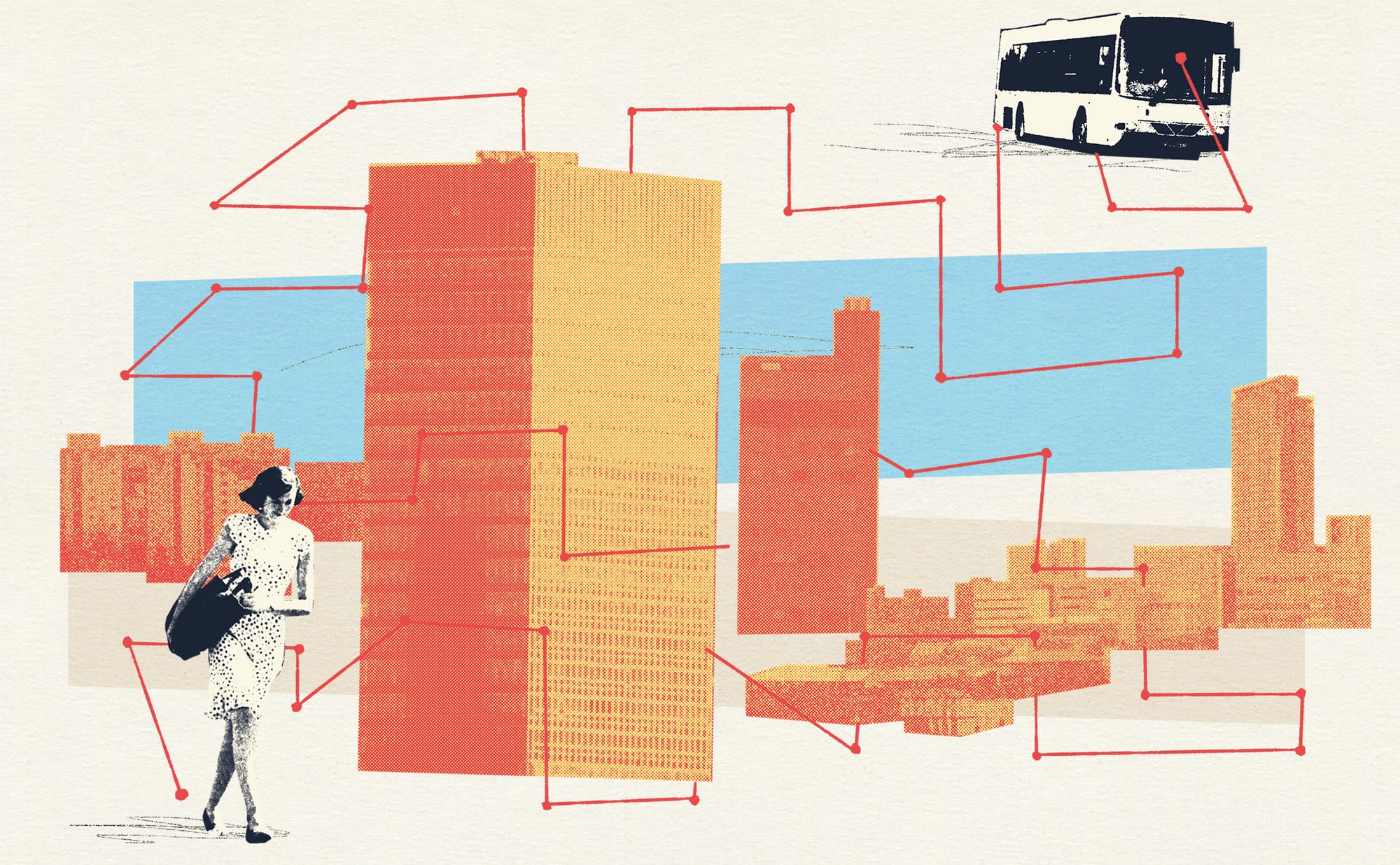
For Deb Southward's 17-year-old daughter, the school day starts early. Really early. Even if she’s dressed and ready to leave the house before 7.30am, in time to catch her bus from Handsworth all the way across the city to King Edward VII School in Broomhill, there’s no guarantee she’ll make it on time. Sometimes the bus just doesn’t show up, or it’s late, or it skips her stop because it’s already too full. Her journey home is no more predictable. Whether the 4.45pm turns up is “pot luck” and, if it doesn’t, Deb says her daughter sometimes doesn’t get home until 6.30pm — meaning she’s had an 11-hour day.
It would be one thing if her daughter was enduring this daily odyssey because she was determined to attend King Edward’s, but what frustrates Deb most is the fact that her teenager simply had no other choice. If she wanted to study A-Levels and achieve her dream of becoming a doctor, she was going to have to travel. None of the four secondary schools in Sheffield’s more deprived corner (Handsworth Grange, Birley, Outwood Academy City and Westfield) offer the qualifications she needs. Sheffield Park Academy on the Manor estate is still a bus ride away, while Sheffield College’s city-centre campus doesn’t predominantly focus on A-Levels.
In fact, even before Deb’s daughter had sat her GCSEs, all eight sixth forms she applied to declined to offer her a place, despite the fact she should have had “priority place” at High Storrs due to attending a school in the same multi-academy trust. Deb had to ring every single sixth form her daughter applied for to plead with them to admit her anyway. “It gets me so mad how we supposedly have all these NEETS [young people not in education, employment or training],” Deb says, “yet I am having to beg to get her a place somewhere.”
The message it seems to send to young people in the south east of Sheffield is that they should limit their ambitions — that A-Levels and a university degree are best left to other, more middle-class teenagers. In the south west, for example, there are eight sixth forms within walking distance of each other. “My daughter has to jump through more hoops just to achieve the same as someone else on the other side of town,” Deb argues. “Just give us a fair shot.”
This wasn’t always the case. When Deb was growing up in Handsworth, she had options. The former Brook School had a sixth form until 1988, when it merged with Beaver Hill to create Handsworth Grange. While there were initially promises that the sixth form would one day re-materialise, these were eventually discarded. You could also study A-Levels at Stradbroke College — that is, until it closed in 1992. More recently, Sheffield College shut down its Peaks Campus in Waterthorpe, citing a decline in student numbers due to bus service cuts. Deb says many of her daughter’s friends have ended up at Thomas Rotherham College, which also requires at least an hour on unreliable public transport.
When we posted on social media asking to hear from people with experience of this problem, we were inundated with emails and messages. One parent based in S13, Amy Shepherd, said she was “increasingly concerned” that her son, who is due to start Year 10 next month, would have no local options when it came to doing A-Levels. “Families shouldn't have to make decisions about their children's education based on whether they can afford the time, transport costs and practical difficulties involved in travelling across the city every day,” she told us.
While local parents were already fired up about this state of affairs, a comment made at a council meeting in January effectively doused the situation with petrol. It was a meeting of the council’s south east local area committee, where the lack of sixth form provision was high on the agenda. Local parent Craig Myers says a remark made by the council’s director of children’s services Meredith Dixon-Teasdale has stuck with him ever since. While discussing the fact that hundreds of local children have to travel across the city or to neighbouring towns to continue their education, Myers claims, “she said it helps them ‘build resilience’.”
This story is free to read. You just need to sign up to join The Tribune's mailing list. And why wouldn't you? You'll get our journalism in your inbox the second we publish, keeping up to date on this and all our stories. No card details required.
Already have an account? Sign In