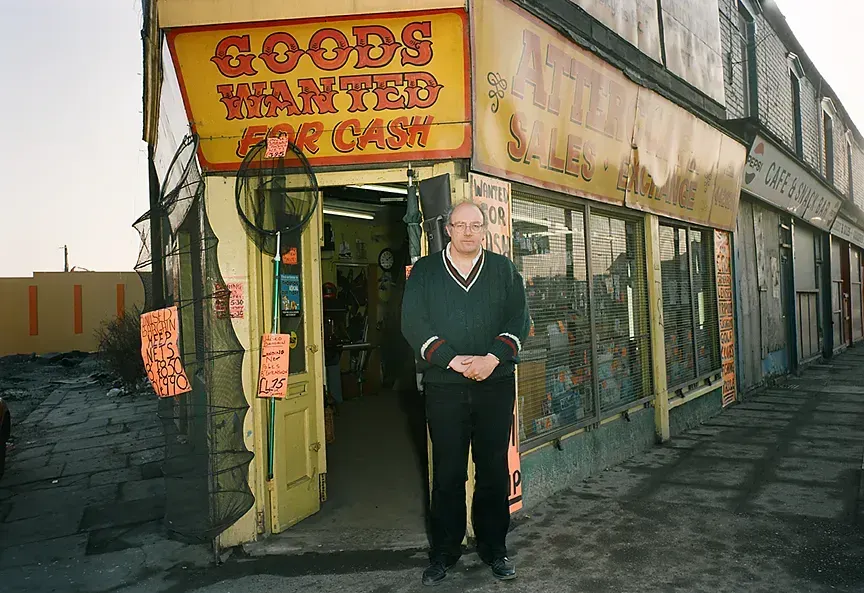
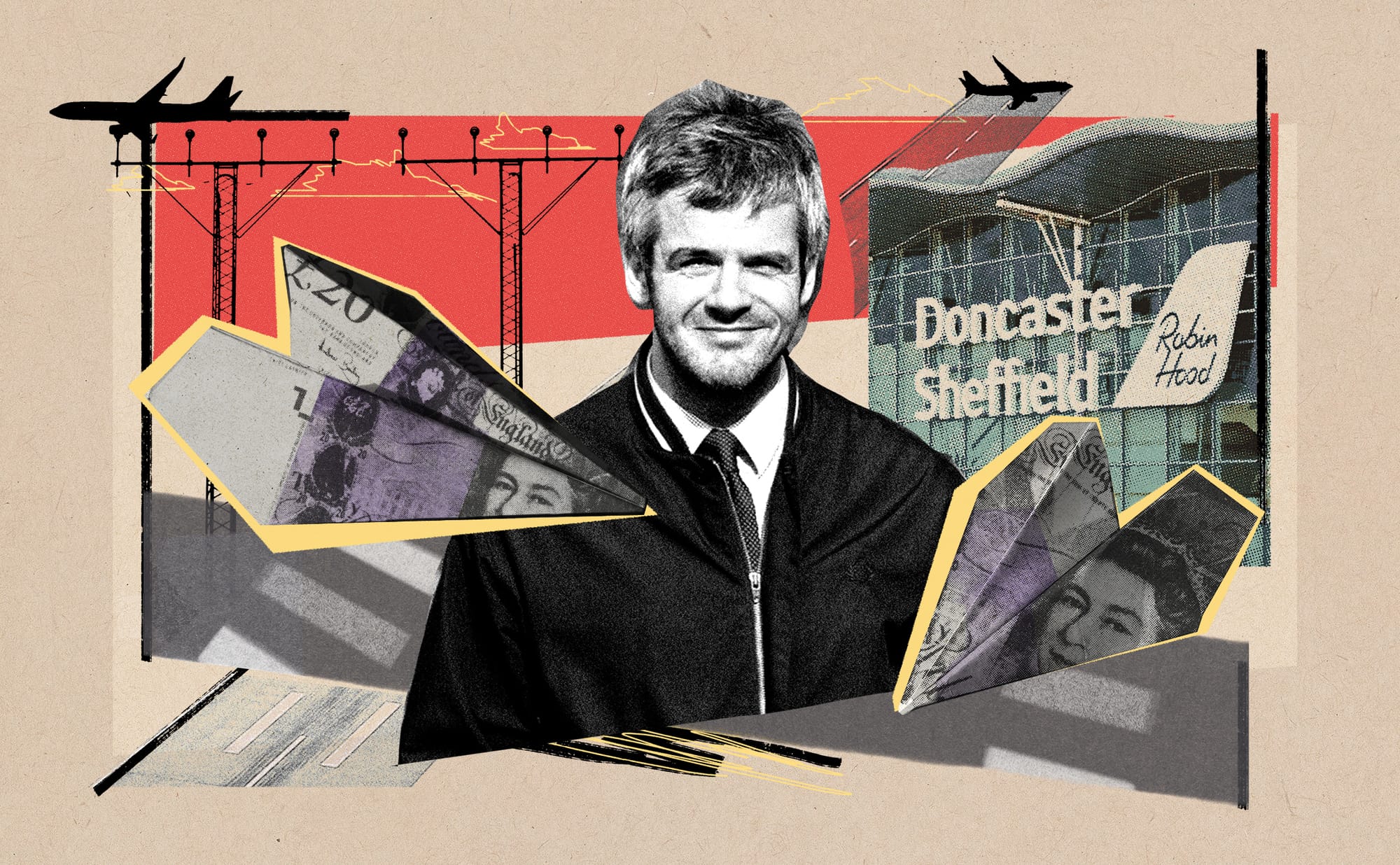
Tomorrow will mark exactly four years since Doncaster Sheffield Airport shut down, seemingly for good, and Gary Winterman’s livelihood evaporated. His company CargoWorld had existed for just shy of 20 years but ceased trading the moment that the DSA’s owner, Peel, decided to abandon what they allege was an irreversibly sinking ship. At the time, Sheffield councillor Ben Miskell described the move as a “total betrayal of the people of South Yorkshire”.
But, for Winterman at least, it seems there’s no hard feelings. He’s delighted to be back working at the airport, this time alongside his son Matthew, with a fancy new title (head of cargo and general aviation) and his own office to boot. He tells me with total sincerity that it’s his life’s mission to make sure it’s a success this time round. “I’m a local lad, born and bred in Doncaster,” he says, before adding: “But it's not just about Doncaster, it’s about bringing this back to the region.”
Though the first flights won’t take off until September next year, Winterman is one of almost 100 employees already on-site, mostly on the payroll of the council’s arms-length company FlyDoncaster. The mood there is “fantastic,” Winterman says, adding that the airport even has a new nickname: Heathrow North. The only thing that threatens to kill the mood is the constant scepticism in the local press and on social media about whether the grand reopening is a good idea. “We just need people to get behind us, which I think they’re starting to,” he says. “I think the tables are starting to turn a little bit.”
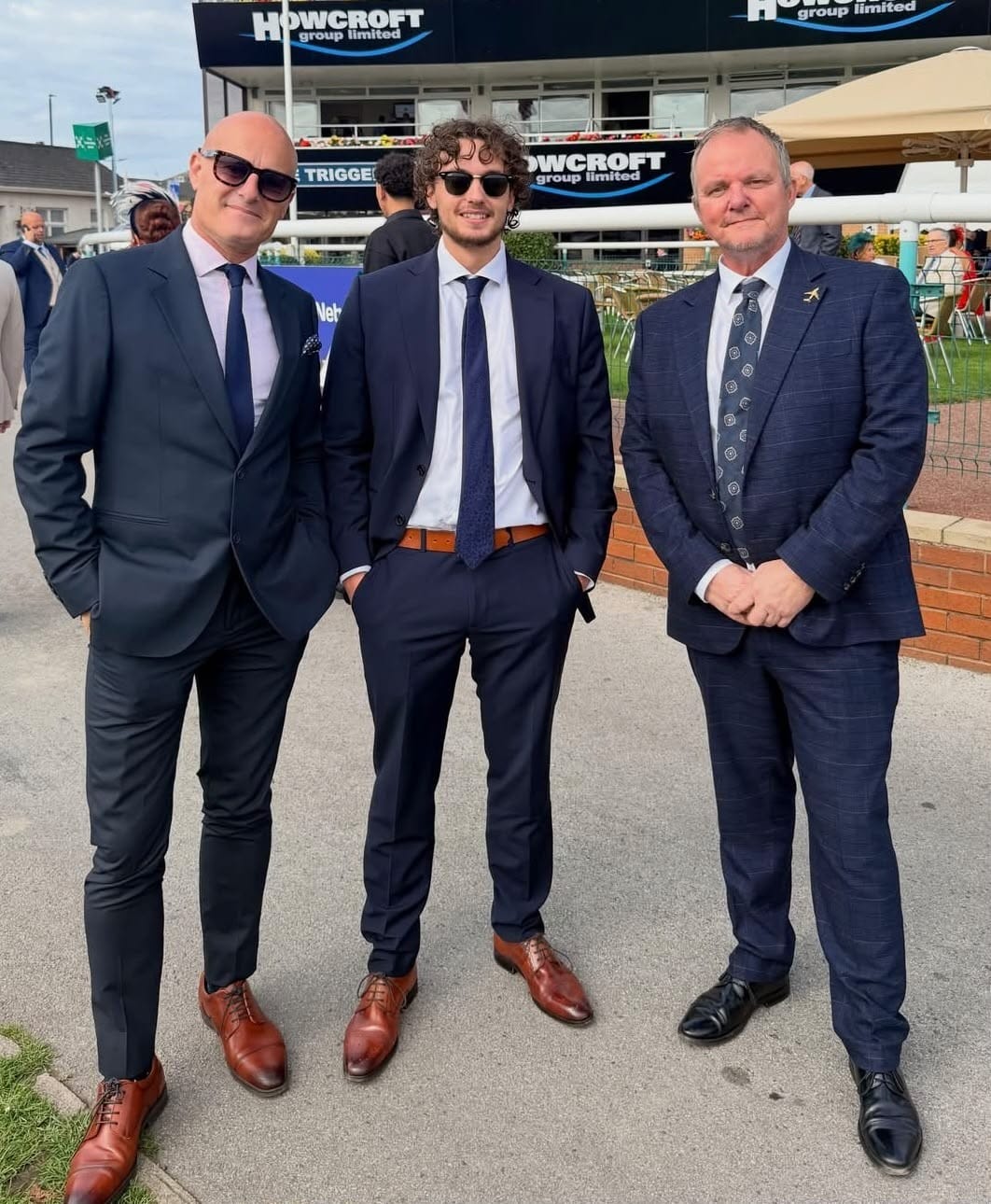
While that may be true, the DSA still has some die-hard critics. Take Richard Sulley, who describes himself as a "disgruntled former employee of the mayor of South Yorkshire” and says he left his job at the combined authority in part because of his outrage at the plans to reopen the airport. “All evidence available publicly from anyone in this field is that small regional tourist airports don’t bring massive economic benefits,” he argues.
In Sulley’s view, Doncaster Sheffield Airport is an obvious white elephant and politicians like South Yorkshire mayor Oliver Coppard are simply in too deep to see sense. “If I was a resident of Doncaster, I would be nervous,” he says, given that more than £121m of Gainshare funding previously earmarked for other Doncaster council projects will now be poured into the airport instead. While politicians insist reopening the DSA will bring economic benefits greater than its cost, he notes the calculations used to support this claim are redacted due to commercial sensitivity. “We will find out everything when there is an inevitable public enquiry about this,” Sulley suggests. “But, by that time, all the politicians will have moved on and the damage will have been done.”
Between one of the airport’s most dedicated advocates and a DSA doomer, who is closer to the public mood? And, more importantly, who will be proven right in the end?
While the second question is hard to answer conclusively, at least without the benefit of a crystal ball, we figured the former was within our capability. Thus, to get an idea of how many people think the return of the DSA is a good idea, we enlisted polling company Find Out Now. Between 23 and 28 October, they interviewed 500 South Yorkshire residents and it seems Winterman is right that the people are largely on board. Out of those respondents, 79% said they support reopening the airport, with only 5% opposed.
But that support falters a bit when people were asked whether they believed public money should be involved. Many more — 24% — were opposed to this, while 43% thought this was a good use of taxpayer cash. A full third of respondents didn’t know.
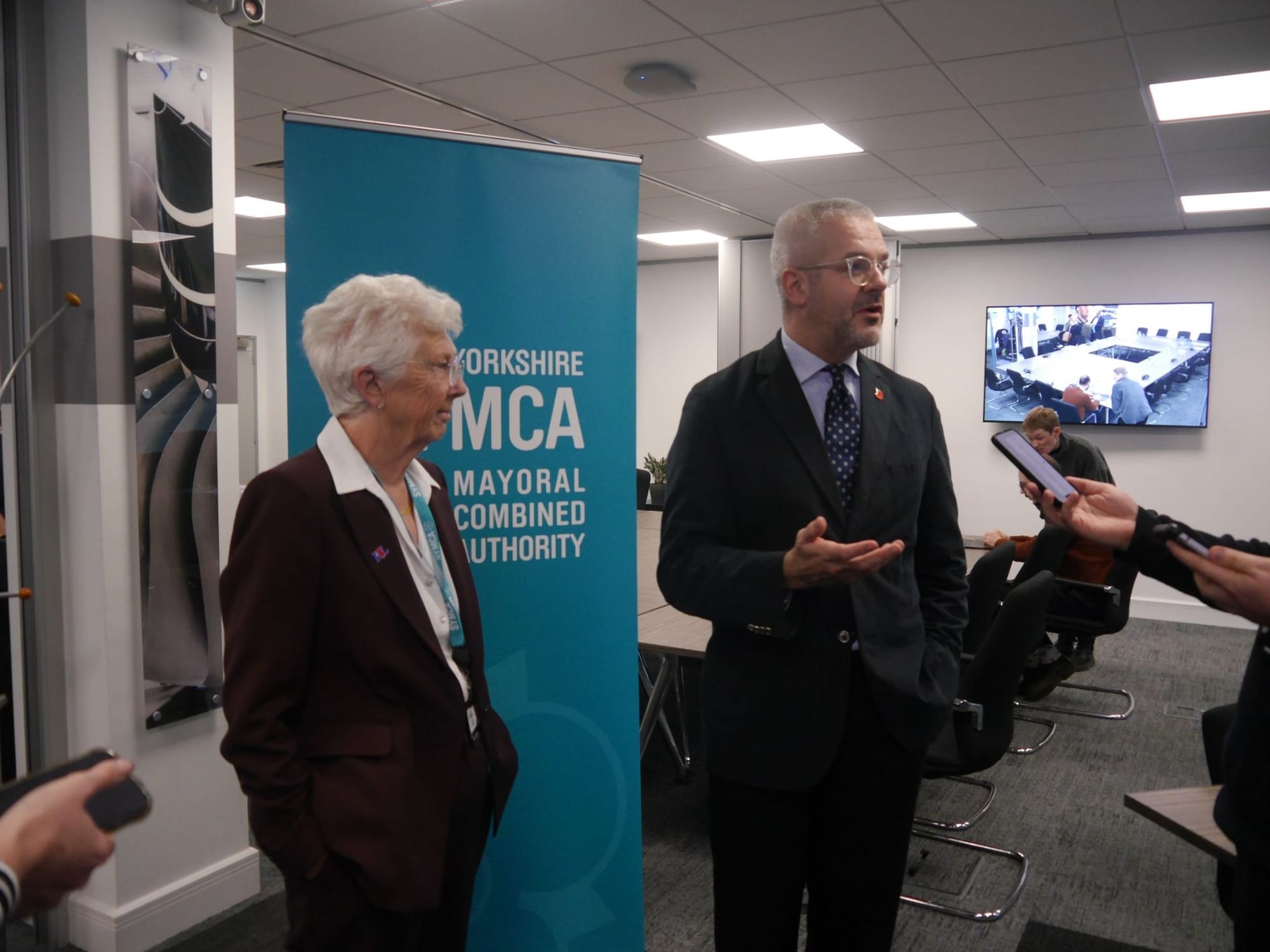
Earlier this week, the South Yorkshire Mayoral Combined Authority (SYMCA) voted to do just that: use a significant chunk of public money to purchase Doncaster Sheffield Airport from Peel. Afterwards, mayor Oliver Coppard held a small huddle for the three journalists in attendance. He was excited and quick to emphasise at any opportunity that he understood the risk he was taking on. “I’ll do everything I can to make Doncaster-Sheffield Airport a success,” he told the room. “We will always strive to do the best possible deal for taxpayers.”
In Sulley’s view, the fact that Coppard is now jumping at the chance to buy the airport is highly suspect, given he’d dismissed the idea in the past. “Was he just playing party politics then and, now we have a Labour government, suddenly it’s a good idea? If something has changed between then and now, I think he should say so.”
The report presented to SYMCA ahead of this week’s meeting does provide an explanation: “This proposal is only possible because of[...] the agreement of Peel to reconsider an option that was not commercially acceptable to them in 2022, for which we are grateful.” Namely, the company was happy to flog off the airport and has now thrown in the adjacent “Innovation Quarter” to sweeten the deal. Across 212 acres, the Innovation Quarter is a “large-scale industrial and logistics development,” which SYMCA’s website described last year as “one of the most strategically important and nationally significant opportunities in England”.
It’s clear that SYMCA believes the Innovation Quarter’s future success is dependent on the reopening of DSA and worth the gamble that the project entails. “Our plans are as significant as they are bold,” wrote Oliver Coppard, in a statement on Facebook earlier this week: “A thriving regional airport anchoring a world leading sustainable aviation and advanced manufacturing hub.” Though he admitted that “no growth plan is risk free,” he felt compelled to seize the “once-in-a-generation opportunity to grow the economy of South Yorkshire, create thousands of jobs in the industries of the future, and connect us to the world.”
But the SYMCA report does make for slightly alarming reading. While no additional funding (beyond the £160m already agreed) will be needed to purchase the airport itself, the Innovation Quarter comes with its own price tag, which SYMCA intends to take out loans to pay. In order to keep up with repayments, FlyDoncaster will need to turn an adequate profit, leaving SYMCA in hot water if it performs poorly. “Whilst the MCA’s funding was already at risk from this performance under the lease arrangements,” the report notes, “the change in nature of the transaction means that that risk now sits closer to the MCA and its broader financial health.”
Which means SYMCA is betting the family silver on the idea that FlyDoncaster can succeed where Peel — which lost money for each of the 17 years it ran the airport — failed. “Despite growth in passenger numbers,” a Peel spokesperson said in 2022, “DSA has never achieved the critical mass required to become profitable.” Part of the problem was Brexit: the airport once buzzed with flights from Eastern Europe, transporting seasonal workers to farms in Lincolnshire, which promptly dried up. Then there was Covid. And the final nail in the coffin came in June 2022, when Wizz Air permanently cancelled many of its DSA routes with little warning. “Unfortunately, it appears that [our] services have been sacrificed in order to support routes at other UK airports,” a spokesperson said at the time.
When it made the controversial decision to close, Peel was so convinced the airport couldn’t be turned around that it rejected an offer from SYMCA to prop them up until another operator was found, arguing it could not “responsibly accept public money for this highly uncertain process against the backdrop of an unviable, loss-making operating business”. What makes Coppard so sure that SYMCA, which intends to take a controlling stake in FlyDoncaster, can soar where Peel plummeted?
The private sector isn’t all it's cracked up to be, Coppard says when I put this question to him, arguing that the public sector also has nous, smart investment priorities and strategic vision. In March, SYMCA announced it had secured £1.5 billion of investment to bring the region’s transport system into public control, and Coppard says a portion of that cash will be used to extend Supertram to the airport. “When you have the support of governments for a long time to come, and you’ve got all the levers we have like public transport, you can take a different approach.”
Daniel Fell, chief executive of Doncaster Chamber of Commerce and non-executive director of FlyDoncaster, makes a similar argument. Though he stresses he’s “super respectful of Peel and the effort they put into making the airport work,” their expertise is in land and property, not aviation. “For them, there were easier ways to make returns on their money than the complexity of running an airport, with all the health and safety and regulations they have to jump through,” he suggests. In his view, Peel “only had the opportunity to make one of their three airports work,” and chose to “put all their eggs into the Liverpool basket”. He recalls watching this favouritism in action back in the day: “You’d see things going quiet at Doncaster and an airline leaving and that airline popping up at Merseyside a few months later.”
Fell insists the fact that so much public money is being invested into the airport will focus minds – while we still don’t know the exact sum that the combined authority is planning to spend, £190 million has already been approved towards the cost. He’s sceptical that Peel made the right kinds of commercial decisions in their time running things, saying that when it came to the airport making money from car parking and selling fuel to airlines, “that revenue stream was not as maximised as it could’ve been. People with fresh eyes would make different decisions these days.”
To take just one example, it seems there will be a much bigger emphasis on cargo flights, hence Winterman’s new office. “You could be looking at a million-plus pounds a day into the economy just from a handful of cargo flights,” Winterman tells me at one point, explaining that each flight is worth around £250,000 to the local economy. “You’ve got about 100 personnel involved with making one flight work,” he says. “So you could expect maybe 60 hotel nights for the crew, then you’ve got food and drinks…”
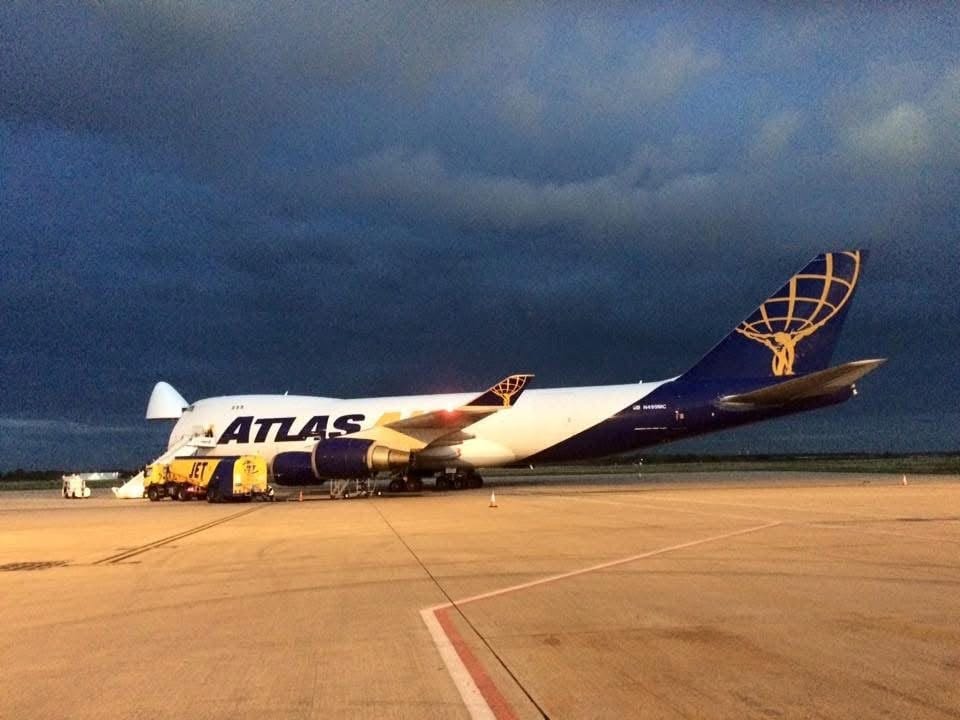
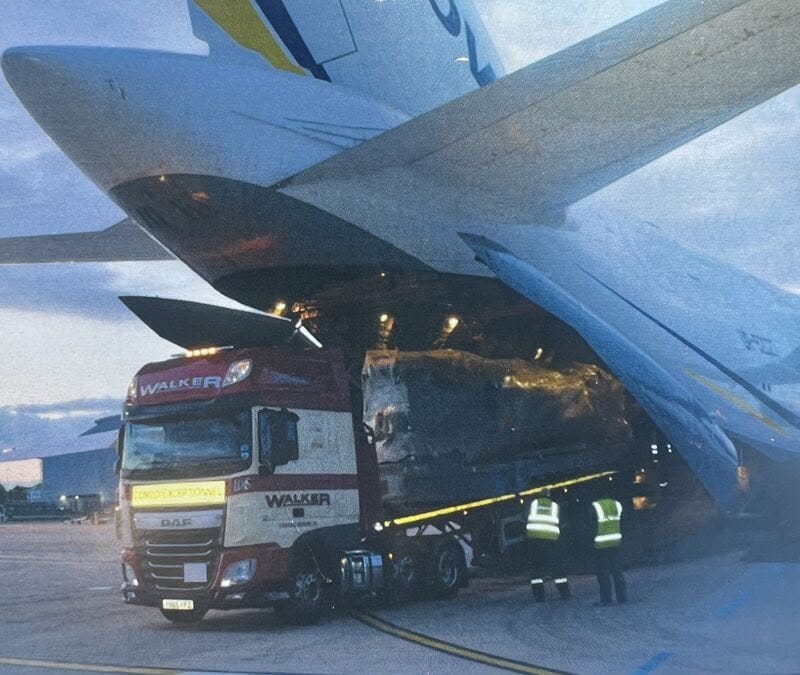
Photos courtesy of Gary Winterman.
Except this cashflow relies on there being enough cargo to justify multiple flights a day. When I ask Winterman what he expects to shift, he mentions touring equipment for bands, wildlife for zoos and horse races, commodities like food and loo roll. What about defence? I venture.
“There are Ministry of Defence contracts and things that are in conversation,” he admits, adding that this doesn’t necessarily automatically mean weapons. It could also cover vehicles and ambulances for UN peacekeeping missions, for example. When it comes to whether there will be weapons flying from DSA, he’s unable to confirm or deny. For their part, local weapons company BAE Systems give a somewhat evasive answer when asked if they are eager to use DSA in future. “We continuously explore opportunities regarding logistics to meet our business needs,” a spokesperson replies.
For Richard Sulley, who once worked as a Net Zero project director for SYMCA, the biggest argument against reopening the airport is the environmental cost. “I think it’s an environmental crime to be trying to grow a sector that is one of most polluting and least able to reduce its emissions,” he says. While SYMCA argues the Innovation Quarter will be a hub for labs looking to find ways to reduce the environmental impact of flying, he believes “there is no credible path for aviation to become sustainable”.
The straw that broke the camel’s back — convincing him to leave his job at SYMCA — was in late 2023, when he was tasked with delivering SYMCA’s Citizen’s Assembly on the climate emergency. At the assemblies, he alleges, “Coppard insisted we talk about the value the airport was going to bring and didn’t allow any opposition to that. Everybody who took part in it said it felt strange.” While he’s not convinced that the airport will be economically beneficial, even if he was, he would still object on environmental grounds. “Nothing justifies the damage.”
A SYMCA report about the climate impact of reopening DSA claims that “very little” of its emissions will be wholly new since, by pinching passengers who would have flown from other airports, DSA will simply be relocating carbon that would have been released somewhere else. A further climate report, which seemingly goes into much more detail, is redacted from the public on grounds of commercial sensitivity. When asked about this topic, a spokesperson for SYMCA insisted that “we recognise the environmental impact of aviation and have never sought to shy away from the challenge it presents”, and that “we will continue to make evidence and information available wherever possible, while respecting legitimate commercial confidentiality.”
For Fell, whose priority is the businesses of Doncaster, he says he already senses that the town’s fortunes are changing. The Crown Hotel has been booked out all month by businesspeople who want to strike up deals with the airport, while new DSA jobs are being advertised every week. “People have thought very very carefully about the airport proposition for a number of years,” he says. “Of course this is real life, there will be winners and losers, there will be someone who gets blighted because they’re under a flight path. But, in the round, I’m firmly convinced there will be more winners and losers.”
If you’d like to sponsor editions of The Tribune and reach over 30,000 readers, you can get in touch or visit our advertising page below for more information