When I get to Dove Stone it’s overcast, but noticeably much hotter than it’s been in recent days. The skyscrapers of Manchester city centre glisten in the distance as jets make their stately descent into the airport. A police car and crime scene tape are blocking access to the main car park. As I take an alternative route to the reservoir through woods, banners adorn several fences: “No Fires, BBQs or Fireworks,” they say. “Fine of up to £2,500 and/or prison sentence.”
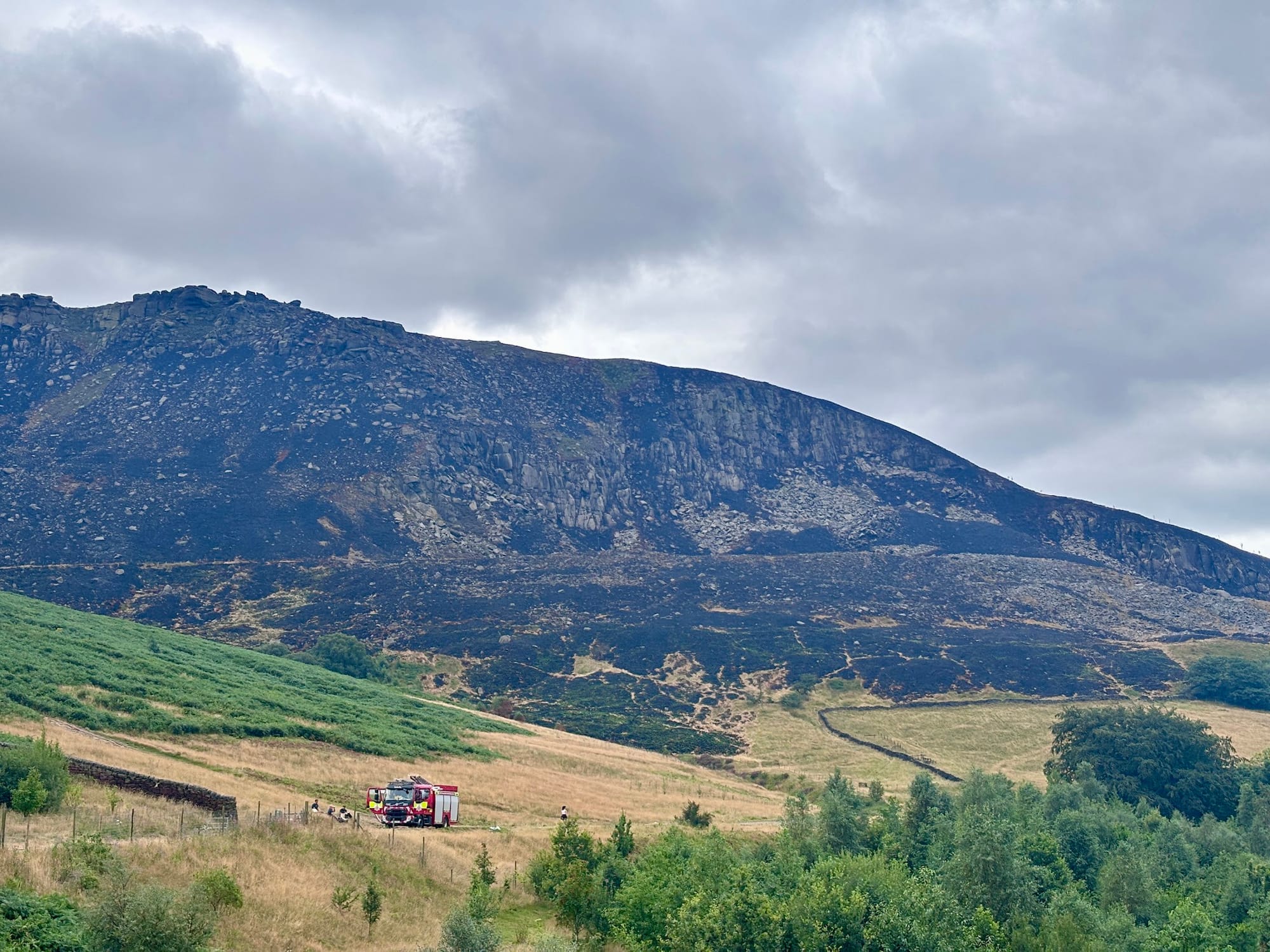
On the other side of the dam, two huge pipes head straight up the hillside, taking water from the reservoir to the still-burning moor on the other side of the hill. A group of firefighters are taking a brief respite for lunch; they have been here for three weeks already and might be here for another two, they tell me.
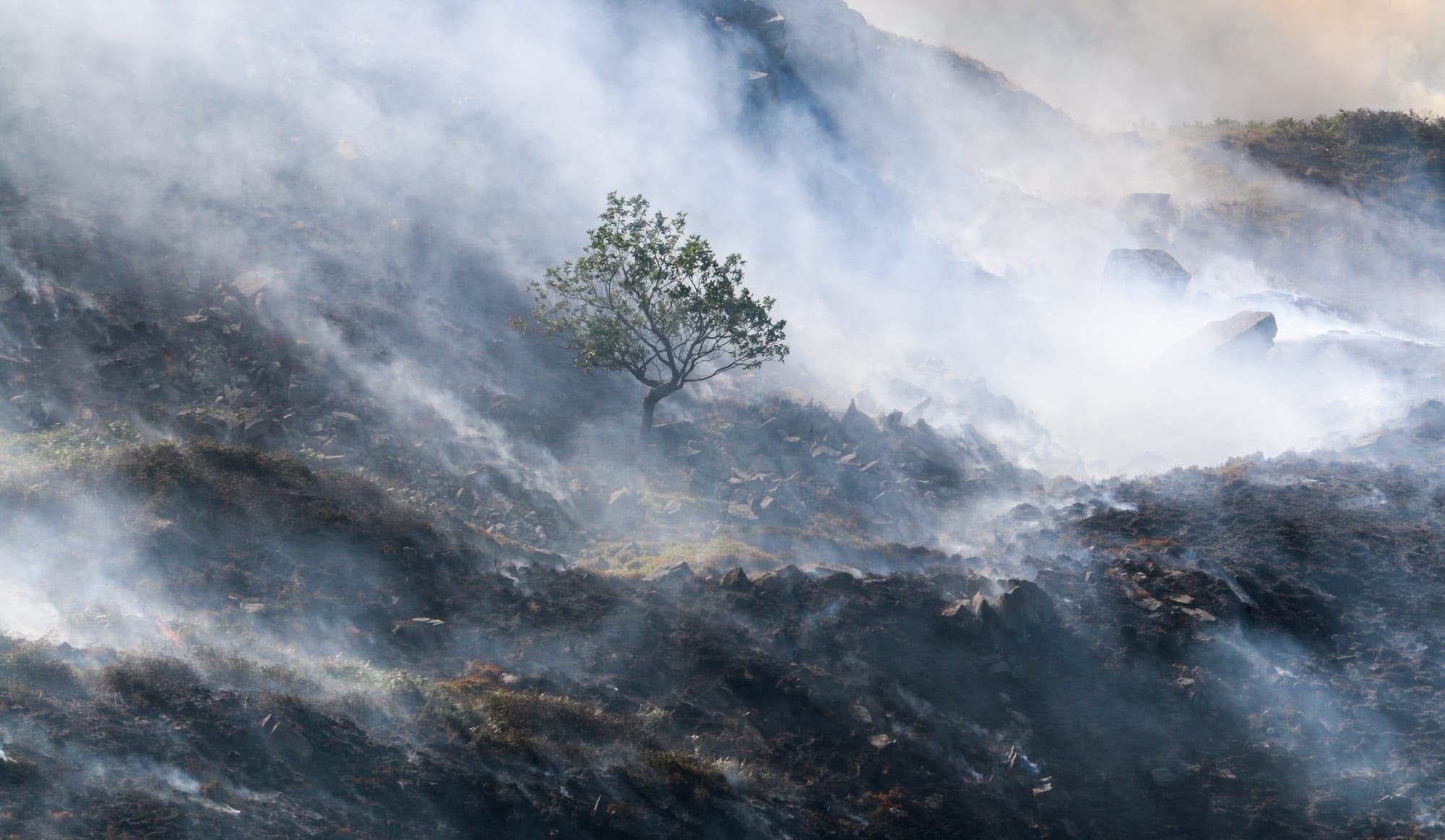
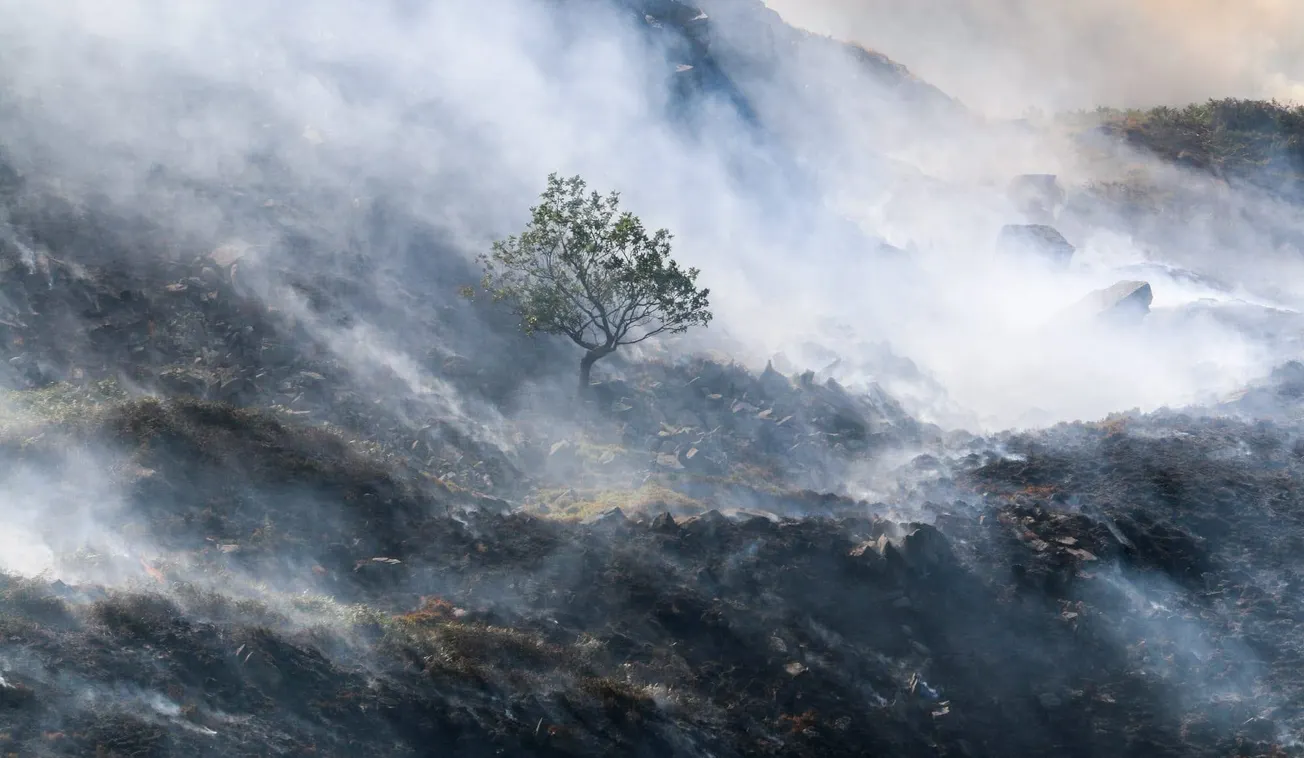
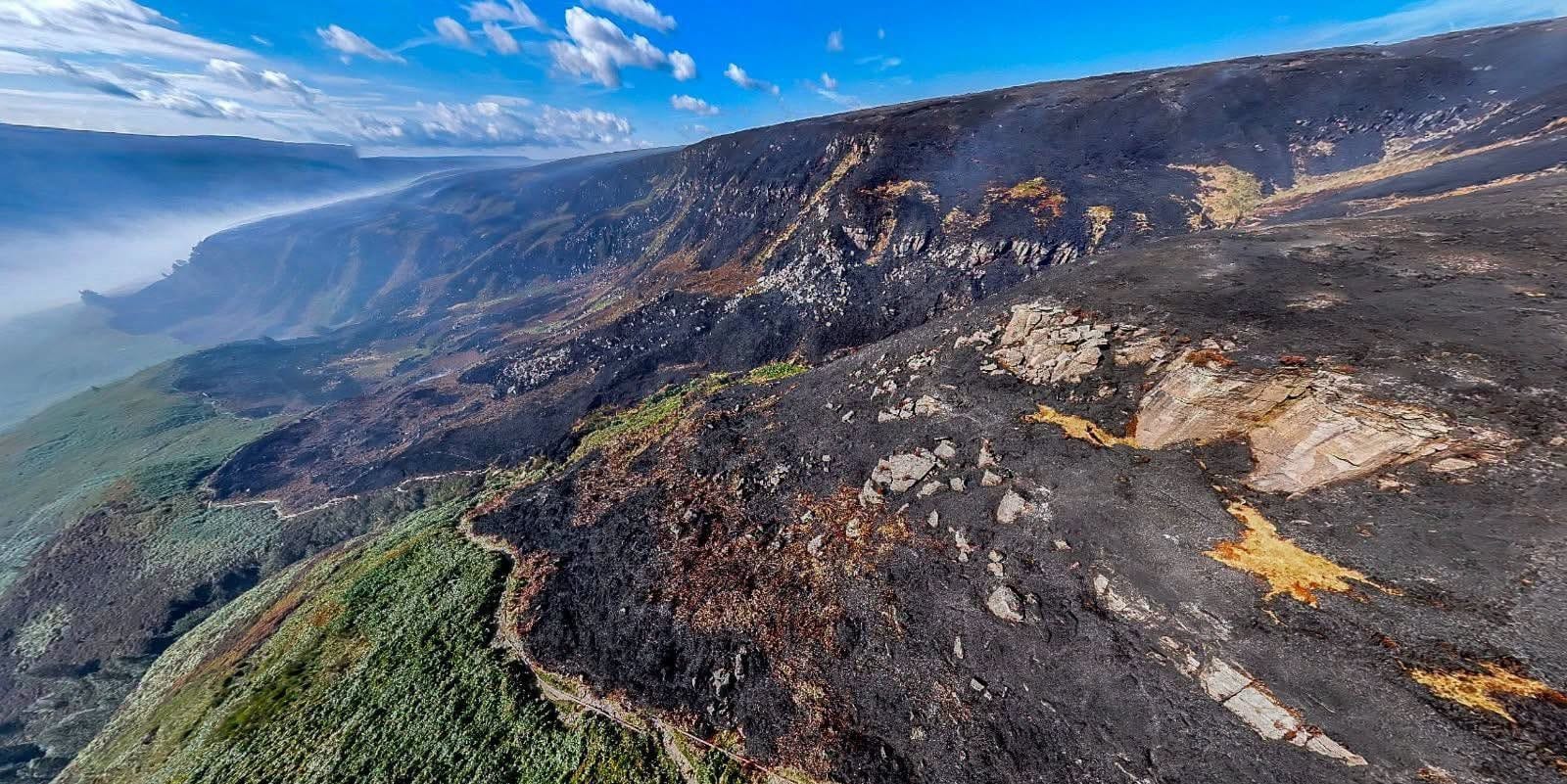
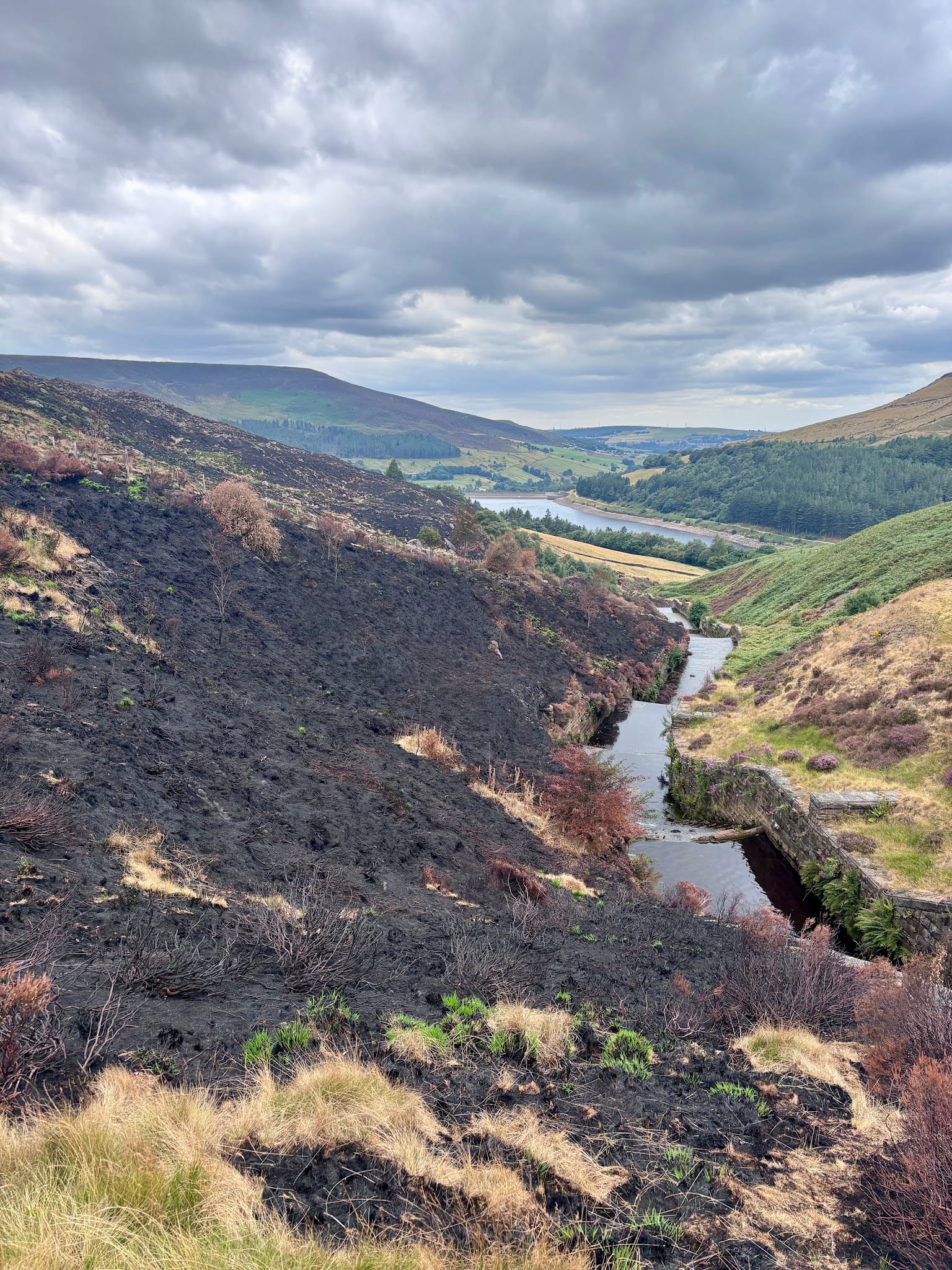
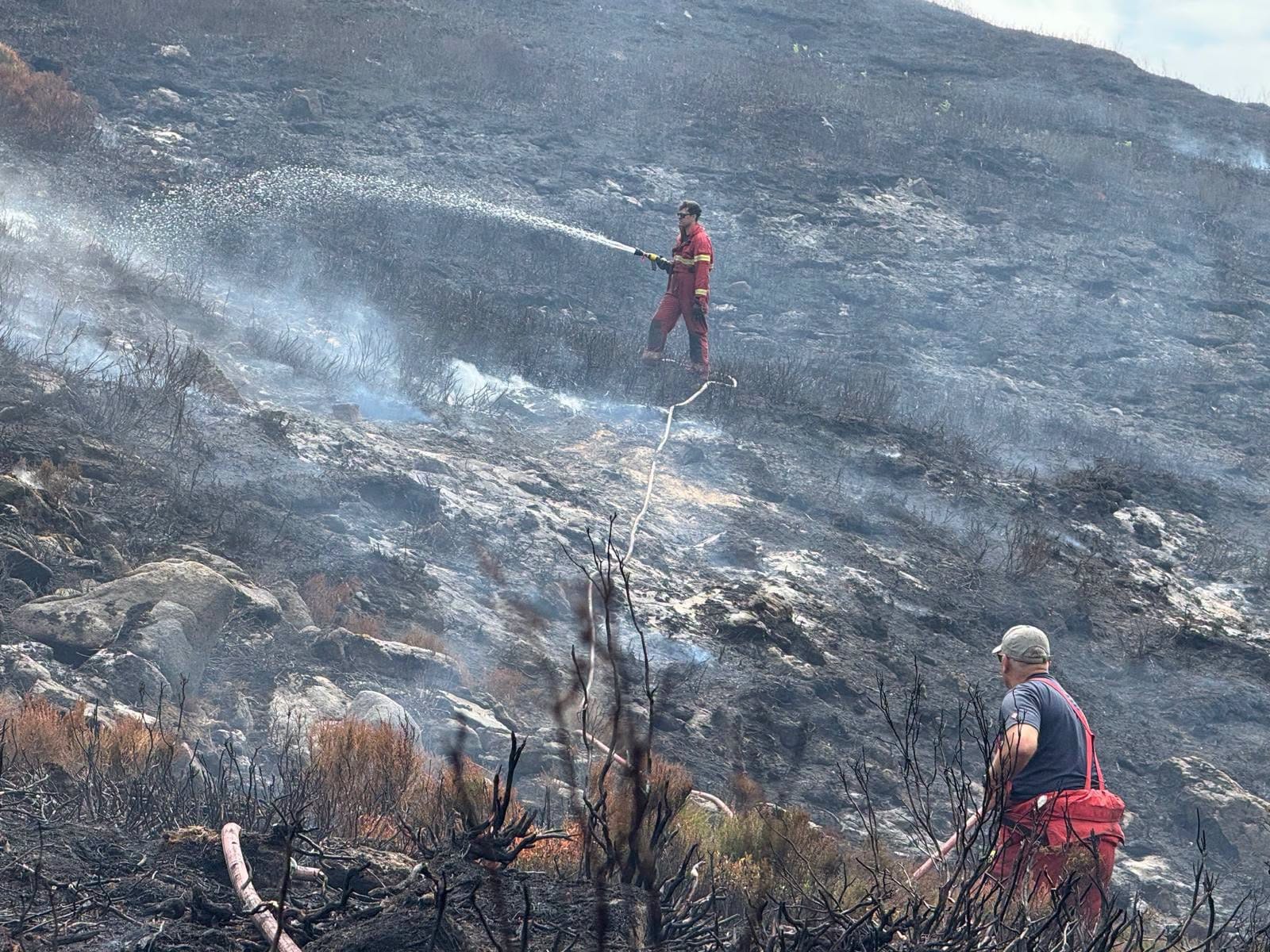
As I get closer to where the fire has been raging, the devastation becomes clear. An acrid stench fills the air, while blackened moorland surrounds me on all sides, sodden from the gallons of water that have been poured on it in recent weeks. Everything here is burned: heather, grass, and trees. A lonely silver birch still has a few green leaves on its very top but the rest are brown and its trunk is charred. As I bend down to touch some blackened grass, it turns to ashes in my hand.
Thankfully, a man-made stream has acted as a fire barrier, stopping the blaze from extending any further down the valley. On the still-green side of the water, a fence is covered with bunches of flowers left in memory of 18-year-old Karl Holland, who drowned at the reservoir on 10 July. A 20-year-old woman has since been charged with aggravated arson in connection to the destruction I've come to witness.
Where there’s fire, there’s smoke. And the smoke from fires in the Peak District this summer has quickly made its way west to Manchester, turning the skies a sinister shade of bruised yellow and creating unsafe pollution levels. Our colleagues at The Mill in Manchester told us the city centre air felt difficult to breathe in the days after the Dove Stone fire started. This will be familiar to many in Sheffield, where smoke from fires deliberately set by grouse moor farmers on Moscar Moor caused similar problems three years ago. Children had to be kept inside at several schools in the west of the city.
Given both Manchester and Sheffield’s proximity to the Peak District, it feels inevitable that, if more frequent and severe fires keep happening on the moors, they are going to have an increasing effect on us. The question is, can we do anything about it?
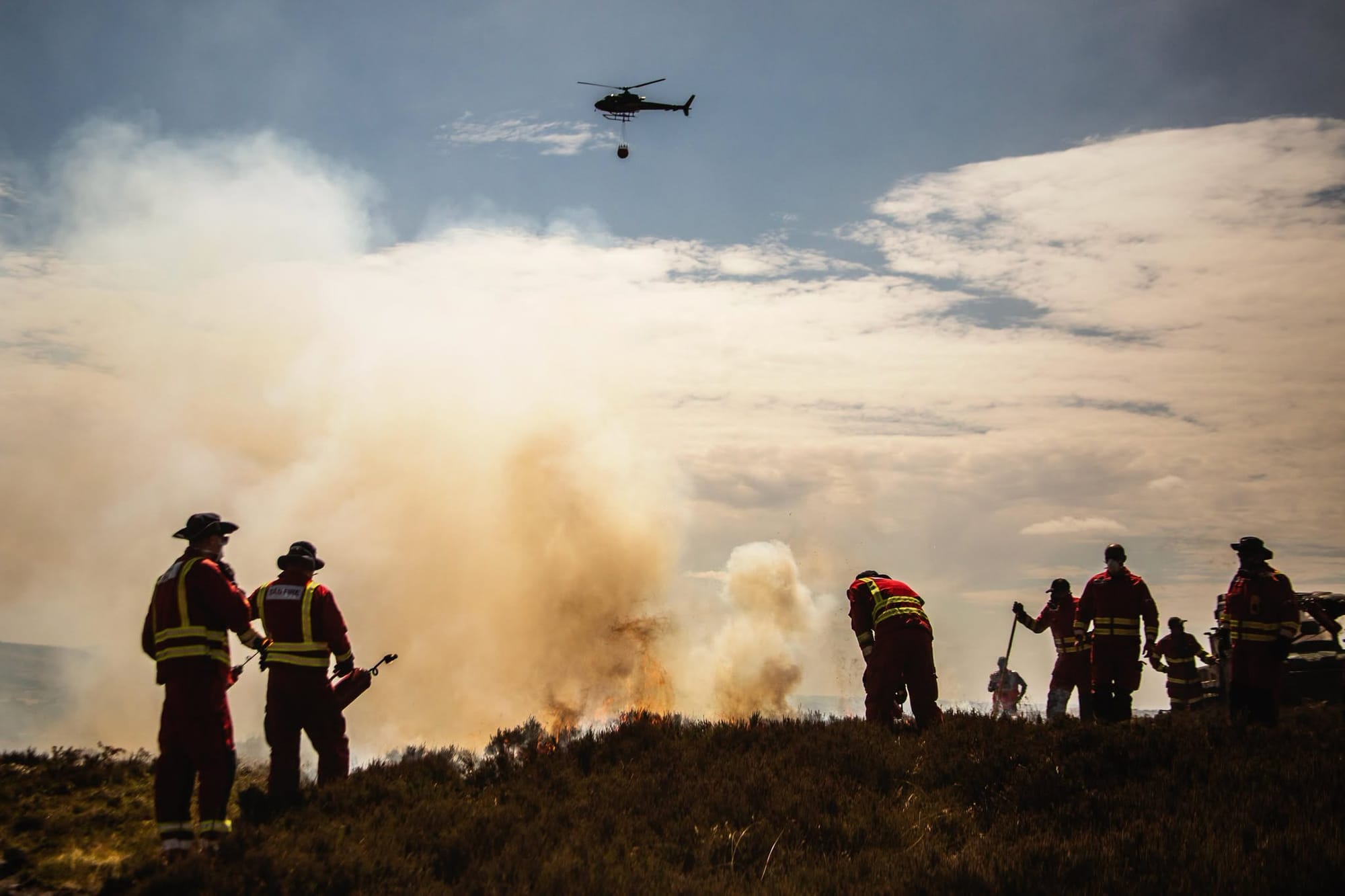
Just miles from those urban centres on the southern Pennines, teams of firefighters, gamekeepers, rangers and even volunteer fire-watchers have been braving 30C+ temperatures to curtail raging moorland fires – and spot new ones breaking out.
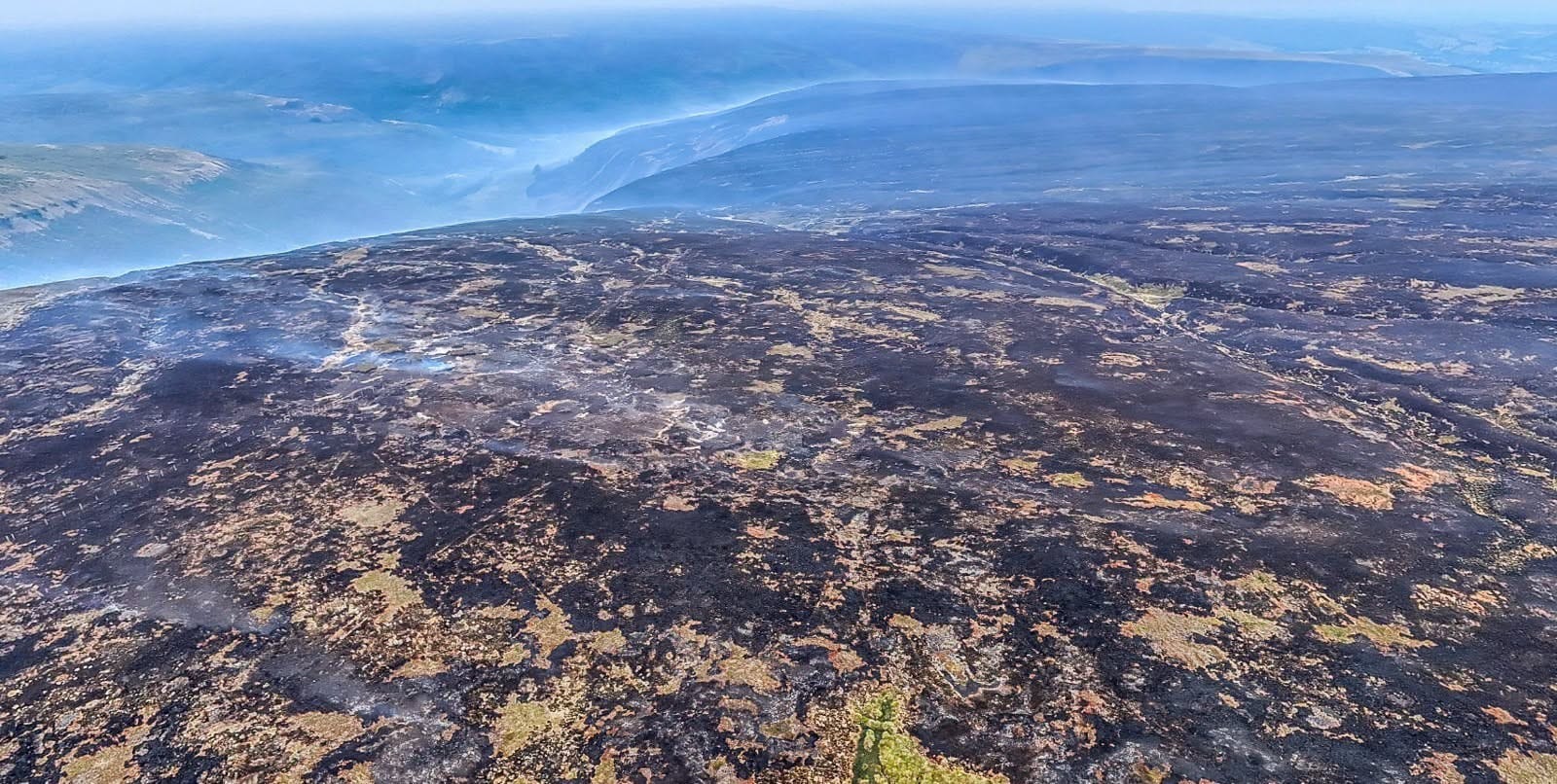
“It’s really claustrophobic,” says Hayden Bridgeman, a ranger team leader at the Peak District National Park Authority. She describes navigating a 30 to 40-minute walk across lumpy moorland to another fire scene at Tintwistle in early July, wearing full PPE and a huge water pack on her back. If the Dove Stone fire was devastating, the Tintwistle one was catastrophic: 606 hectares in size, the equivalent of 900 football pitches. Pictures shared by the Derbyshire Fire and Rescue Service and Derby Mountain Rescue Service show charred, blackened moorland as far as the eye could see.
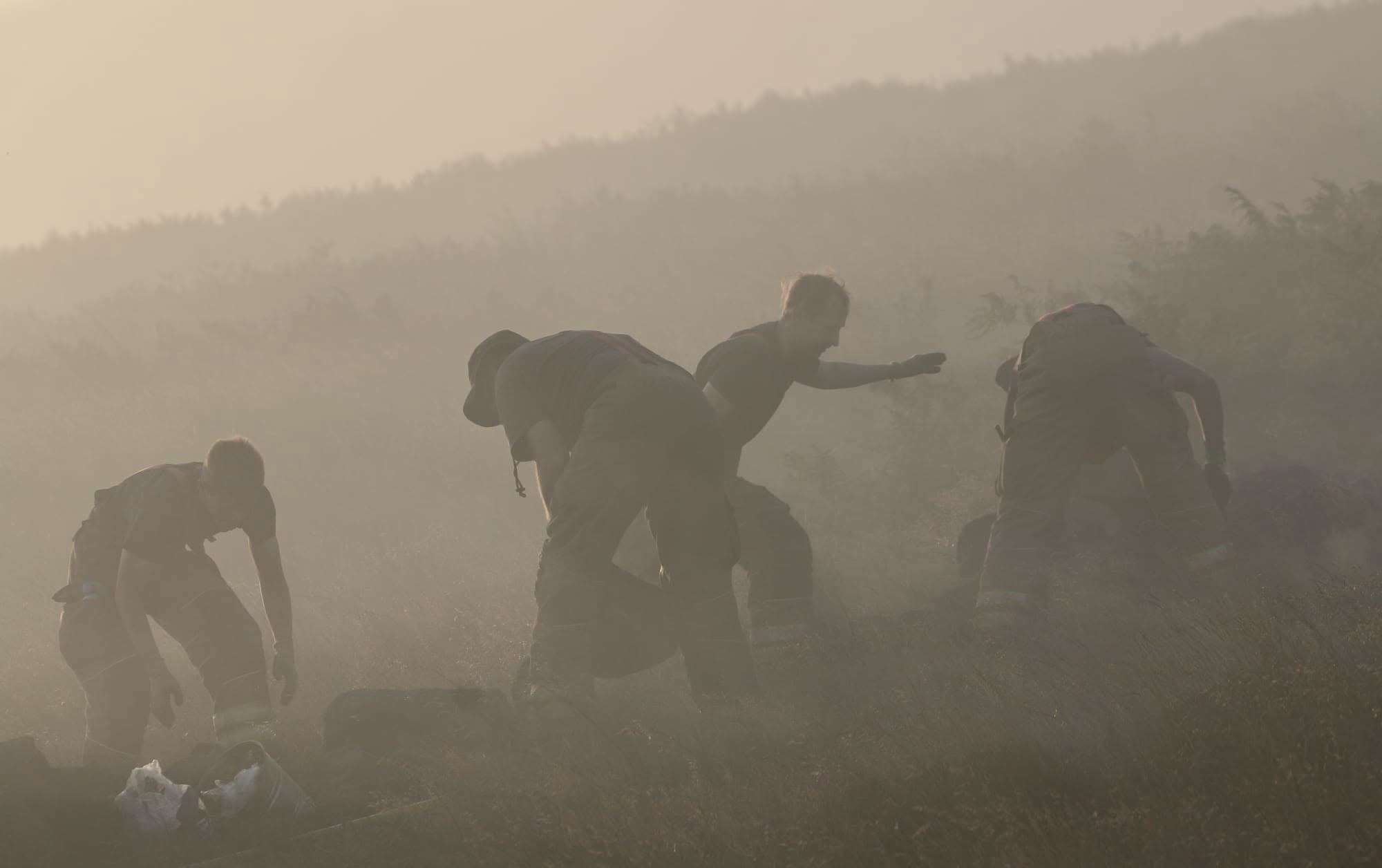
“You’re breathing in the smoke, and it looks and feels post-apocalyptic,” continues Bridgeman. “It’s frightening, overwhelming and just really difficult, mentally as well as physically. When I was out there it was 30 degrees and we actually got called off the fire because it was too hot.”
This year’s moorland fires are not actually caused by climate change, explains Danny Udall, site manager of the Eastern Moors partnership, which looks after moorland around the edge of Sheffield. “Climate change is creating the conditions that make ‘wildfires’ more frequent and severe,” he says. “But the cause is people lighting them.”
The inaccuracy of the word ‘wildfire’ came up in many of the interviews for this piece. Yes, fires are raging across Europe, but almost none of them have truly natural causes, such as lightning strikes. Barbecues, campfires, fireworks, dropped cigarettes, and even castaway heat-magnifying litter like glass bottles are implicated as causes, all left or set by humans.
The word ‘wildfire’ almost absolves us from responsibility, yet Danny claims at least 99.9% of moorland fires have human origins.
On hot summer evenings, teams of rangers and fire-watching volunteers patrol the Peak District’s woodlands and moorland edges, looking for people piling out of cars and camper vans with barbecues or campfires, who’ve often followed leads to exciting summer party spots on social media, sometimes from hundreds of miles away. A few years ago, I was told many people didn’t realise the risks of open fires in dry landscapes. Not so much nowadays, when there are warning signs at pretty much every stile, gate and lay-by.
But, given how many people simply ignore these signs, the BMC Access and Conservation Trust charity has funded a specific wildfire engagement officer for the Eastern Moors: Damian.
He tells me he and a team of volunteers are on duty late into the night checking for illegal fires or barbecues. As he approaches people, he starts a conversation, trying to establish a rapport, he says. Occasionally people respond that it’s only a small fire, and look, they’ve got a bottle of water. So what’s the risk?
“Regardless of how competent you think you are, you can never carry enough water when you need to put a fire out once it gets out of control,” he says.
Huge resources go into Peak District fire prevention. On the Eastern Moors alone, in addition to Damian working throughout the summer, Danny Udall estimates the equivalent of four days a week of ranger and volunteer time is spent trying to stop tourists from setting fire to the place.
And then there’s the cost of the fires themselves: this year’s fires around Dove Stone have required about 500 hours of work from Eastern Moors staff alone in response so far, says Danny, while local gamekeepers estimate they’ve spent more than 1,000 hours dealing with the burning moors. Helicopter flights carrying water on to the fires are likely to have cost £500,000, he adds.
Several local authority areas now have Public Space Protection Orders to enable spot fines and prosecutions against people lighting fires or barbecues around the Peak District. At the moment, Sheffield and Stockport do not. Land managers and firefighters who’ve been out in the smoke and heat this year are urging these councils to change their minds, not least because many moorland fires are likely to have been set on purpose. Perhaps up to 80%, I was told, are “unexplained”.
I joined National Trust crews at a relatively small fire near Baslow a few years ago. Trudging back off a blackened moor through the wisps of smoke still drifting up from the smouldering peat, those on the scene were openly devastated by the loss of landscape and wildlife. They spoke of the bodies of snakes and lizards, dead mice and voles, and burned-out birds’ nests, often belonging to at-risk species like lapwings, plovers or curlews. The suspected cause of the fire I saw back then was arson. Years of careful conservation work had literally gone up in smoke.
Across the Peak District and South Pennines, organisations like the RSPB, National Trust and Moors for the Future are doing their best to restore a landscape denuded by acid rain from the industrial revolution.
After all that hard rain, centuries of overgrazing by millions of hungry sheep, and 200 years of moorland management for game shooting, many of the moors were covered in heather and vigorous molinia (or purple moor) grass, both of which ignite easily in dry weather. Couple that with ever-increasing summer temperatures, and we have a tinderbox just a few miles away.
But there is some heartening news. The restoration of a much more natural blanket bog landscape across the uplands of the Peak District will make this area more resilient to fires, says Moors for the Future conservation and land manager Ted Talbot, and can even act as a natural firebreak. Sphagnum moss, which was previously killed off by acid rain, is now growing again after being planted on moors managed for conservation. This moss holds on to tons of water in the ground, dramatically reducing fire risk. But restoring a damaged moor into a fully functioning blanket bog, bristling with wildlife and water, might take 40 years, Ted adds.
In the meantime, Danny Udall says, we’ll need to bring in water-carrying drone swarms and robot firefighting machines, rather than rely on humans. As our heatwaves and water scarcity worsen, we can’t put humans in PPE in front of a 600 degree fire on a 40 degree hot summer’s day, he argues. We’ll also need these robots' help to prosecute human fire starters too: Peak District fire-watchers already have drones in the air watching for illegal fires and the people who light them.
Looking at Europe this year, and the USA in 2025, I ask if there’s a similar risk to human life around Manchester and Sheffield from the moors above us. The firefighters and moor restorers pause briefly and say yes, there is.
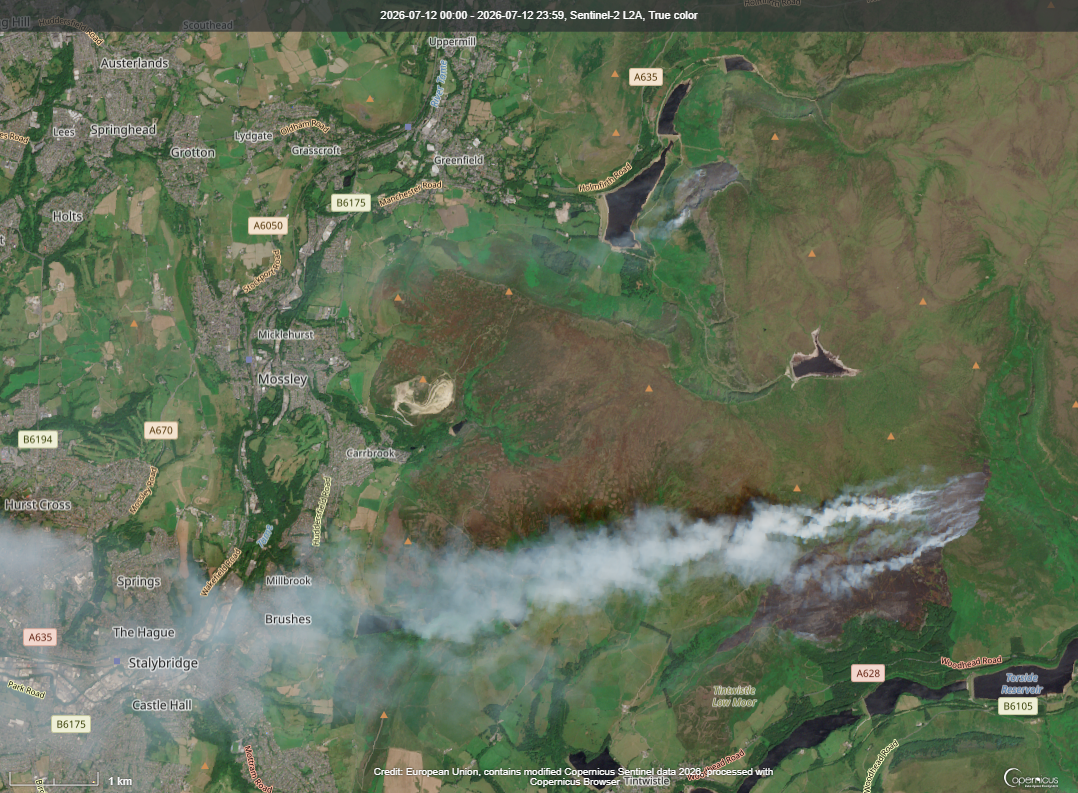
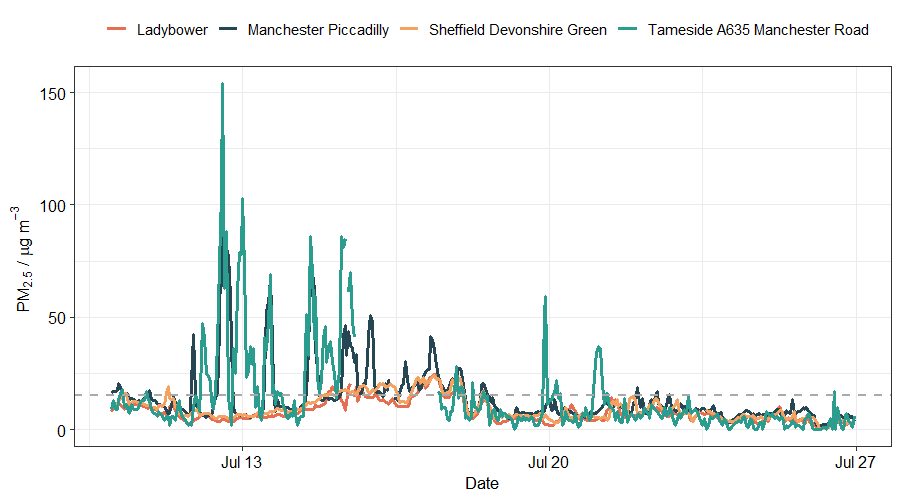
A fire could spread to homes and buildings, but the firefighters themselves are at risk of heat exhaustion and heat stress. And as smoke from Tintwistle plumed into Manchester in early July, air pollution researchers from Sheffield, Nottingham and Manchester universities monitored the PM2.5 pollution it carried: microscopic fragments of part-burned moorland which drift into our lungs, brains and blood vessels. On 12 July, PM2.5s peaked at 150 micrograms per cubic metre at Tameside and more than 100 at Manchester Piccadilly, more than five times the theoretical ‘safe’ limit.
“There were continued days where the air quality was way above the air pollution guideline limits set by the UK government and by the World Health Organization,” says Dr Becky Wagner, “so we know this fire has had a really big impact on Manchester.”
Becky is part of a team developing the Peak Fire Recorder app, to monitor air pollution from burning moorlands. They’re setting up a new network of air pollution monitors around the Peak District, and ask anyone who reports a fire in the national park to then use the app to collect location data by logging fire outbreaks.
Published research by her colleague Dr Ailish Graham from Leeds University, studying a single fire on Saddleworth Moor in 2018, concluded that the pollution it raised will likely have led to the early deaths of at least 24 people.
Back at Dove Stone, the firefighters are getting ready for another trip to the seat of the blaze. One firefighter explains that cooler temperatures and a bit of rain will hopefully mean they can finally leave Dove Stone in the next few weeks. But isn’t it meant to get hot again this week, I ask. “Yeah,” he says. “That could scupper it.”
* If you see a fire, or smoke, on the moors or open countryside, the simple message from the Peak District Fire Operations Group is to call 999 immediately with a location, such as a What3Words or grid reference.
David Bocking also writes about nature, the environment and active travel at: A Bit Black Over Bill’s Mother’s.
 Over Bill’s Mother’s

Hi, Dan here. We hope you found today’s piece about fires in the Peak District interesting and thought provoking. Many local journalists these days spend their lives stuck behind a desk all day, ripping stories from social media or regurgitating press releases. The Tribune does things differently. We want to be able to see, smell and feel what’s actually happening on the ground. That’s why I spent a day this week travelling to Dove Stone and Tintwistle, speaking to firefighters and seeing for myself the devastation caused by these fires. If you think that kind of reporting is what Sheffield needs, please become a paying member of The Tribune. It costs just £8.95 a month or £89 for a full year. Thank you.
If someone forwarded you this newsletter, click here to sign up to get quality local journalism in your inbox.
If you’d like to sponsor editions of The Tribune and reach over 30,000 readers, you can get in touch or visit our advertising page below for more information