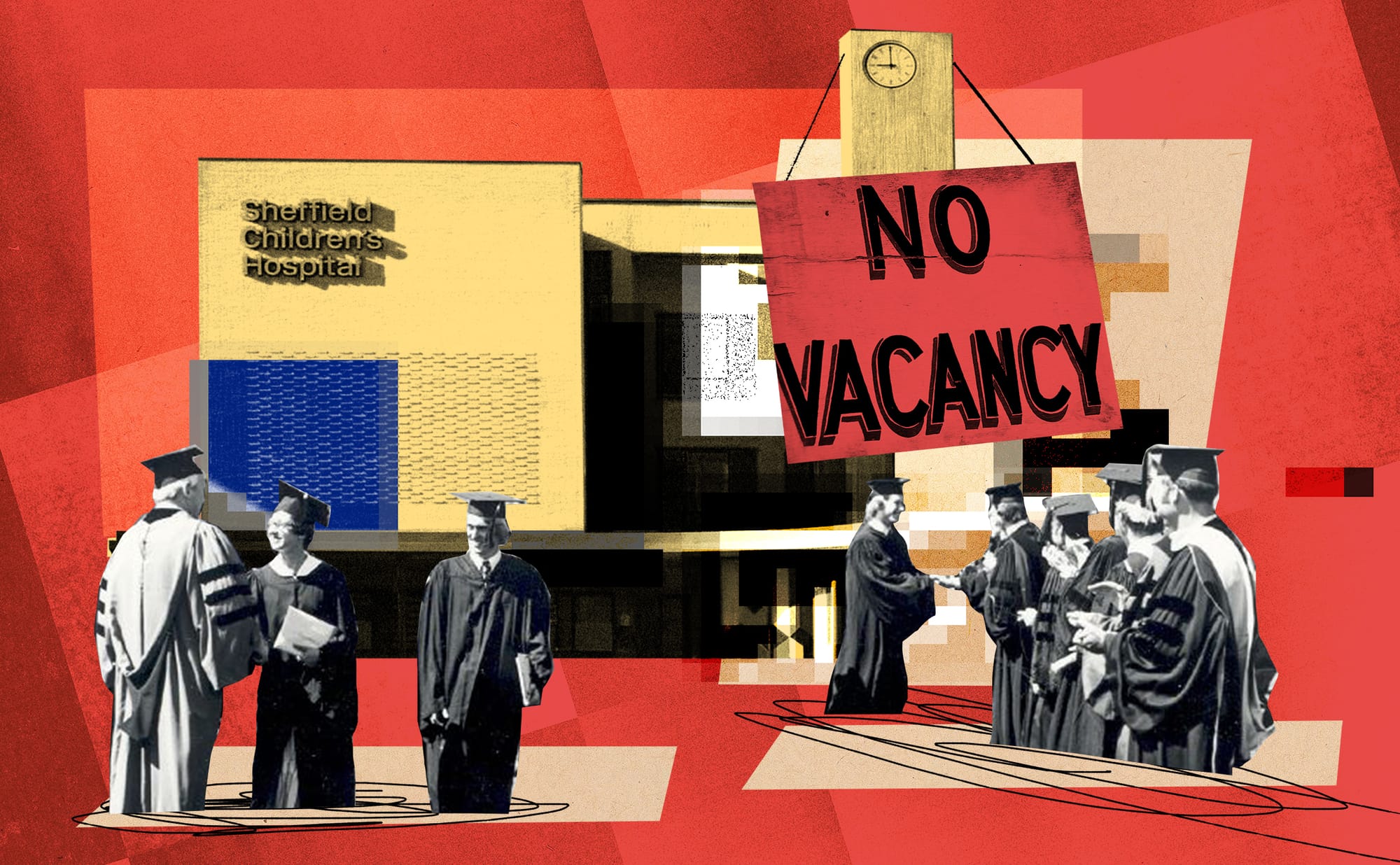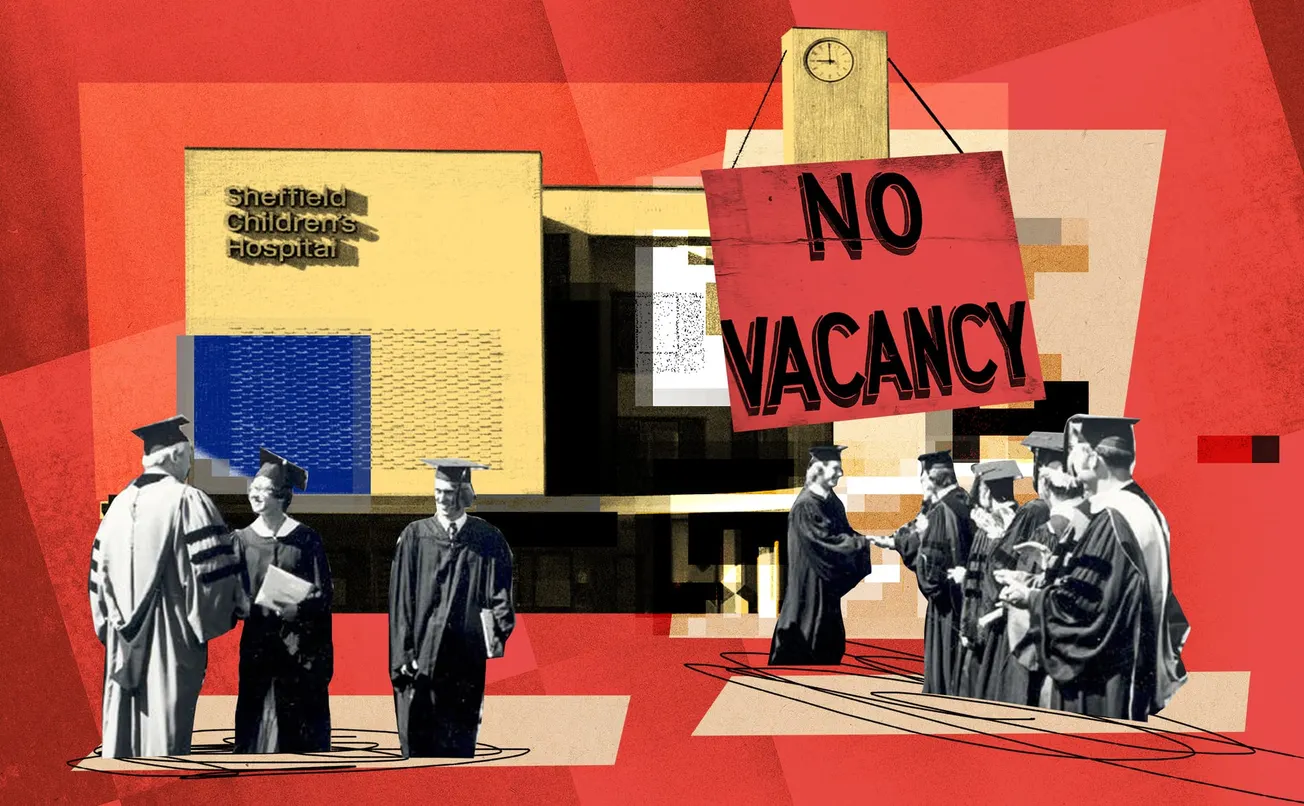
When Katy-Louise Richardson, a newly qualified children’s nurse, started her course at Sheffield Hallam three years ago, she never imagined she’d find it impossible to find a job. Since graduating in the summer, she tells me she’s applied for 10 positions, some of which would require her to commute two hours to work each day, and has not even been invited to a single interview. As far as she can tell, the majority of her coursemates are in the exact same position.
It’s disheartening, she admits, defeating even. In addition to her studies, she views the hospital placement she completed as part of her course as 2,300 of unpaid work — a common refrain from graduates, although the NHS would disagree with this framing. These gruelling efforts seemed worthwhile to her at the time because she’d been led to believe she was guaranteed a job at the end. “Ever since I can remember, child nursing has always been my dream,” she says. “It has always been my career path.” Another student, who asked to remain anonymous for fear of making her job search even harder, is feeling similarly deflated. “We have worked so hard for this, only to end up with nothing at the end of it.”
I’ve been a nurse at Sheffield Children’s Hospital for more than 15 years and, in my personal view, the job market for newly-graduated children’s nurses has never been quite so competitive as this. Though my career path has not been linear, back when I graduated in 2001, the promise that my peers and I would be able to breeze into a position at a local hospital was still largely true. This year, I’ve had the pleasure to work with some fantastic students who completed their placements at my hospital, nurses who I would have happily hired on the spot. It breaks my heart seeing so many of them receiving rejection after rejection and growing increasingly discouraged.
When I first began looking into this problem in July, the student nurses I spoke with were in total agreement about where to lay the blame. As Katy-Louise puts it, “the main cause of this issue is a lack of communication”. To her, and many of her peers, it seems obvious that Sheffield Hallam accepted as many students as it could, desperate to fill its coffers with their tuition fees, with no regard for whether the region’s hospitals would be able to employ them. At least at first, this theory made a lot of sense. After I began to investigate, however, my belief in this tidy narrative was shaken.
This story is free to read. You just need to sign up to join The Tribune's mailing list. And why wouldn't you? You'll get our journalism in your inbox the second we publish, keeping up to date on this and all our stories. No card details required.
Already have an account? Sign In