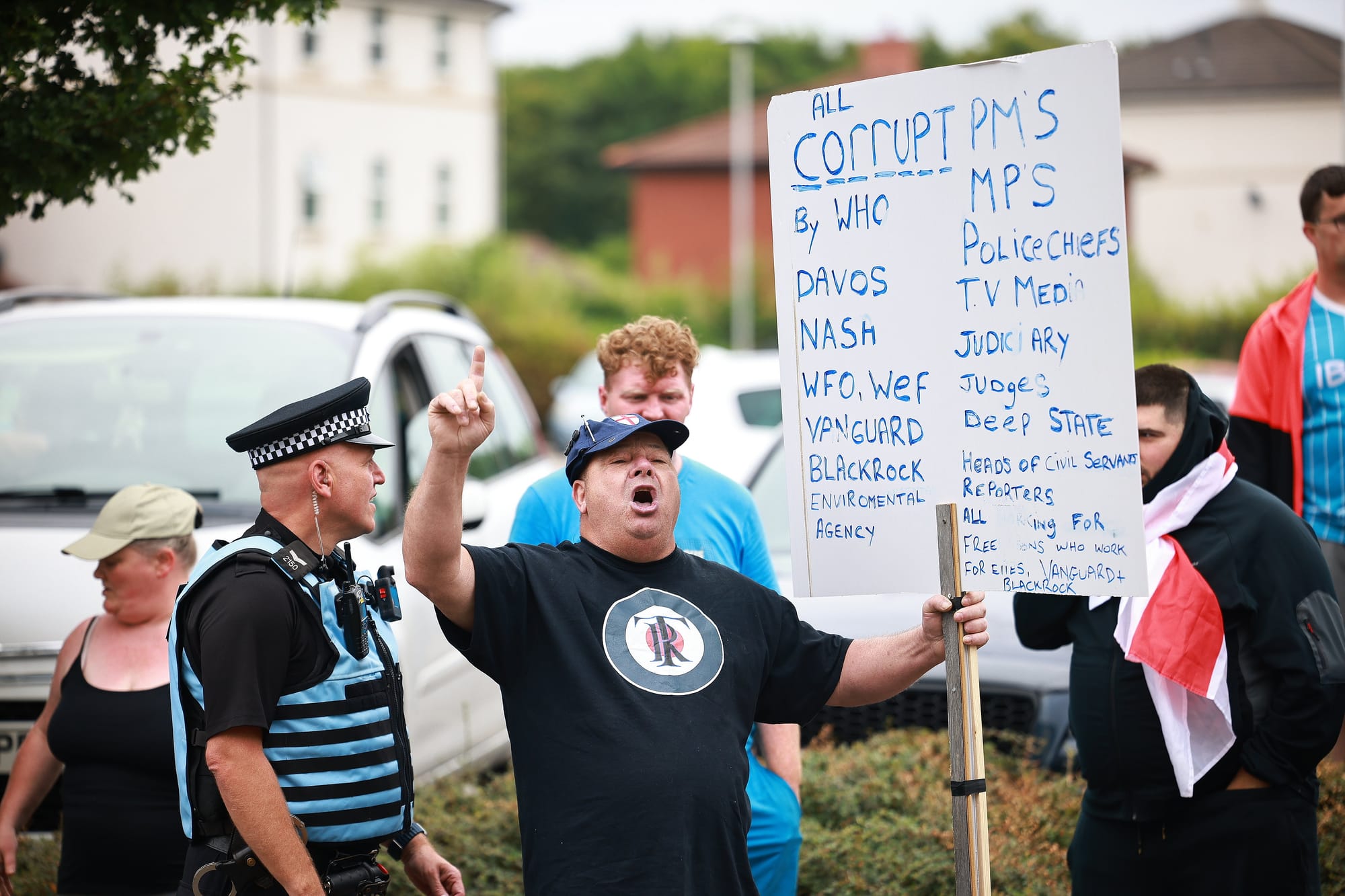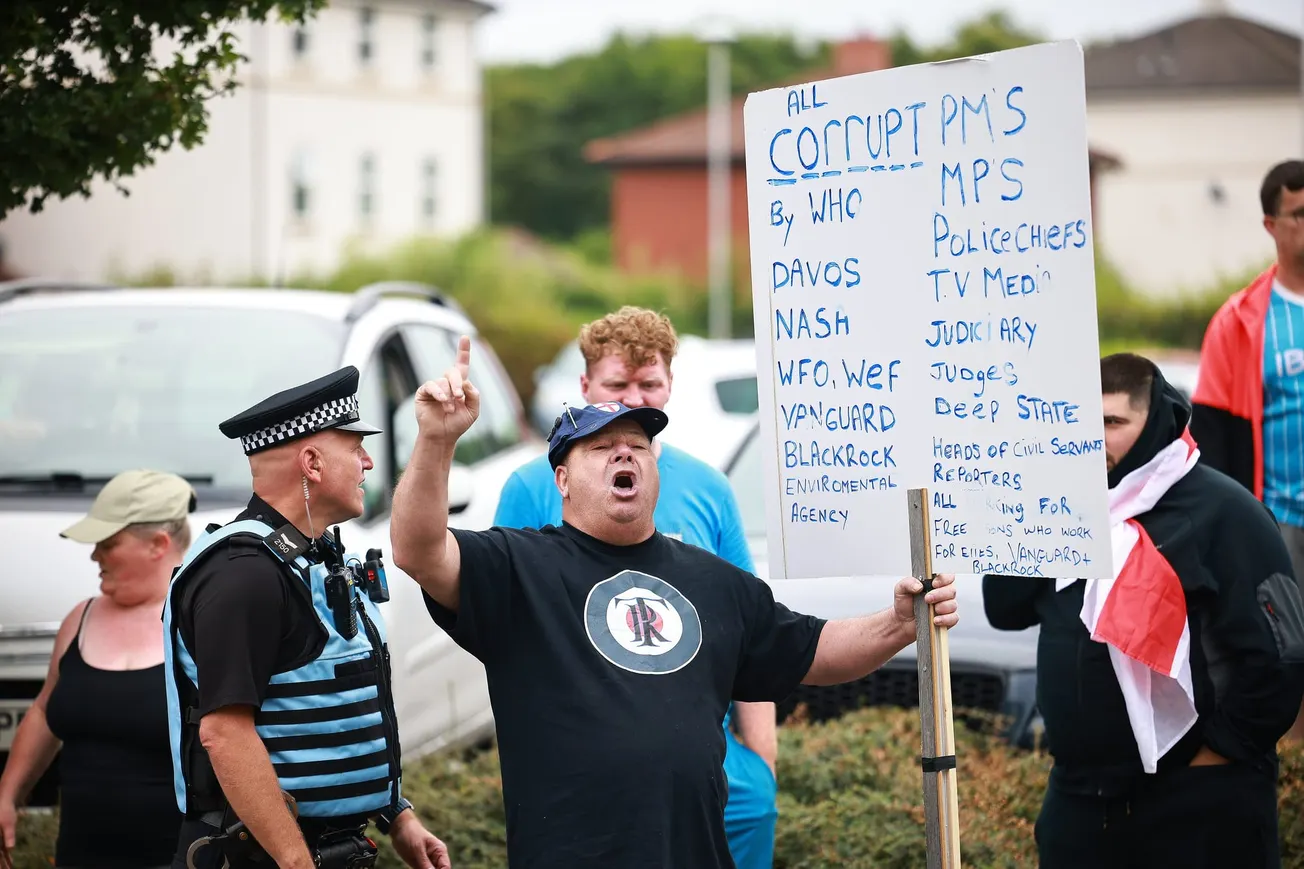
Eight days into the two-week inquest of Peter Lynch — a Rotherham grandfather jailed for his part in the 2024 riot outside an asylum seeker hotel — the tension that has been simmering since the beginning finally boils over. After a short shouting match with the lawyer representing his family, coroner Nicola Mundy orders the jury out, retires to her private chambers and, minutes later, abruptly boots everyone out of court. Her staff periodically emerge from the locked room to apologise that they can’t tell us what is going on, before eventually sending us for an early lunch.
It’s no surprise that this inquest proved explosive, on more than one occasion. Following his death two years ago, Peter Lynch went from a total unknown — one of 120 people sentenced for taking part in a mob several times that size — to a right-wing cause célèbre. “Peter Lynch was one of us,” Tommy Robinson posted to his approximately one million followers on X at the time. “Tormented to suicide? Away from his family!” A week after his death in late October 2024, thousands attended a demonstration which Robinson organised in his memory, with some wearing custom t-shirts that declared “I AM PETER LYNCH”.
Just days after his death, Telegraph columnist Isabel Oakeshott wondered whether the 61-year-old was Britain’s “first political prisoner” before describing his sentence and eventual death as “a stain on the British state”. The Guardian’s Owen Jones argued jailing those with racist views could never cure them of their bigotry. But the media’s fascination with Lynch hasn’t extended to time-consuming reporting about his death. For all but the first and last two days of his inquest, I was the only journalist in the room.
Back on day eight of proceedings, we are eventually allowed to shuffle back into Doncaster Coroners Court. “What happened before, frankly, I hope I never have to see again,” coroner Mundy tells us sternly. “In 20 years sitting as a coroner, I have never been subjected to such open disrespect in court.” Though this specific argument began after she objected to some of the body language displayed by the family’s barrister Richard Copnall — she alleges he has been looking at the ceiling, raising his eyebrows and pulling faces — it’s not the first time she has grown frustrated with him. At several points, she steps in when Copnall attempts to challenge witnesses on whether Lynch’s actions, both outside the hotel and in prison, were actually racist. “I have said many times that this inquest is not to prove whether Mr Lynch was a racist,” she tells him at one point, “but rather to explore his mental health.”
After Copnall apologises to the court “unreservedly,” adding that “no disrespect was intended,” coroner Mundy seems satisfied that we can resume. “I want to put the focus firmly back on Mr Lynch,” she insists.
Many readers will be familiar with the disturbing events that took place outside a Holiday Inn in Manvers on 4 August 2024, but it’s worth outlining Lynch’s involvement that day.
This story is free to read. You just need to sign up to join The Tribune's mailing list. And why wouldn't you? You'll get our journalism in your inbox the second we publish, keeping up to date on this and all our stories. No card details required.
Already have an account? Sign In