
Dear readers — a warm welcome to all of you who joined us as paying subscribers over the past few days. This weekend was the biggest moment of growth in the campaign, with dozens of you signing up and sending us encouraging messages.
The point of this campaign is to add 1,000 members by 21 June so we can fulfil five pledges that will make Sheffield even better: they include talking about disinformation in schools, publishing a monthly good news edition and reporting on the city’s inequalities. The whole team has been hard at work delivering print editions around the city and begging friends and family members to share this link so we can bring The Tribune to a significantly larger audience and reach our goal.

We’re now in the second half of the campaign, and we’re almost halfway on the numbers: 492 of you have signed up to get us to make good on our promises.
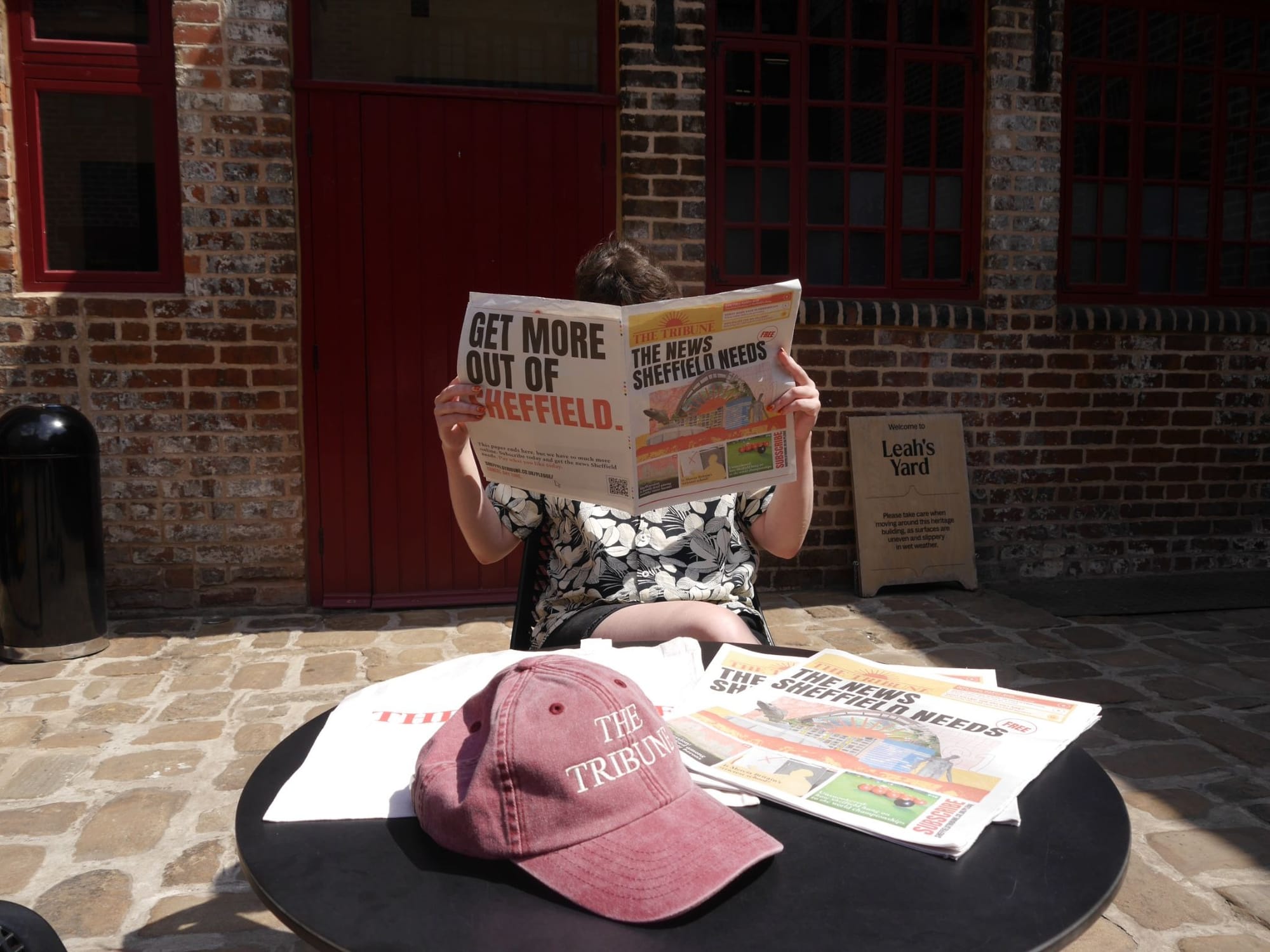
What that tells us is: this is doable. Our slightly insane bid to hit 1,000 might actually come off, though we’ll need lots more of you to take the plunge. We’ll be looking out for the name of the 500th person to join us in our campaign push and that lucky paying subscriber will receive a Tribune hat, tote bag and a print edition as a thank you.

Take on tinnitus with local experts
Peter Byrom is a local audiologist on a mission: to help Sheffielders living with tinnitus get help with a condition that can cause isolation and frustration. On Saturday, 13th June, Byrom Audiology is hosting a free event all about how to live with, and manage, the condition. It will include expert talks, a Q&A and information on modern treatment options.
If you, or someone close to you, suffers with tinnitus, head to Kenwood Hall Hotel on Saturday 13th June. Grab your tickets below.
Interested in sponsoring The Tribune? Get in touch.
In case you missed it
For our Tuesday story, regular freelancer David Bocking stood knee-deep in wild buttercups and daisies and spoke to rewilding experts about their efforts to brighten up Sheffield by keeping grass verges and meadows unmowed. “Informative and quietly inspiring,” wrote James Whitford in the comments.
On Thursday, Victoria reported on a freak accident in a flat in Kelham Island last November when an extension cable caught fire, and how the evasive developer Nu-Build Group were able to get away with installing a faulty sprinkler system in the apartment block. “I’m 99% sure this is a cover-up,” one resident says, “rather than anything that has slipped through.” Paying subscribers can read this piece here.
And over the weekend, we published the harrowing story of three Czech siblings trying to escape Nazi-occupied Europe in 1939. While two made it to Sheffield and began new lives, one was forced to stay behind and met her end at an extermination camp in Poland. “A story that should be told as widely as possible,” wrote Vitho in the comments. “Sheffield proudly continues to be a city of sanctuary.” That story is free to read.
The big picture: Roots of greatness ⚽
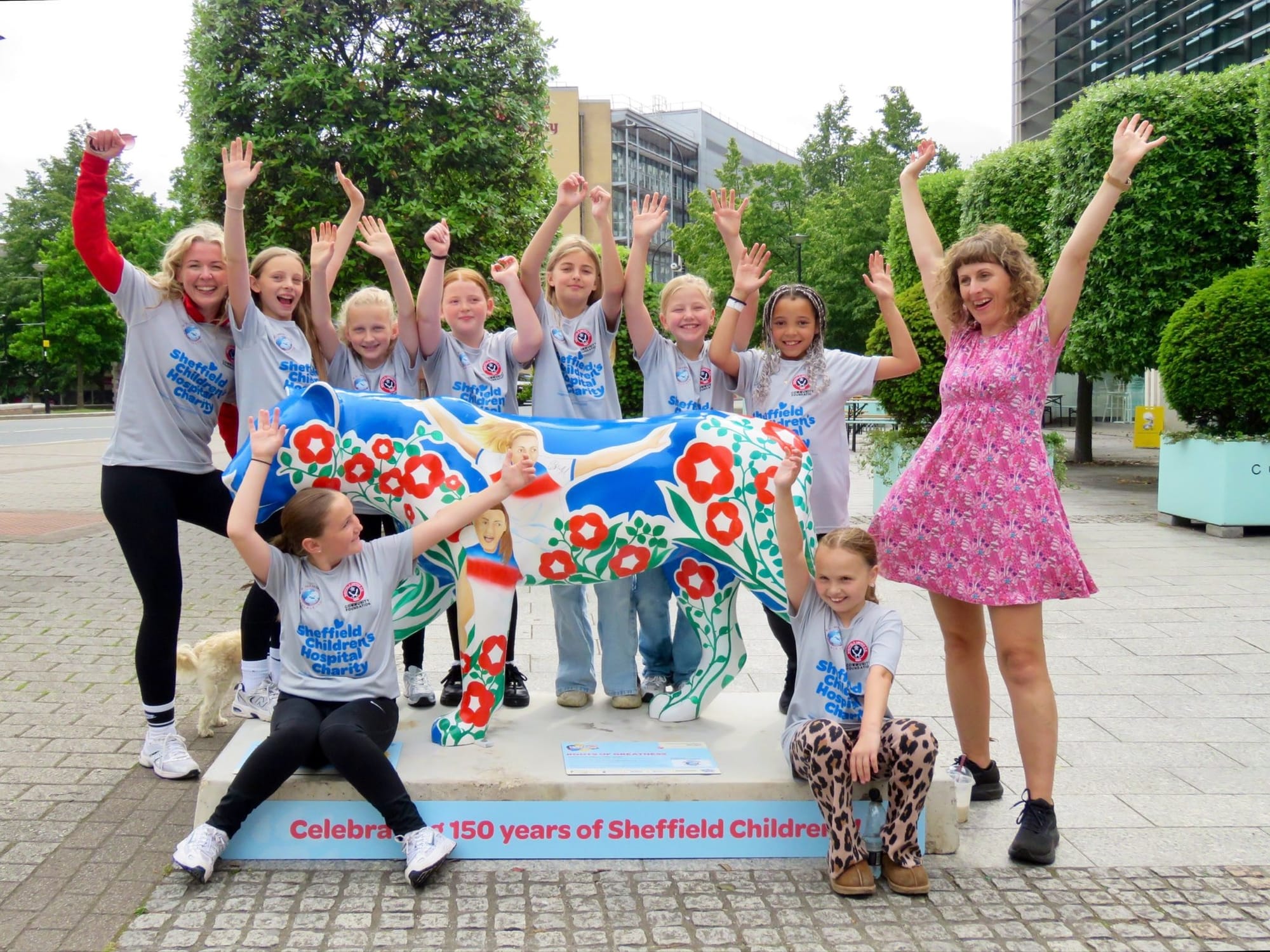
The wait is finally over: The Children’s Hospital Charity’s Pride of Yorkshire sculpture trail has begun. 150 lions and lionesses created by local artists, and 150 lion cubs created by schools and community groups, are now on display across South Yorkshire. Pictured are the Sheffield United Community Foundation Under-11 girls team unveiling Roots of Greatness by artist Nicole White, which celebrates the England Lionesses and is signed by Sheffield’s Esme Morgan. For a full list of all the locations, visit the Pride of Yorkshire website.
The big story: Academic boycott of University of Sheffield begins
Top line: The University and College Union (UCU) has called for academics around the world to boycott the University of Sheffield, in response to what UCU general secretary Jo Grady has described as “horrific union-busting tactics”. Academics are being urged to refuse to speak or organise events at the university, give guest lectures, accept visiting professorship positions or agree to act as external examiners until the boycott comes to an end.
‘Double deductions’: David Hayes, the president of the university’s UCU branch, said academic boycotts are “essentially the highest form of sanction that our trade union can inflict on an employer”. The last time he’s aware of this measure being taken was against Goldsmiths, part of the University of London, in 2022.
The UCU called for the boycott in response to the university’s decision to deduct the wages of staff who have gone on strike, even after they have returned to work. For example, when staff went on strike for 16 days in November and December last year, their wages were deducted for these 16 days and an additional 15 days. Last month, academic staff who went on strike for six days saw 11 days deducted from their salary in total. “Over the course of the academic year, members have been on strike for 22 days,” Dr Hayes explained. “In response to those 22 days of strike action, they have imposed 42 days of pay deductions.”
‘Disproportionate and unfair’: While staff have no issue with their wages being docked for the days they are on the picket line, the UCU insists the additional wage deductions are disproportionate and unfair. “It’s nakedly for the purposes of punishing people and deterring them from taking part in future strike action,” Dr Hayes said, adding that the union had seen slightly fewer staff willing to take part in the strikes in May. “Thanks to donations from other branches and other unions, we’ve been able to weather the storm reasonably well but it has created a lot of stress and uncertainty for members.”
“It’s also created a lot of bad blood in some departments, between the heads of department — who are the ones who have to monitor what’s going on — and striking staff,” Dr Hayes added. “That will make the workplace a lot less pleasant for a lot of people.”
Why extra wages were docked: As the Tribune reported previously, the University of Sheffield is only deducting additional wages if academics refuse to reschedule teaching hours that were missed while they were on the picket line. Since not all UCU members are academic staff or teach students directly, not all striking staff have had extra deductions applied. A spokesperson told Research Professional News that wage deductions were only affecting around 50 individuals from a workforce of approximately 8,600, the equivalent of less than 0.6% of staff.
“We respect the right of staff members to participate in industrial action and understand this decision is not taken lightly,” a university spokesperson told The Tribune in December. However, they insisted that staff who refused to make up lost teaching had made “the choice to breach their contract” of employment. “This approach follows Office for Students’ (our regulator’s) expectations to ensure students receive the education they are entitled to with minimal disruption.”
Picking your own scab: According to UCU general secretary Jo Grady, however, asking staff to negate the impact of their refusal to work is essentially an attempt to “force staff to scab on their own strike”. Dr Hayes says that, in some cases, staff are being financially punished for refusing to replace only a small number of lost hours. “During January and February, I only had three hours of lectures to make up and, in return, I lost 15 days of my salary,” he said. When The Tribune spoke to university staff in December, many pointed out that, while the OFS guidance instructed universities to “prioritise” replacing lost learning, institutions are also given the option to financially compensate students for missed lessons instead. Newcastle University, for example, paid out more than £1.7 million to students affected by strikes last year.
The boycott: As Dr Hayes explains, the ways academics are being asked to snub the University of Sheffield are mostly “quite symbolic” and will have no “immediate impact on the university’s bottom line”. However, the final request — asking academics not to sign new contracts to become external examiners — may prove slightly more painful.
At the end of each academic year, the grades given to students in every course are checked over the course of three meetings by the relevant exam board — a group of academics from that school of study. Each exam board must have three to six “external examiners” — academics from outside the University of Sheffield — to ensure the university is not being overly lax to boost its students’ grades. “Otherwise the university could mark its own homework,” says Dr Hayes.
Since the boycott was announced last week, Dr Hayes alleges that around half a dozen existing external examiners have resigned from working with the University of Sheffield. If they can’t be replaced, this could affect the end-of-year results for students at the university.
University response: A spokesperson for the University of Sheffield said:
“Like many UK universities, we are adapting to changing sector demands and shifting student enrollments and our priority remains safeguarding Sheffield’s world-class education and student experience. We are disappointed that UCU has decided to call for an academic boycott…
“We have already made several significant offers to UCU to resolve this dispute, including a guarantee of no compulsory redundancies until October 2026, which the union rejected. Our focus remains on continuing to work with our trade unions on a constructive and fair path forward that supports our students and ensures Sheffield’s world class teaching and research continues to thrive.”
Your Tribune briefing 🗞️
📃 Sheffield Heeley MP Louise Haigh is “working day and night” to win the Makerfield by-election for Andy Burnham, according to this insightful piece in the Sunday Times, which describes her as the person “everyone in Labour wants to impress”. Deputy political editor Lara Spirit writes that since Haigh joined his campaign to return to parliament, Burnham “has run a notably more successful operation”, and notes her success at bringing together like-minded MPs. “I think she’s just very interested in people,” said a cabinet minister close to Haigh, noting her return to cabinet now seems inevitable.
📉 South Yorkshire Mayoral Combined Authority has yet to conclude its investigation into whether senior staff members at Sheffield College committed exam fraud to secure higher levels of public funding. Last July, we revealed claims that pass rates of over 90% were for English for Speakers of Other Languages (ESOL) courses were considered unreasonably high. With ESOL courses, achievement rates are linked to the funding the college receives. A college is allowed to claim 75% of the possible funding from the Adult Skills Fund – administered by the combined authority – if a student attends ESOL courses. The remaining 25% of funding is released if a learner passes their exams.
Data from the Department for Education shows a steep drop off in the pass rate in the 2024/25 academic year. Staff had raised the alarm internally just before this academic year began.
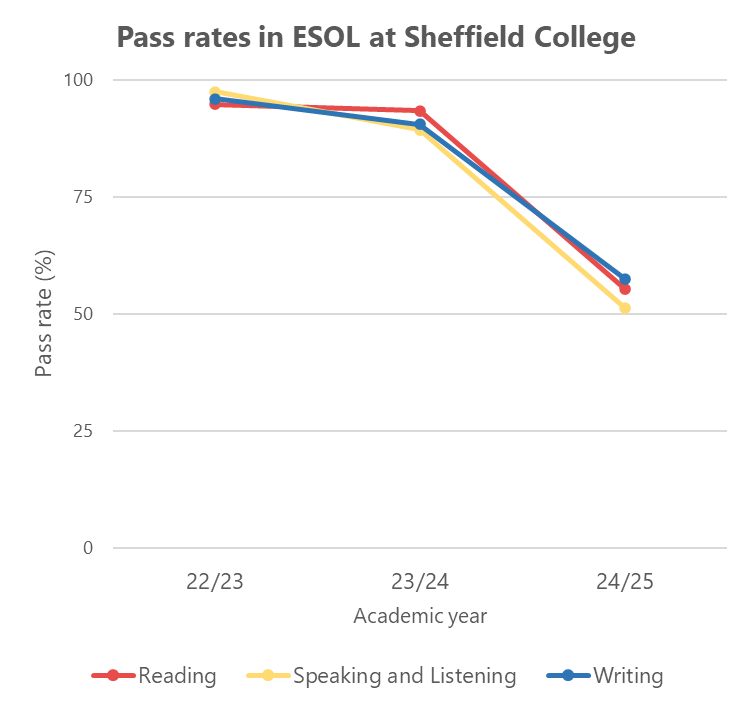
In response to this new set of data, Sheffield College referred us to a recent press release which insisted these results are the outcome of “enhanced quality assurance processes” brought in after senior leaders identified some “unsatisfactory practice”. The college has not offered comment on the students from previous academic years who may have passed their ESOL courses despite not meeting the necessary grade requirements, and may now face a disadvantage, being thrust into work or further study without the English language skills necessary to help them thrive. Nor would the college comment on the fates of the four senior staff members who were suspended in connection with the investigation. As ever, if you’d like to tip us off anonymously about this story, the person to contact is mollie@sheffieldtribune.co.uk.
🗳️ Long term readers may remember James Holmes, the Sheffield man who last year erected a 100 foot wide Union Jack flag on a building in Chesterfield. Well, Mr Holmes has been getting about a bit. Yesterday, a video was posted to X (formerly Twitter) purporting to be a “Makerfield resident” confronting Greater Manchester Mayor Andy Burnham about his supposed lack of support for a full investigation into group-based child sexual exploitation. However, as shown by Holmes’ Facebook page, the man confronting Burnham is actually our old friend, who is campaigning for Rupert Lowe’s Restore Britain in the constituency ahead of the by-election on 18 June.
🏠 Does Andrew Milne own your freehold? If so, a group of leaseholders have come to an outline agreement with Milne to buy their freeholds, which is also being offered to anyone in this position. Contact James Gray on leaseholdhelp25@gmail.com if you'd like to find out more.
The weekly Whitworth ✍️
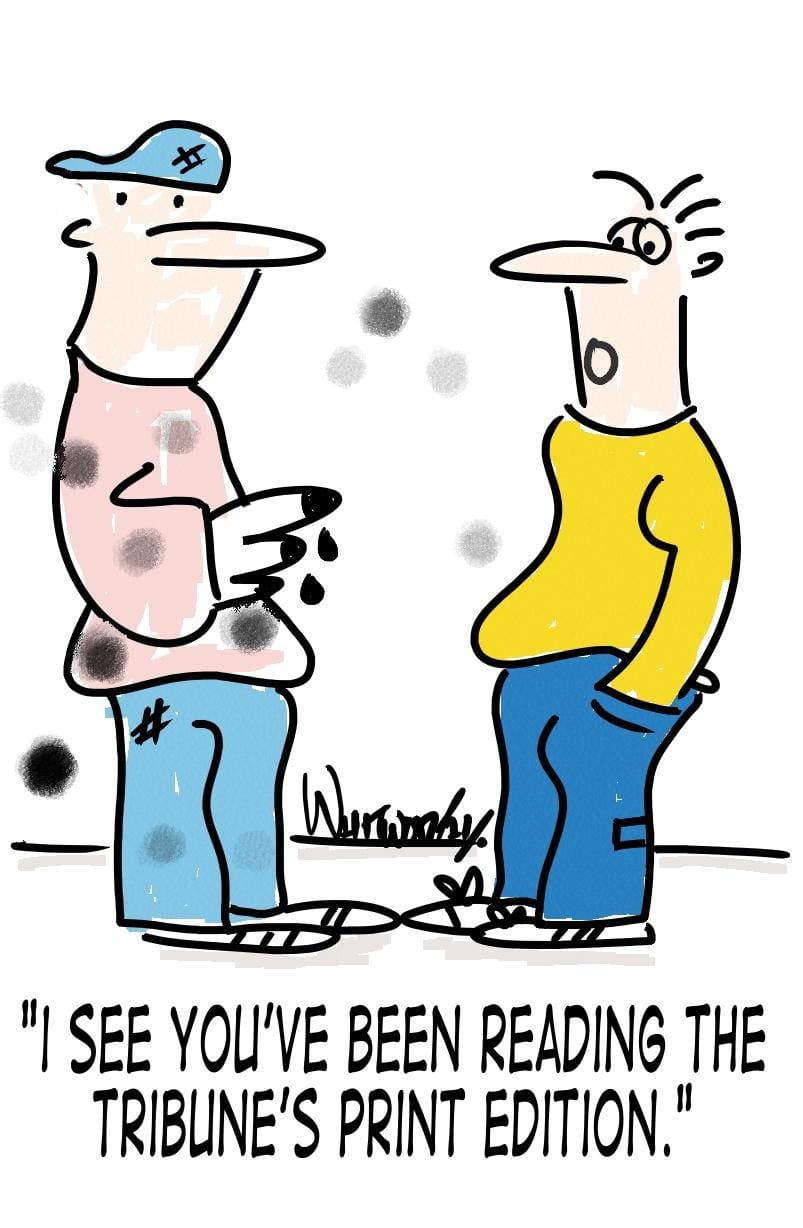
Cartoonist James Whitworth on one drawback of The Tribune’s print edition — newsprint all over your fingers! You can still get a copy of the one off paper in lots of venues across the city including I Said Bread in Meersbrook, Abbeydale Beerworks, La Biblioteka, Union Street and many more. If you can't find one, pop into Leah’s Yard and pick one up at our office.
Home of the week 🏡

This two bedroom terrace in Lower Walkley has a lovely rear garden with far reaching views, and is also a stone's throw from the beautiful Rivelin Valley. It is on the market for £180,000.
Things to do 📆
Theatre 🎭 On Tuesday, the Tudor Players return to the Library Theatre with The Whitby Rebels, a new comedy based on the incredible true story of Captain Jack Lammiman. In Whitby Harbour, in the summer of 1991, a humble pleasure boat set sail for the Arctic. The mission? To erect a plaque on a volcanic island hundreds of miles north of Iceland. The Whitby Rebels is a joyful and (mostly) true story of British eccentricity and determination!
Film 🍿 This Wednesday sees the start of Sheffield DocFest, the 33rd year of the UK’s leading documentary festival. The six-day festival features 104 films including documentary features, shorts, docuseries, plus podcast live events, immersive and extended-reality exhibitions, workshops, and talks. The festival opens with We, The Hated, a documentary about environmental campaigners Just Stop Oil. The festival runs until Monday 15 June.
Art 🖼️ Starting on Thursday at Yellow Arch Studios is The Promise, a new exhibition of paintings by Sheffield-born artists Paul Allender. Growing up in a slum in Neepsend before moving to the Parson Cross estate, Allender’s work focuses on his working class upbringing but also touches on themes of creativity, playfulness, excitement, aspiration and even joy. The exhibition runs until Saturday, June 20. For a preview, see this piece in Now Then.
If you’d like to sponsor editions of The Tribune and reach over 30,000 readers, you can get in touch or visit our advertising page below for more information