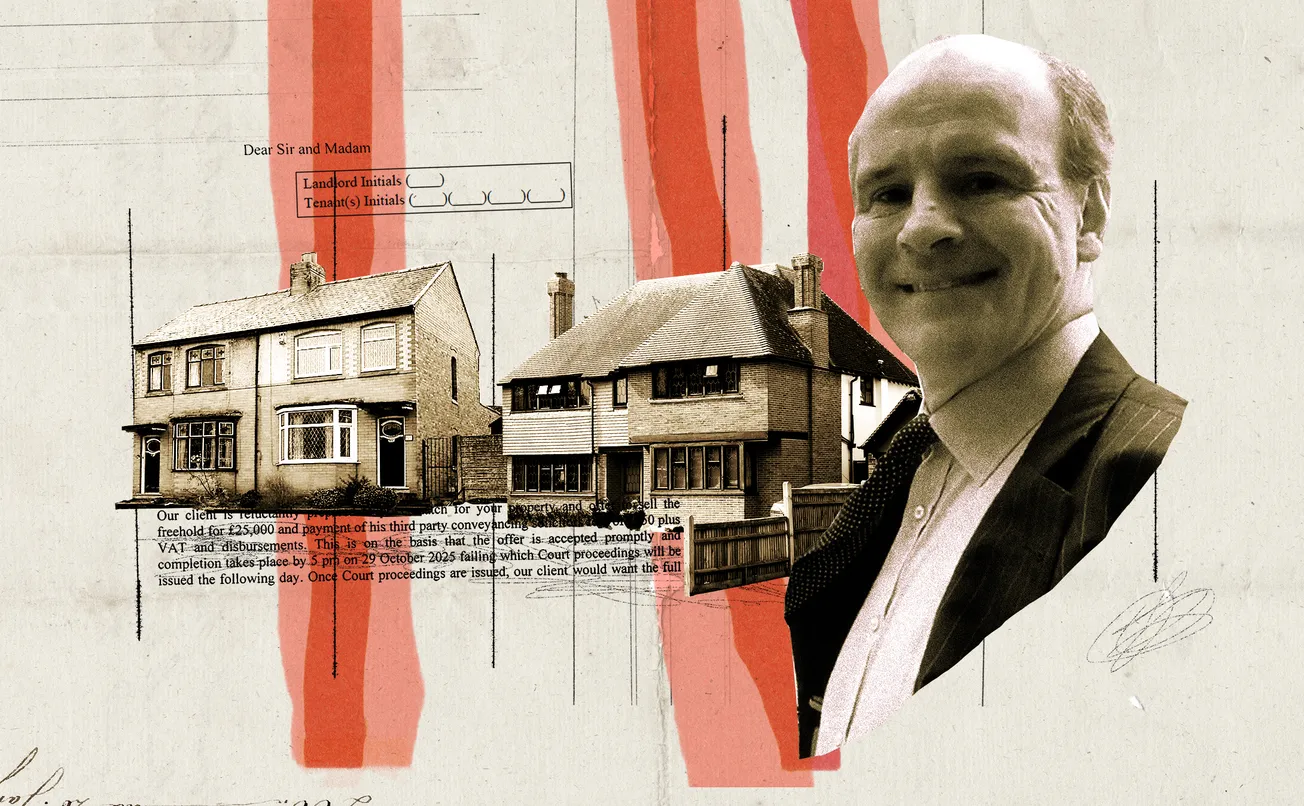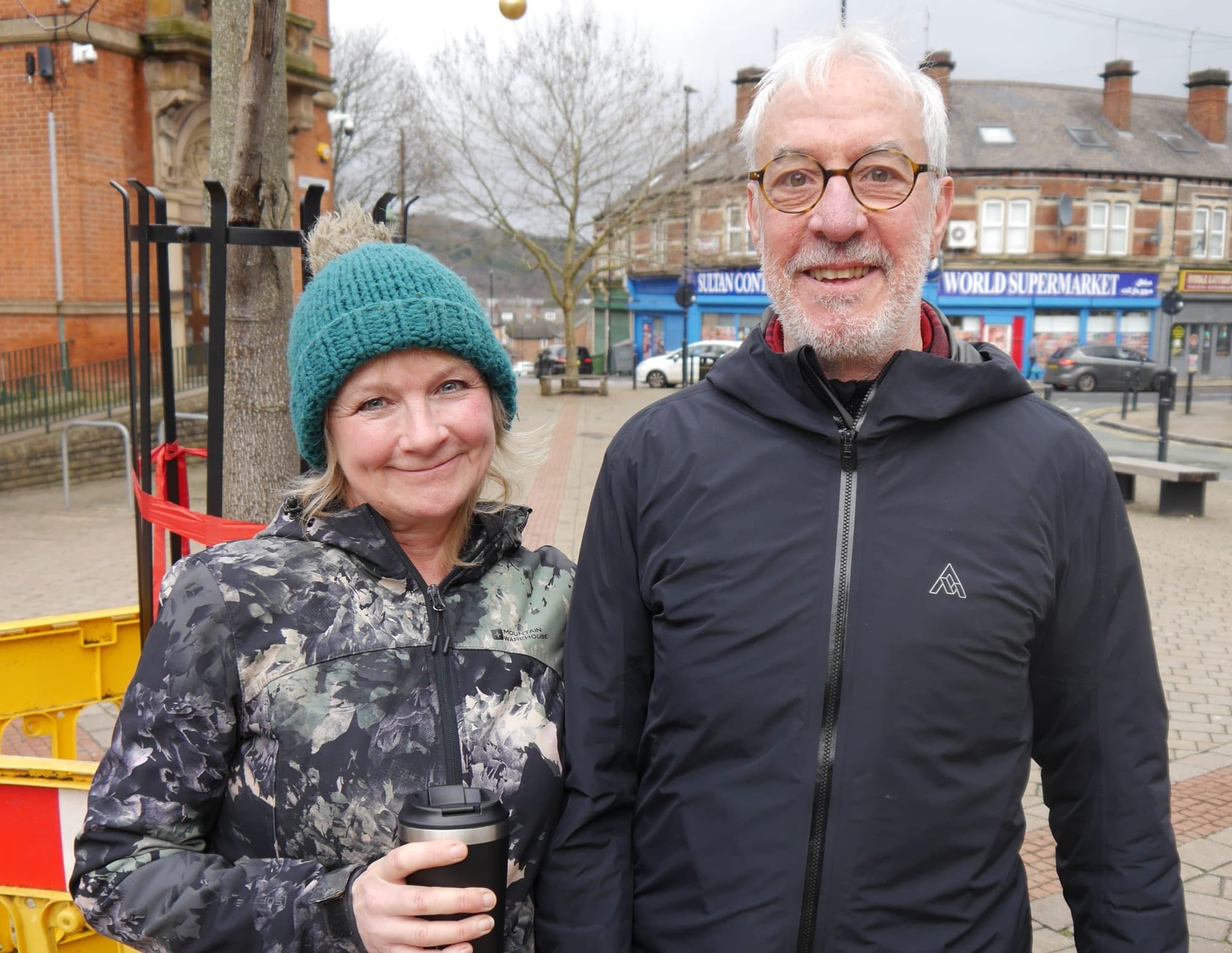
David Lipka has an oddly specific dream. He wants a bollard. Not just any bollard, he clarifies, but a collapsible bollard. Like Taylor Swift on stage at Wembley flanked on either side by dancers, this new bollard would be the star of the show – standing in the centre of a row of existing bollards at the northern tip of Upperthorpe precinct. A sleek black finish would be preferable, he muses, for uniformity. But Lipka, a man with greying hair, a craggy face and an intense stare, is tired of waiting around. The most important thing is that it turns up.
Why, when there are already half a billion bollards in the world (according to the World Bollard Association) is Lipka so fixated on adding one more to the tally? Because without it, there’s a space wide enough that motorists have been able to squeeze their cars through, parking their cars on Upperthorpe precinct. Something that was meant to be a public space has eroded into a car park.
It’s definitely a hot topic. When I pop into the Zest Centre, and announce the reason for my visit, a staff member barely suppresses an eye roll. “We all have opinions on the bollard,” he says.
To explain what happened, we need to go back. The precinct was created in the 90s. With its cobbled paving, two trees, a planter of flowers and a bench, it was designed to give Upperthorpe’s citizens a public space where they could congregate. This haven (“It’s a sun trap. At times it can be too hot”) was protected by a row of black shiny bollards — keeping the cars out.
That was until the fateful day, believed to have been some time in 2004 or 2005, when one of them was knocked down. “It was probably something as simple as a bin lorry reversing into it one day”, one person tells me. Danny Watson, a former caretaker at Upperthorpe Healthy Living Centre (now the Zest Centre), can speak more authoritatively: he claims he was on duty when a minibus filled with disabled passengers careened into the bollard, knocking it clean off. “Who knows?”, he says, when I ask how the crash happened. “Bad driving? Lapse in concentration?”
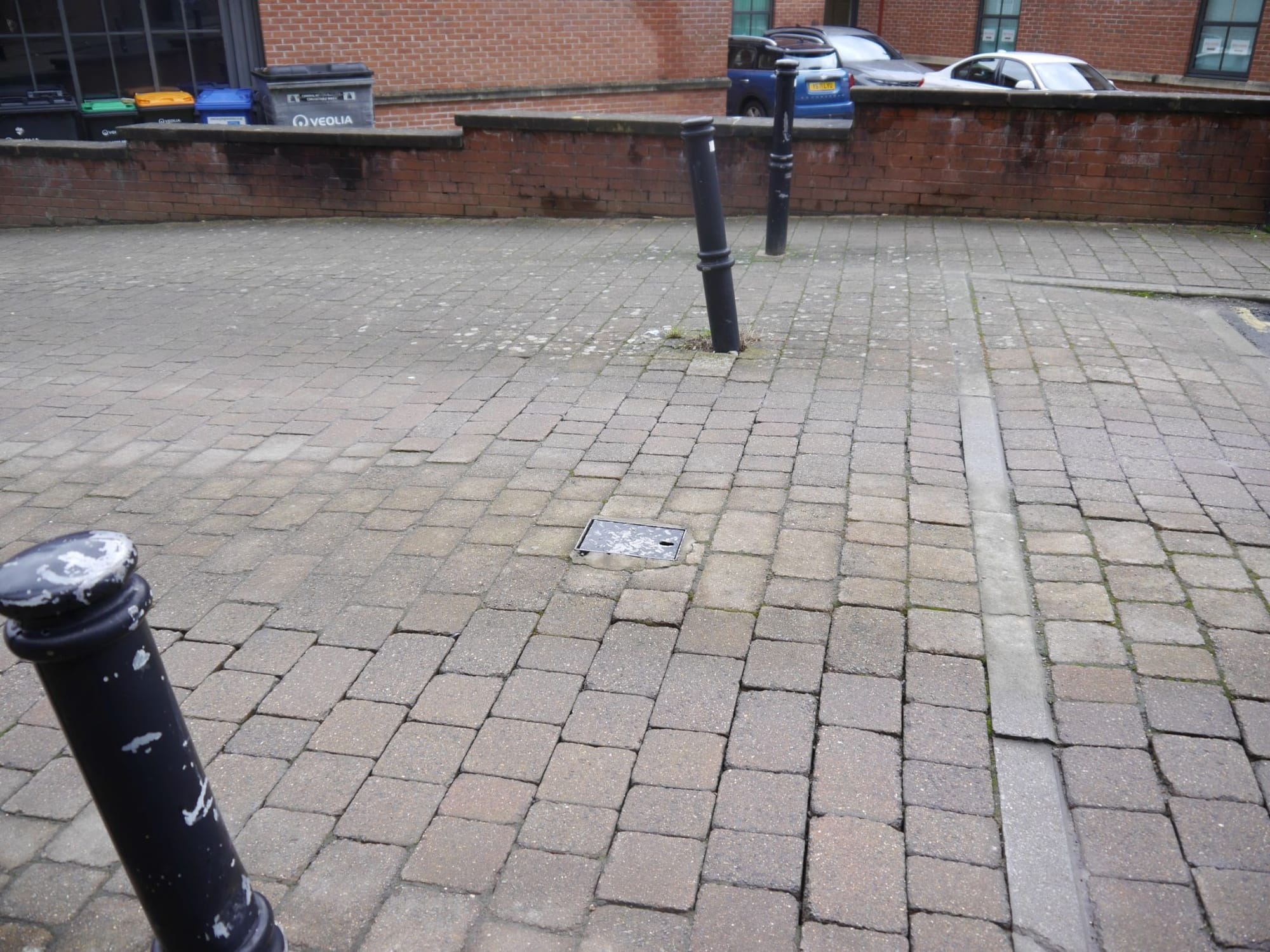
That moment set a precedent. In the weeks between its destruction and the council sorting a replacement, motorists noticed a gap and started to sneak through, circling around the tree that sits in the middle of the precinct as though it were a mini roundabout, before parking their cars in neat rows at the edge. More cars followed.
The replacement arrived, this time a removable bollard, and was placed in the care of Upperthorpe Healthy Living Centre. Staff were required to remove and reinstall it each time drivers transporting disabled passengers wished to drop people off right at the door (roughly in the middle of the precinct). Given the community centre holds the proud accolade of being the only fully accessible swimming pool in Sheffield, this was quite often.
The rumour goes that staff, tired of this back and forth, and exhausted from hauling a heavy steel bollard on their shoulders, eventually adopted a practice where it would only be reinstalled on special occasions – like when the community centre wanted to host a Jamaican Independence Day celebration or Eid parties on the precinct. Otherwise, it doesn’t come out very often. I ask Matt Dean, the chief executive at the Zest Centre if I can see it. “It might be difficult to access,” he says, wincing.
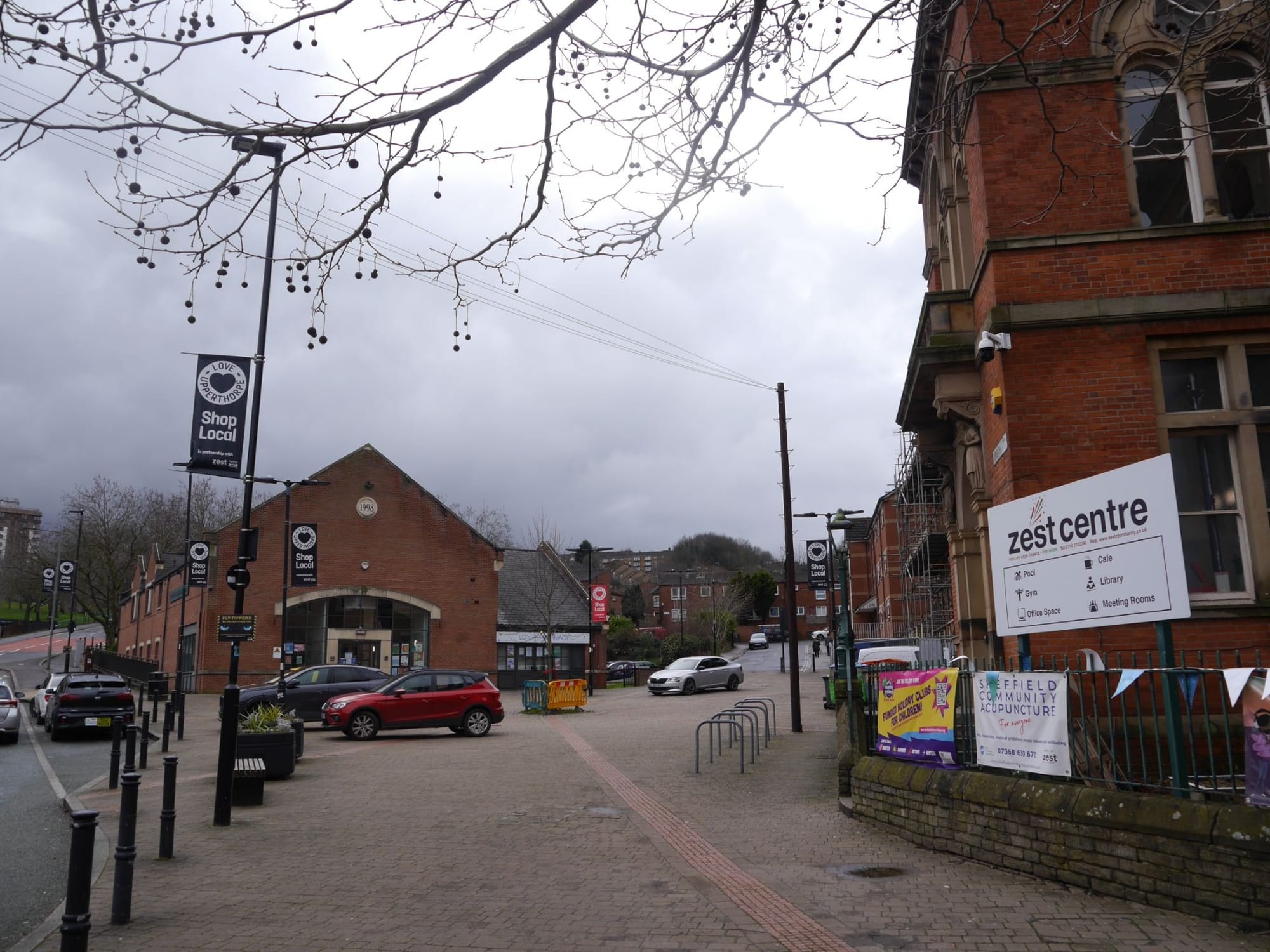
On a grey, drizzly day this week, I meet David and his wife Kate at the precinct. He stomps around the space, pointing at cracked kerbs and cigarette butts. At one point, he’s cut off mid-sentence by a silver car driving through the gap where the bollard once was. “Oh, here we go,” he says. He tells me that he used to confront motorists, but after a recent incident when someone responded: “I can fucking park here if I fucking want”, he decided to stop. “I don’t want to be getting shot,” he says.
Lipka believes the council’s failure to act enabled the degradation of a public space. Many of the red cobblestones, designed to weather footsteps rather than heavy vehicles, are broken. Recently, a car crashed into one of the trees and the bench that circled around it. “It’s just falling apart,” he says. “Upperthorpe has been neglected, and I think people don’t bother because they’re not bothered about it.”
A collapsible bollard would solve the whole problem, he argues. Instead of lugging a huge lump of steel in and out of the Zest Centre, the staff could quickly fold it down, or even just press a button when they needed to provide vehicle access. Most of the time, the bollard would be up. Lipka envisions it as the kind of community space that could host weekly artisan markets, day festivals, circus skills for children, football games and much more.
This fight has evolved into a 15 year struggle of meetings, letters, and protests — all for the sake of one bollard. Lipka even offered to pay for it himself at one point. He emanates anger as regales me with the saga. “Have you read Kafka?” he says abruptly. I haven’t. “You need to read some Kafka. The Trial is the best one. It’s about the way that bureaucracy stonewalls you, and you can’t get through”.
But, much like the minivan that ploughed into the bollard just over twenty years ago, Lipka won’t let anything stand in his way. One day in December, after reaching breaking point, Lipka turned up at Sheffield town hall and demanded a meeting with council leader Tom Hunt. Security guards asked what he wanted. “They were a bit nonplussed,” Lipka admits, when he told them he was there on bollard business. Eventually, they managed to get Hunt's secretary on the phone. A meeting was set up for the end of January.
By Lipka’s own admission, it didn’t go well; so much so that he felt obliged to send an email afterwards attempting to smooth things over. “Let me start by offering you an apology for the intensity of feeling I communicated with you at our meeting today if this made you feel uncomfortable,” he wrote, saying he understood Hunt is “genuinely well intentioned on this matter” but that he required an action plan and a “monthly progress report” to ensure things were moving ahead.
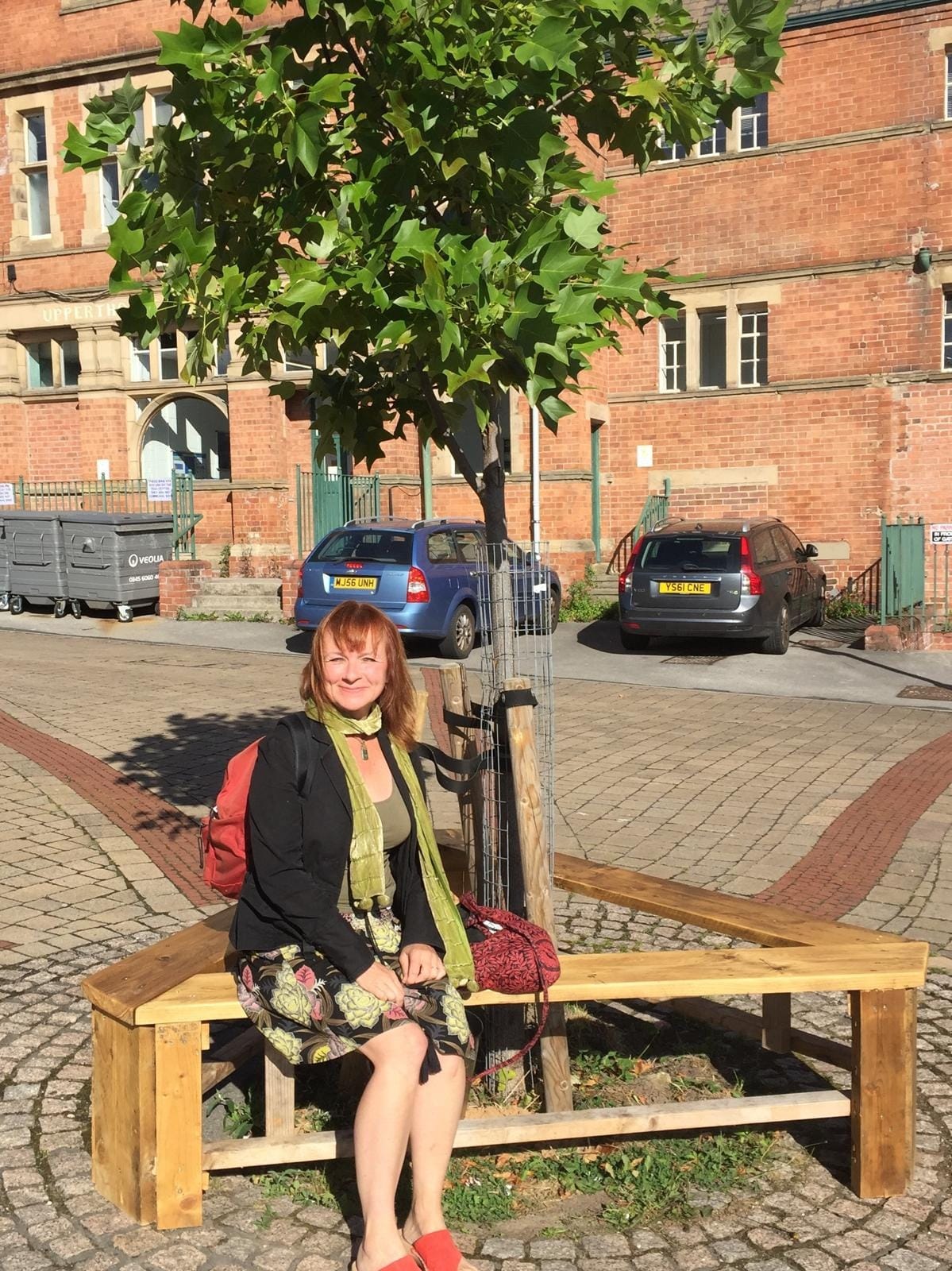
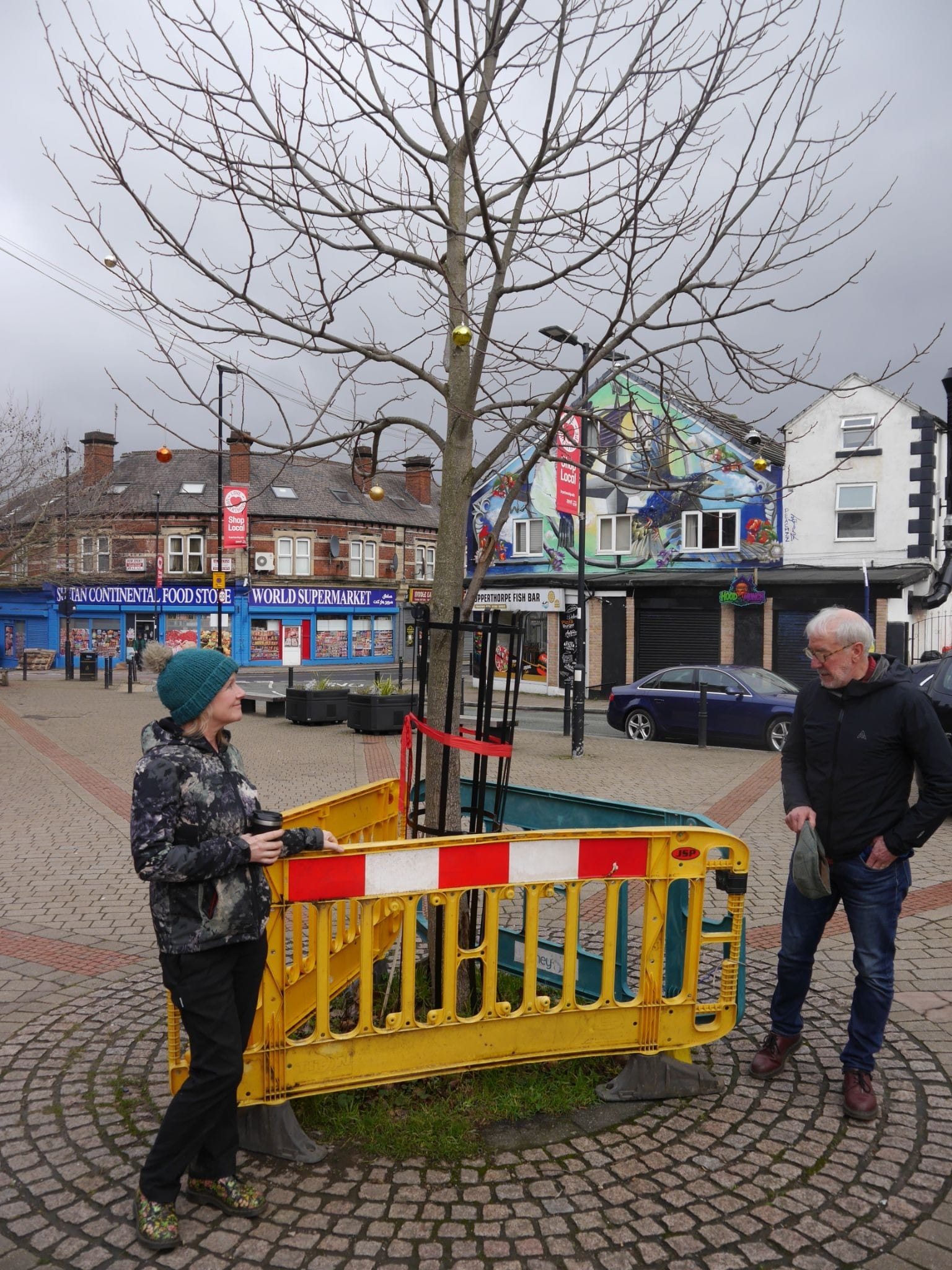
Kate Lipka sitting on a bench in the precinct in 2013. Photo courtesy of Kate. Kate and David in the same spot in 2026. Photo: Mollie Simpson/The Tribune.
It’s getting cold, standing in the rain, so we move into the Zest Centre. “David won’t give up,” Kate sighs, when he goes off for a bathroom break.
Why? I ask.
“He’s a completer, a finisher,” she says. “That’s what he does. He cares.”
The next day, I’m back in the Zest Centre with Tom Hunt and Laura McClean (both are councillors for the area). We huddle around a table, soaked from the rain, making pleasant small talk, until I sully the atmosphere by bringing up the bollard. Hunt goes quiet and stares into his coffee.
McClean is a little more enthusiastic. “That space is a pedestrian only space. It’s not a highway,” she affirms. “When the space is used for events like Jamaican Independence Day, it’s an amazing space and a really great way to bring the community together. So in the last couple of years, we’ve been trying to work towards that.”
What are the next steps? “Well, part of it is about working with Zest,” Hunt tells me, explaining that while the precinct is entirely council-owned, there’s a small strip of land at the top which is technically theirs. He mentions “improving signage”, asking the GP surgery and pharmacist to communicate with residents about appropriate places to park and “bringing everyone with you to say, ‘right, how are we going to make this better?’”

Lipka’s bollard battle began long before The Tribune was founded, but there’s a particular reason we’re covering it now. Upperthorpe and Netherthorpe have a problem with organised crime, South Yorkshire Police admitted two weeks ago. The killing of Kassim Mohammed last September, followed by two further non-fatal shootings in December, are just the latest in a series of incidents of violent crime that have taken place in the two neighbourhoods. At a public meeting, Hunt declared: “enough is enough. If we don’t go after the snake’s head, this will keep happening.”
“Lots of people at the moment are saying they don’t feel safe,” McClean says. “Every eighteen months, there’s been a major incident in the area, and I think people feel that needs to change.”
These issues would appear to be much more serious than whether the council eventually decides to bollard, or not to bollard. But just maybe they’re connected. The oft-cited “broken windows” theory posits that when a place looks and feels unloved it can see crime worsen rapidly. A lack of shared pride in where you live can cause community breakdown. Is there a world in which the bollard had been installed, Upperthorpe precinct had become the vibrant hub Lipka imagines, and the community was safer as a result?
McClean cites an example where something like that has happened at the nearby Ponderosa Park, a place where people had reported feeling unsafe at night time. Last summer, a new mural was unveiled on the side of the Boiler House celebrating the diversity of Sheffield's nature.
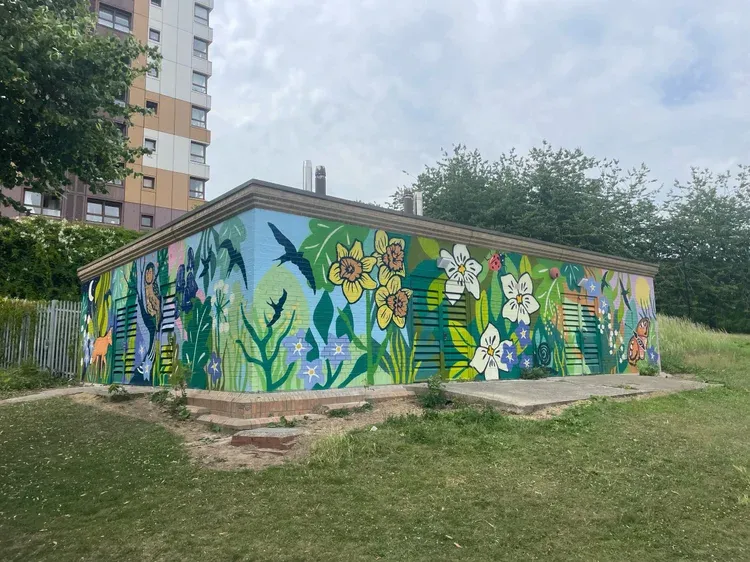
It was a small change, but McClean says that, surprisingly, it’s made people feel much safer. “We had people thanking us for getting the council to improve the lighting,” she says. “But we hadn’t improved the lighting. It’s just the mural, it really has brightened it so much, so when you walk through it at night, it just feels bright and light and safe.” She says there’s been no graffiti on it since it was unveiled last summer; previously it was a “heavily graffitied” building.
Could Upperthorpe undergo a similar transformation? Will the council finally bring back the bollard? Or has the Lipka-Hunt rift scuppered any hope of progress?
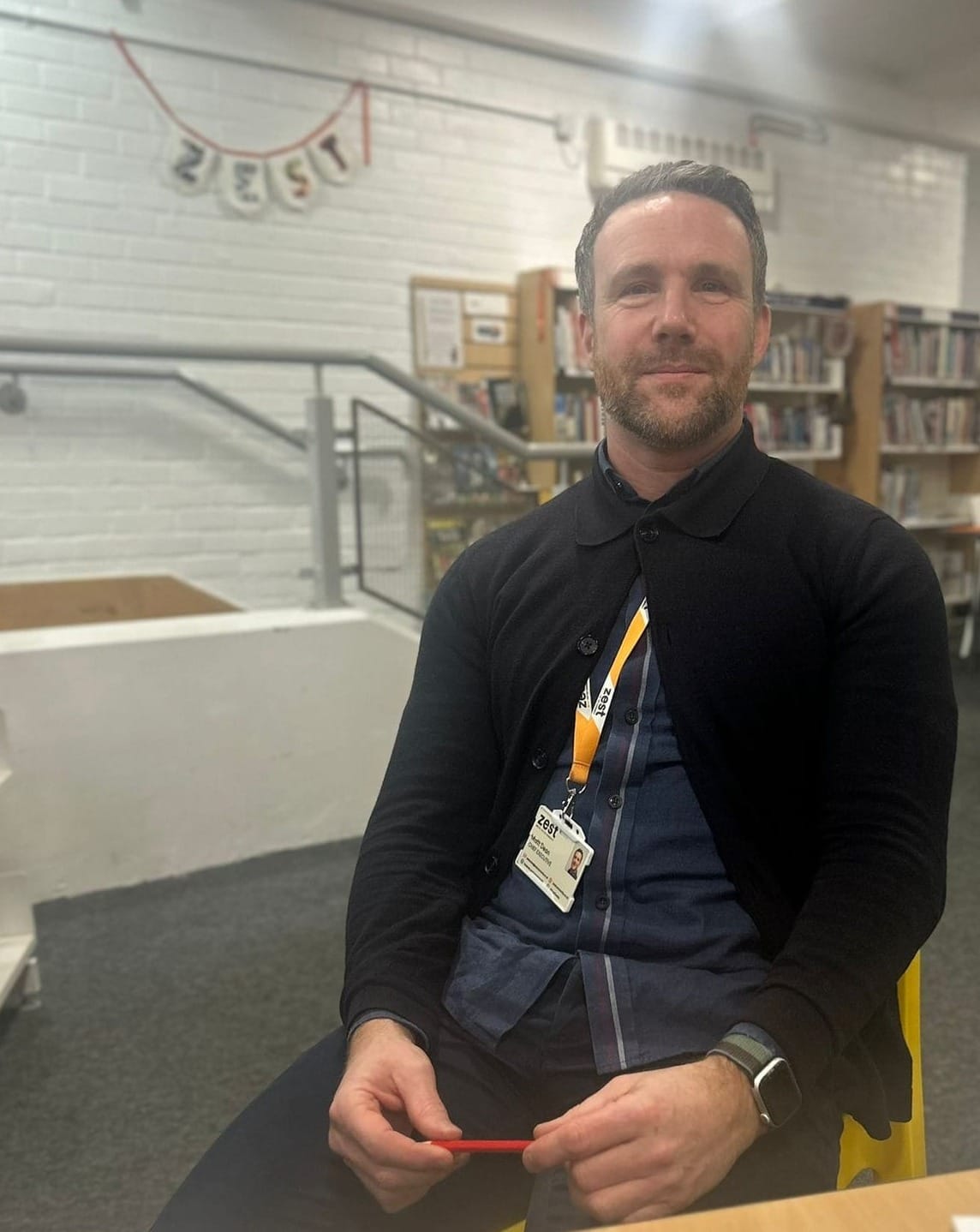
If a mediator is needed, Matt Dean, chief executive of Zest, might be the answer. He kindly agrees to speak to me at very short notice and on Friday we meet in the community centre’s well-stocked library.
He speaks in gentle tones and takes thoughtful pauses before he responds to my questions. “What’s happened is it’s been normalised,” he says, when I ask about the cars parked outside. “I think people drive up and go, well, there’s four cars parked there, I can drive on there, pick up my prescription and I can drive off again... Those of us with a longer memory know this is a pedestrianised area with paving for pedestrians, not cars. But how can we alter that behaviour?”
He says the removable bollard hasn't been practical or easy to manage. “I’m not expecting my staff to carry bollards around,” he says. “It’s not in the job description.”
Would he back a collapsible bollard? “I think it’s something we’d have to test the waters on, and that doesn’t mean we shouldn’t do it, because sometimes you have to crack a few eggs,” Dean says, warming to this theme: “We have to be bold.” I’m expecting him to propose something truly radical but he cools down again. “My perspective is: how do we reasonably reclaim the space and find that reasonable compromise?”
For Lipka, the fight goes on. “It’s become this thing, this angry white middle aged geezer, banging on about a bollard. ‘Get a life, mate’, people say,” he tells me. But, for better or worse, this is his life; it’s his cause. And he really does believe a new bollard will make other people’s lives better. "It’s worth trying," he insists, "however vainly."
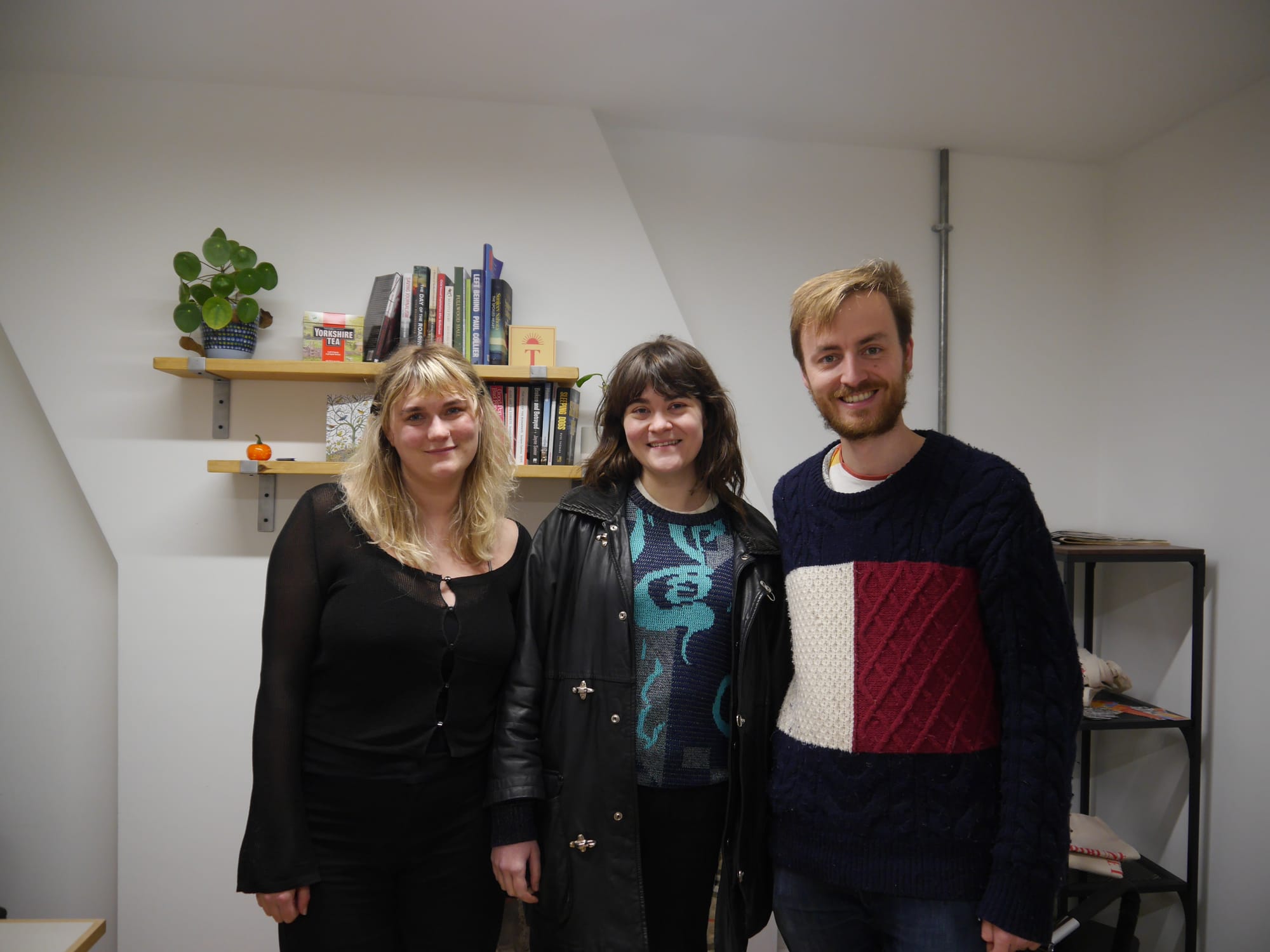
Hi, Mollie here. Thanks for reading my piece about a missing bollard in Upperthorpe. I became aware of it after a conversation with a reader. After chasing the council, local councillors and community groups, I became convinced that it wasn’t just about a bollard, it was illustrative of how hard it can be to turn run-down parts of Sheffield around.
If you sign up for free, not only will you get all our journalism sent directly to your inbox, you’ll be joining a community of like-minded Sheffielders who understand the importance of well-researched and well-written journalism. It’s completely free, so why not give it a go?