On 8 January, NHS staff in South Yorkshire woke to find the article on the frontpage of a healthcare magazine: their chief executive had left his role with £300,000 in exit payments. Within minutes, colleagues were furiously forwarding links and screenshots, with union officials called in to demand explanations.
The staff — managers and administrators who oversee the local NHS system — had spent the last year in a state of anxious uncertainty, struggling to get answers about whether their jobs were being axed, and what kind of redundancy pay would be available. So the news about their recently departed boss felt like a final insult: “This just felt like a massive injustice”, said one source close to the redundancy process. “It was one rule for the bosses and another for the staff. People were absolutely livid.”
It was just the latest grievance in what’s been a drawn out decimation of local NHS teams, as the government attempts to transform how the health service is managed. I’ve reported on numerous NHS reorganisations over the last decade, for the Health Service Journal and others, but have spent the last two weeks trying to understand why these latest reforms have caused so much anger across South Yorkshire, Greater Manchester and Cheshire & Mersey, and what they could mean for how our hospitals and clinics are run.
I wanted to understand what has gone on inside the NHS bureaucracy across the three areas. Facing huge cuts to their numbers, an indifferent public, and a health secretary who doesn’t seem to believe they offer very much, the staff working in these largely anonymous but hugely significant organisations are trying to keep Britain’s healthcare system afloat. Soon, hundreds of them will be gone.
‘Unnecessary bureaucracy’
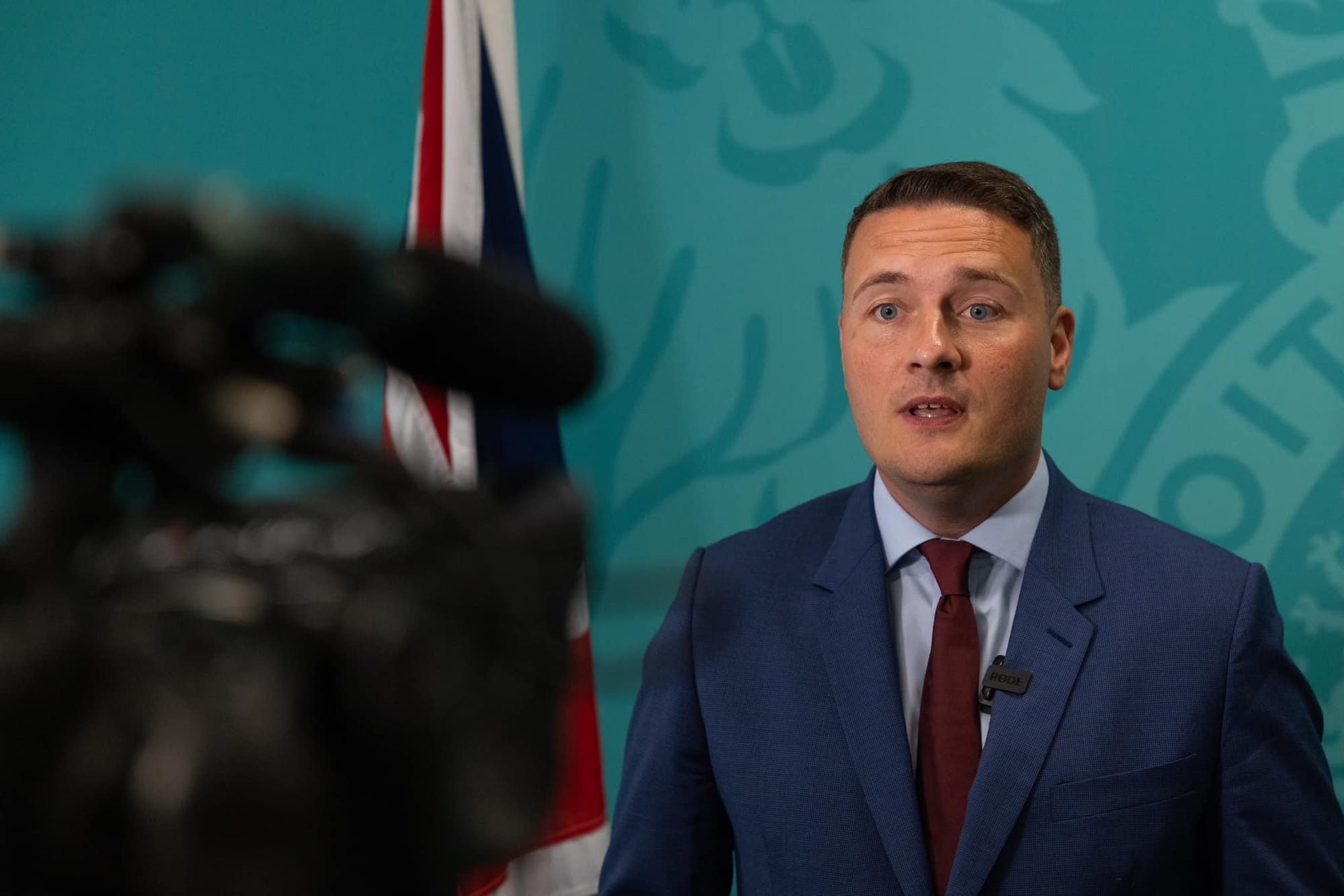
To understand how staff ended up in this place — one where, as one employee told me, they felt “demoralised” and “lied to” — we have to go back to March last year, when health secretary Wes Streeting announced sweeping budget cuts to the NHS bodies that plan and oversee local health services, known as integrated care boards (ICBs).
The ICBs in South Yorkshire, Greater Manchester, and Cheshire and Mersey would have to cut their costs by between 30–50%, Streeting said, equating to more than 1,000 jobs across the three areas.
Streeting framed this as slashing “unnecessary bureaucracy” while protecting frontline patient services. These are the type of job losses that patients won’t necessarily notice straight away, as these staff are behind the scenes, spending most of their time figuring out how to make services better in the future. That makes them a safer option for ministers to target, as the downsides won’t be felt immediately. But beyond the headlines, there was little clarity about what the new, slimmed-down organisations were supposed to look like.
ICBs had only been formally established in 2022, themselves a concentrated version of the old Clinical Commissioning Groups, of which there was a far greater number. They took over all the old CCG roles, from managing contracts with hospitals to preventing people from becoming ill in the first place, but were also tasked with getting different parts of the local NHS to work better with each other.
Yet as the cuts were announced, there was no detailed blueprint from Whitehall to set out which of these functions should be scaled back, transferred, or simply scrapped altogether.
Nothing was clear, so I’m told that local leaders struggled to make plans for how their smaller organisations should be structured. For staff, that translated into months of confusion and uncertainty about whether their roles would survive.
For this story, I have interviewed multiple NHS sources affected by or involved in the restructure, all of whom spoke on the condition of anonymity for fear of being sanctioned.
“It was all done completely backwards,” said a source close to the process in Greater Manchester. “The government just told ICBs to cut their costs and quickly get rid of people, but how were they supposed to do that without knowing what they’d be responsible for doing? It was the cart before the horses.”
Sheffield deserves great journalism. You can help make it happen.
You're halfway there, the rest of the story is behind this paywall. Join the Tribune for full access to local news that matters, just £8.95/month.
SubscribeAlready have an account? Sign In