For decades, people have assumed that the film Brassed Off is based on the real-life story of the Grimethorpe Colliery Band. “Everyone thinks that,” says Mark Herman, its 72-year-old writer and director, “but it’s totally coincidental.” Conversations he had in local pubs during pre-production did shape the final script — “I would tweak it whenever I got a good piece of flavour from locals,” he says. However, he maintains it was only after his story was already written that he learned how closely it mirrored reality.
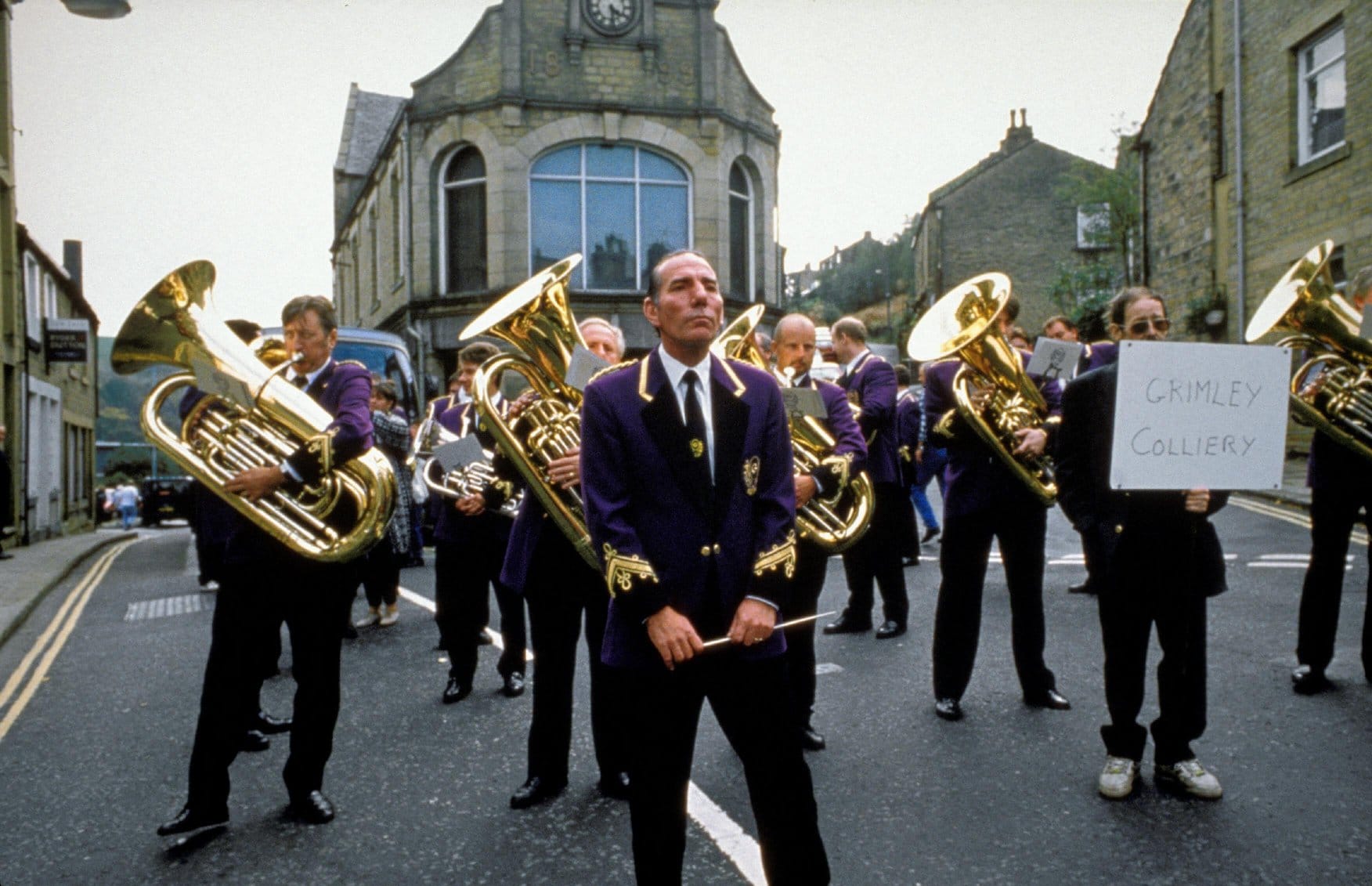
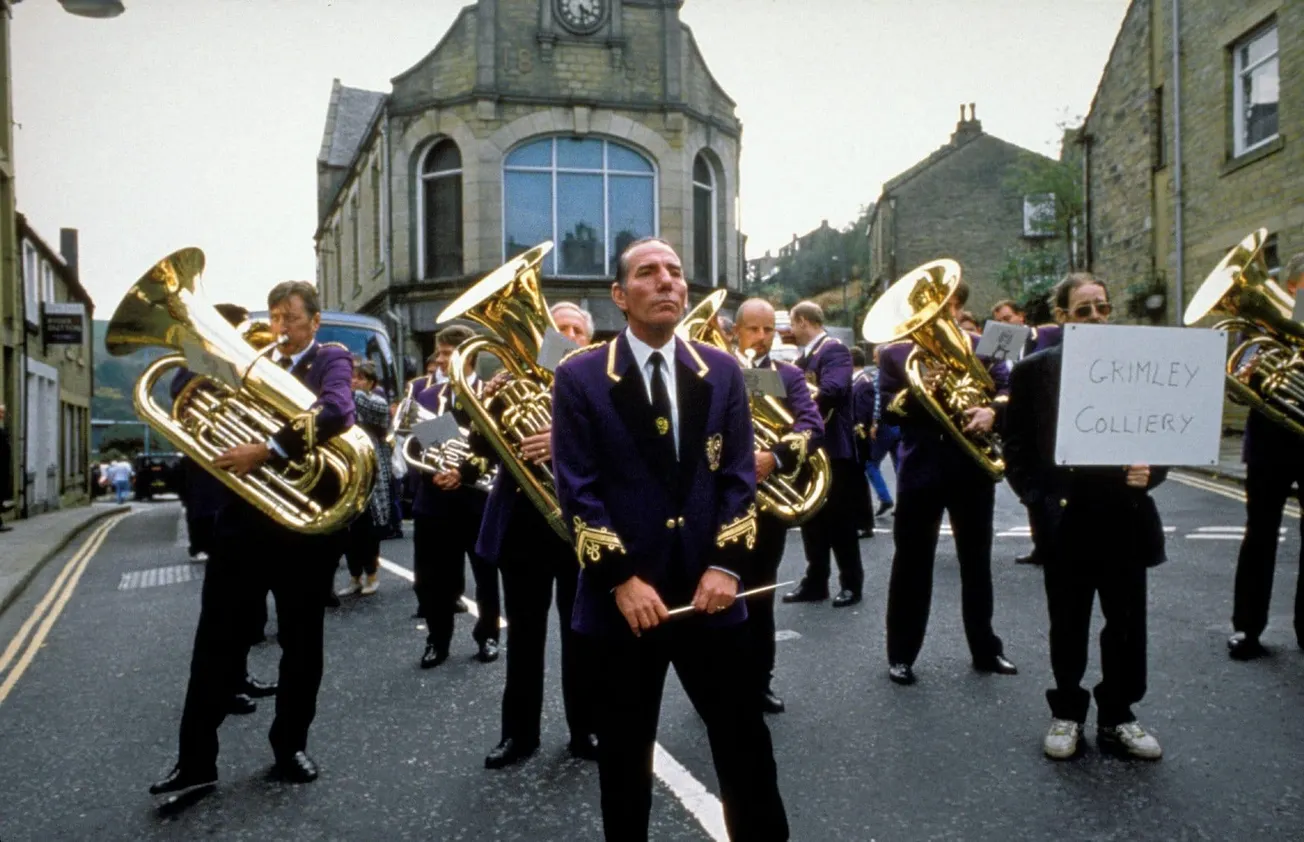
On the face of it, this may seem hard to believe. Though the film is set in the fictional South Yorkshire town of “Grimley,” most of its scenes were filmed in Grimethorpe, while the soundtrack was provided by the colliery band in question. More to the point, the central premise — a group of musical miners making it to the finals of the National Brass Band Championships in London, while struggling to cope with the devastating news that their local pit is shutting down — exactly matches the band’s real-life experience in 1992. In October that year, they won the grand prize, scoring 99 out of 100 points for their performance at the Royal Albert Hall, just four days after the closure was confirmed.
According to Mark, he hit upon his subject while driving through South Yorkshire in the mid-90s and seeing the state of the once-thriving mining towns he’d visited in his previous work as a bacon salesman. “It was a shock to see those places looking like ghost towns, with everything boarded up,” he says. “Of course, I knew about the miner’s strikes — everyone was aware — but the effects of those closures were not really on our TV screens.” While he immediately started trying to write something about the plight of the miners, something wasn’t clicking. “I didn’t know quite what to hang it on. My first attempt was pretty grim.”
It was only during another drive — when he heard a radio news segment about a colliery band in Newcastle that disbanded because the workers couldn’t afford to keep it going — that his idea finally came together. “I didn’t particularly like brass band music until making the film,” he admits. “I associated it with Terry Wogan and that ‘ey up’ kind of Northern stuff.” However, it struck him as the perfect way to inject the “lighter element” he felt his script needed. “I like playing with the mix between light and dark,” he says. “I suppose it’s a bit like life: not all happy, not all sad.” Even his most famous film to date — The Boy in the Striped Pajamas, adapted from a novel about the Holocaust — includes “moments of humour” despite the serious topic.
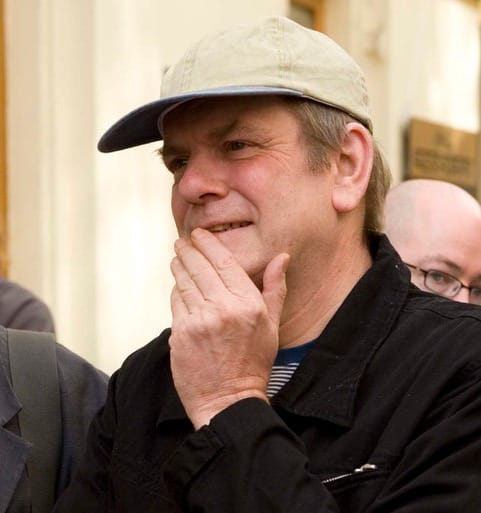
Born in Bridlington in East Yorkshire, by the time Mark landed on the idea for Brassed Off, he was more than 40 years old and had only recently made his first full-length feature: the 1992 comedy Blame It on the Bellboy, which critics eviscerated for reasons he still doesn’t quite understand. He’d decided on a film career fairly late in life, after abandoning his earlier dream of becoming an animator while studying alongside Nick Park, who went on to help create Wallace and Gromit. “I’d thought I was quite good until then, but I saw I was so far behind,” he recalls. “Still, it was interesting to see genius at work.”
This month marks 30 years since the premiere of Brassed Off — a film that quickly joined The Full Monty, Kes and Threads as one of the most iconic depictions of South Yorkshire in cinema history. Starring Ewan McGregor, the late Pete Postlethwaite and Tara Fitzgerald, it tells the story of both a struggling brass band, a will-they-won’t-they romance and the machinations of Thatcher’s government, which strong-armed workers into accepting the eradication of their way of life. When I ask Mark what proved the most difficult scene to film, he recalls the moment in which the fictional miners learned that their colleagues had voted to close the pit, rather than try to privatise, in return for redundancy payments. “A lot of locals got very upset,” he says, “because it was very accurately done and it brought it all back.”
Sheffield deserves great journalism. You can help make it happen.
You're halfway there, the rest of the story is behind this paywall. Join the Tribune for full access to local news that matters, just £8.95/month.
SubscribeAlready have an account? Sign In