Dear readers — two updates for you today.
As we announced on social media channels on Tuesday, Andrew Milne has been convicted of stalking. Despite using a range of methods to drag the trial out, after seven days in court Judge Towell’s view of Milne’s guilt was clear. We’ve got the write up.
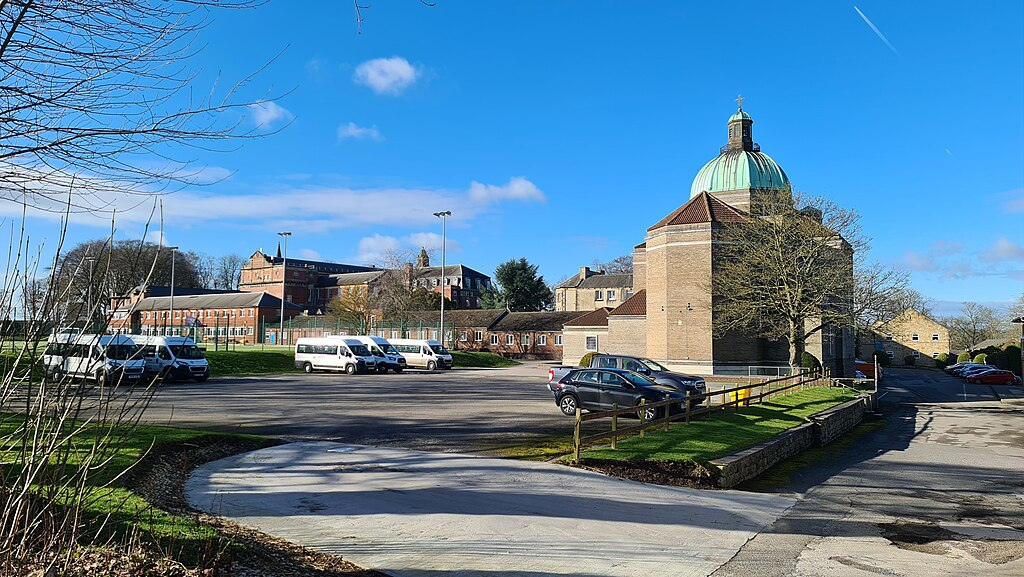
We’re also returning to our story about Mount St Mary’s College. The Catholic private school closed down last summer. But as we looked into it, we discovered that Derbyshire Police had launched an investigation into historic sexual abuse at the school. Today, we can reveal that more people have come forward about their experiences.
Normally we paywall our mid-week pieces, but we felt these are both items that should be widely read. However, if you’d like to support our ongoing work to investigate these important stories, then please join our small army of backers. We can’t do it without them.
As Andrew Milne convicted of stalking, MP demands action
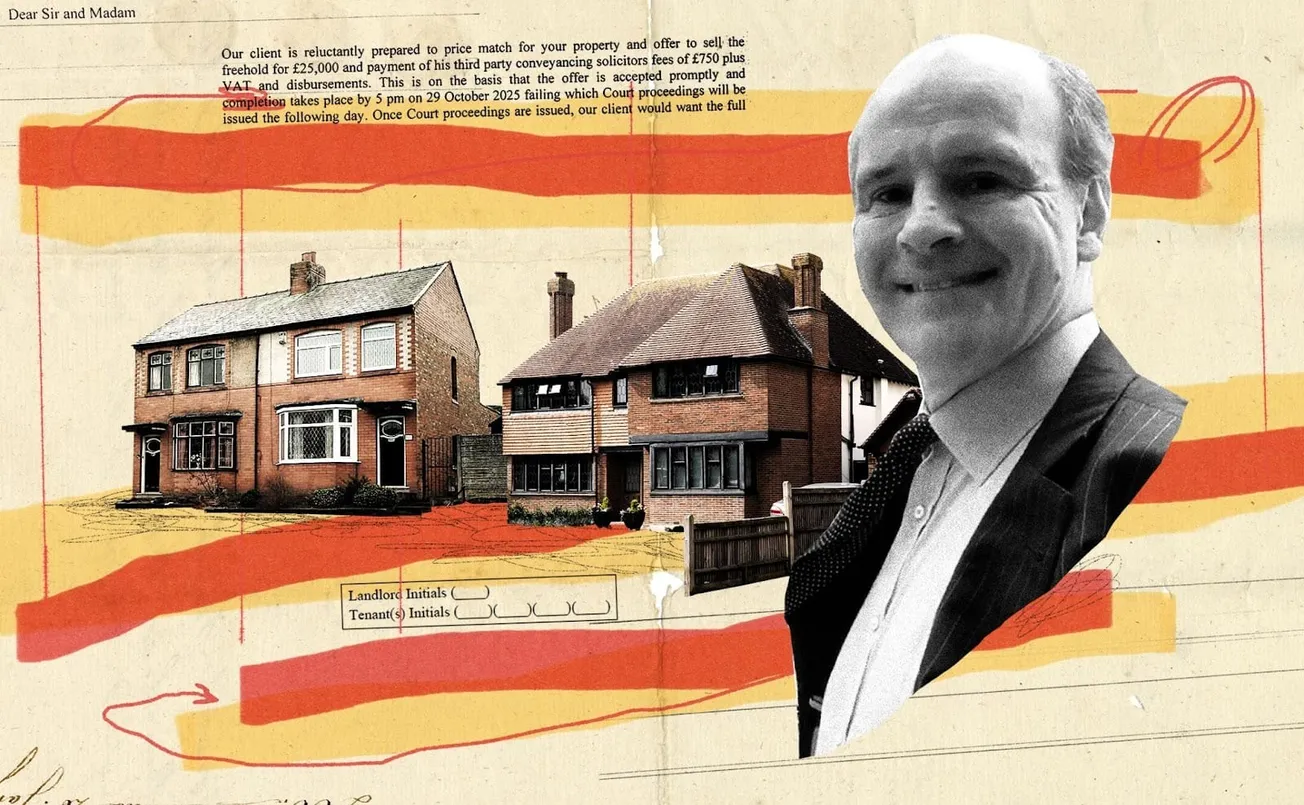
A group of local MPs, led by Labour MP for Sheffield Hallam Olivia Blake, is urging the Solicitors Regulation Authority (SRA) to suspend Andrew Milne from practicing “as a matter of urgency”, now that he is a confirmed criminal.
On Tuesday, after a week-long trial reported on by the Law Gazette, the notoriously controversial Milne was found guilty of stalking court blogger Daniel Cloake. The court heard that, over the course of five months in 2024, Milne sent Cloake 124 emails. Cloake replied only once, with the word “thanks”.
The court also heard that Milne visited Cloake’s home address on one occasion, posting a bizarre note through his letterbox, which offered to let Cloake live in his garage in return for becoming his “total sex slave”.
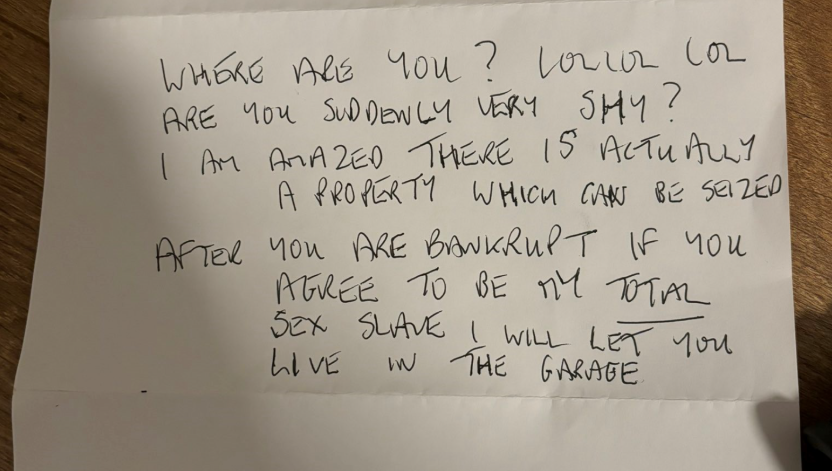
Despite the damning evidence against him, Milne attempted to convince the judge that Cloake was his ex-lover and that the other man had previously stalked him. Unsurprisingly, District Judge Towell did not find this convincing.
“Your account that there was a relationship is wholly contrary to the content of the emails you sent,” she told Milne, adding that she accepted Cloake’s evidence that “there was no form of relationship beyond exchanging pleasantries at court hearings and two lunches at the Law Society”.
Milne is due to be sentenced on 10th March. The Tribune understands that the SRA does not automatically suspend a solicitor’s right to practice if they are convicted of a crime and would normally wait until after they are sentenced to make their decision. However, Blake and other MPs plan to urge the regulator not to delay.
The letter, written by Blake, reads: “We write as MPs who have had constituents impacted by Andrew Milne. Mr Milne’s actions have caused a number of our constituents an unimaginable amount of stress, while many have told us they may not ever financially recover from this situation.
"As of writing, Mr Milne is still an SRA accredited solicitor. Although we understand that the SRA are investigating Mr Milne’s conduct, and are considering the imposition of interim conditions on his practising certificate, we believe that Mr Milne’s conviction makes it absolutely clear that he is not fit to be a solicitor.”
When contacted by The Tribune yesterday, a spokesperson for the SRA said: “We are aware of the conviction and are deeply concerned to see this serious development in the context of existing, but separate, issues over Mr Milne’s conduct. Our focus remains on protecting the public and we will continue to take steps necessary to do so.”
More alleged victims of sexual abuse at Mount St Mary’s come forward
This story includes details of sexual abuse some readers may find distressing.
Until he read The Tribune’s article about Mount St Mary’s College, Alan* had never told anyone, not even his wife, that he was abused at the school. He struggled to even understand it himself. “When I saw the article, it just turned my stomach and I knew I needed to say something,” he tells me over the phone. The day before our chat, he contacted Derbyshire Police to add his name to the growing list of alleged victims, as did the former classmate who sent him the article. “I’ve known my friend since I was 14 and I’m in my 50s now,” Alan says. “But he’d never said anything and likewise neither had I.”
Last September, The Tribune exclusively revealed that Derbyshire Police had reopened their investigation into historic sexual offences at the private Catholic boarding school. While another former student Daniel* had contacted the force to report abuse by two former staff in January last year, he was initially told that, because both of the men he accused were dead, there was nothing the police could do. However, last August, a month after the school closed after almost 200 years due to financial difficulties, something changed. A Derbyshire Police spokesperson told The Tribune that “new information came to light relating to the identity of one of the alleged suspects”.
At the time our last article was published, The Tribune understood that Daniel was one of 16 people who had approached the school’s founders, the Jesuits in Britain, to report being sexually abused there between the 1950s and the 1980s. Daniel was certain there were more victims and hoped his story would encourage them to come forward. Now, he has been proven right.
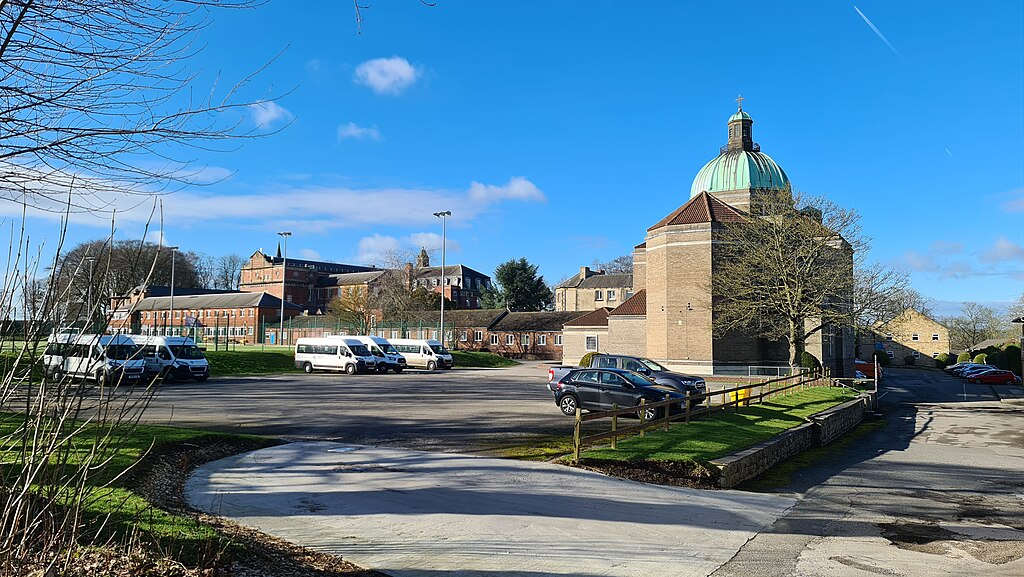
According to Daniel, he was recently contacted by Derbyshire Police and told “half a dozen” new victims had come forward and that the force now has a team dedicated to the case. A police spokesperson told The Tribune that, for operational reasons, they could not confirm how many allegations they had received or whether they implicated further members of former staff. “Victims of sexual offences can report these crimes to us at any time, even if they happened months, years or decades ago,” the spokesperson added. “We take every report seriously, no matter how much time has passed.”
A Jesuits spokesperson confirmed that, since our article was published, three alleged victims of a priest named Father David Lamb have approached their organisation, although they did not respond when asked how many allegations had been received in relation to other members of staff. “All have been managed according to our safeguarding policies, with the safeguarding team providing support and care to those involved,” they added.
For Alan, even just acknowledging what he went through has helped him understand the mental health problems that have plagued him for his entire adult life. “I’ve been on antidepressants since the day I left school but I had a breakdown about two or three years ago,” he says. “It was getting to the point where I was prepared to take my own life but I just didn’t know what was going on, it was horrendous.” When he spoke to a mental health professional after his breakdown, he told them he struggled being in rooms with the door closed. After reading The Tribune’s article and reflecting on his time at school, he realised “the only closed door I thought of was when I kept getting locked in the infirmary”.
Father Lamb — who Daniel previously told The Tribune began grooming him at the age of 13 and convinced him to perform oral sex while he was underage — had a room attached to the infirmary in the school. Alan recalls he once spent a few nights sleeping there, after receiving a concussion, and that Father Lamb kept locking the door. When he first arrived, Alan says, the priest put a hand on his knee and told him everything would be alright. “He started rubbing my leg and his hand was moving towards my groin but then something interrupted him and he just left.” Alan claims he also woke up one night to find Father Lamb touching his groin but says the priest heard a noise outside and abruptly left.
Though Alan was too young to fully understand what was happening at the time, he was distressed enough by this incident that he later ran away from Mount St Mary’s, heading to the prep school Barlborough Hall. The two former schools are 2.5 miles, or almost an hour’s walk, apart. “Quite a trek in the middle of the night,” Alan points out. Despite this, he doesn’t remember anyone at Balborough Hall, also run by the Jesuits at the time, asking him why he’d gone to such great lengths to travel there. “I wasn’t given any opportunity to say anything,” he says. “When I got back to Mount St Mary’s, I was caned for leaving.” He tells me it felt impossible for students to complain about any of the treatment they received at the school. “You couldn’t talk to anyone, things would just get dismissed.”
Despite this culture of silence, however, Alan suspects other students and even staff at the school knew something was unusual about Father Lamb. At the end of his infirmary visit, he recalls the matron asking him if he would sleep there for an extra night so that a younger boy, who was about to arrive, wouldn’t be alone. “Now I look back on things, I wonder if she knew about [Lamb].” Even outside the infirmary, Alan recalls incidents where Father Lamb kept him after class and appeared to be touching himself through his clothes or rubbing himself against a desk, behaviour he was too young to understand at the time. Another alleged victim told The Tribune students used to refer to Father Lamb as “gay Dave”.
This former student claims that, immediately prior to Father Lamb’s departure from the school in 1988, he came across a younger boy crying because the priest had “felt him up”. He claims the boy’s mother visited the school shortly afterwards and believes this had something to do with Father Lamb leaving, although a Jesuit spokesperson said he left the school of his own volition in order to become a parish priest. The spokesperson added that no formal safeguarding concerns about Father Lamb were reported to the Jesuit’s Provincial Superior until 1999, after which he was immediately removed from active ministry and summoned to the headquarters in London to answer questions. Daniel previously told The Tribune he was informed that Father Lamb took his own life before this meeting could take place.
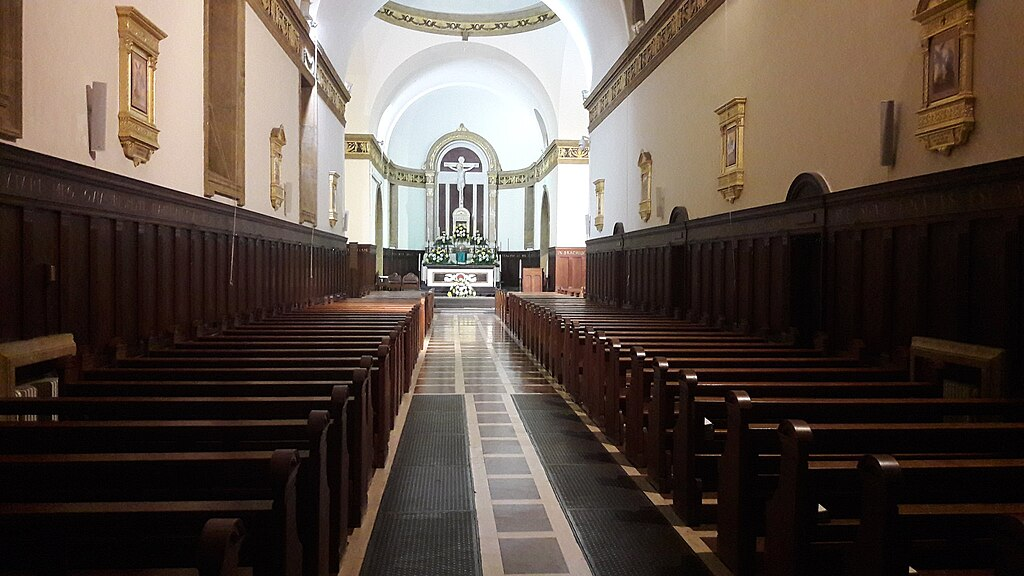
In Alan’s view, Father Lamb may have been protected by his close friendship with the then-headteacher, Father Grummit, who is also the subject of posthumous abuse allegations by former students. “He and Father Lamb were like two peas in a pod, they ruled the roost,” Alan recalls, adding that Father Grummit seemed to have a “power over everybody” that extended beyond his position as school leader. “Everyone was scared of him, even the rest of the teachers.”
Like Daniel, Alan recalls being subjected to regular caning by Father Grummit, always “at night when no one else was about” and for what seemed like spurious reasons. “He’d cane you if your uniform wasn’t right, if you sat on some drawers, any excuse he could find to do something to you,” Alan says, “and he’d find something on what seemed like a weekly basis.”
Also like Daniel, though Alan does not allege that Father Grummit performed any explicitly sexual acts on him, he believes the regular caning was a form of sexually-motivated sadism. “When he pulled your pants down, it was like he paused and waited for a moment. And the fact you had to be bent over the desk — when I look back on it now, there was no need for that,” he says. “Half the time, he would be half drunk and it seemed like he enjoyed what he was doing.” Alan says he was always caned between six or 12 times and would often bleed afterwards. “When he sent you back to your dormitory, he would come to see if you were asleep and, if you were crying, he’d threaten to give you six more. I have never known anything like it.”
Daniel previously told The Tribune he was so traumatised by his experiences at Mount St Mary’s that he left the school with no qualifications. Similarly, Alan had only one O-level at the time he graduated. “We might as well have been in some sort of prison given the way we were being treated,” he says. “For me, the Jesuits are responsible because they were responsible for those priests. They did not safeguard any child in that school.” Like many students, he was conscious that his mother and grandparents had struggled to pay to send him to an expensive boarding school, which made it difficult to admit to them that he was so unhappy. “I only told my mum yesterday,” he added.
When contacted by The Tribune, a spokesperson for Jesuits in Britain said they are treating the new allegations they have received “with the utmost care and attention” and encouraged any other former students with concerns about their treatment at the school to contact them. They added: “We take our safeguarding responsibilities extremely seriously and have strengthened our practices over the years to ensure our communities are safe places for all. Safeguarding is central to our mission, with robust policies, mandatory training, and clear reporting procedures in place today.”
*Names have been changed to protect victims’ identities.