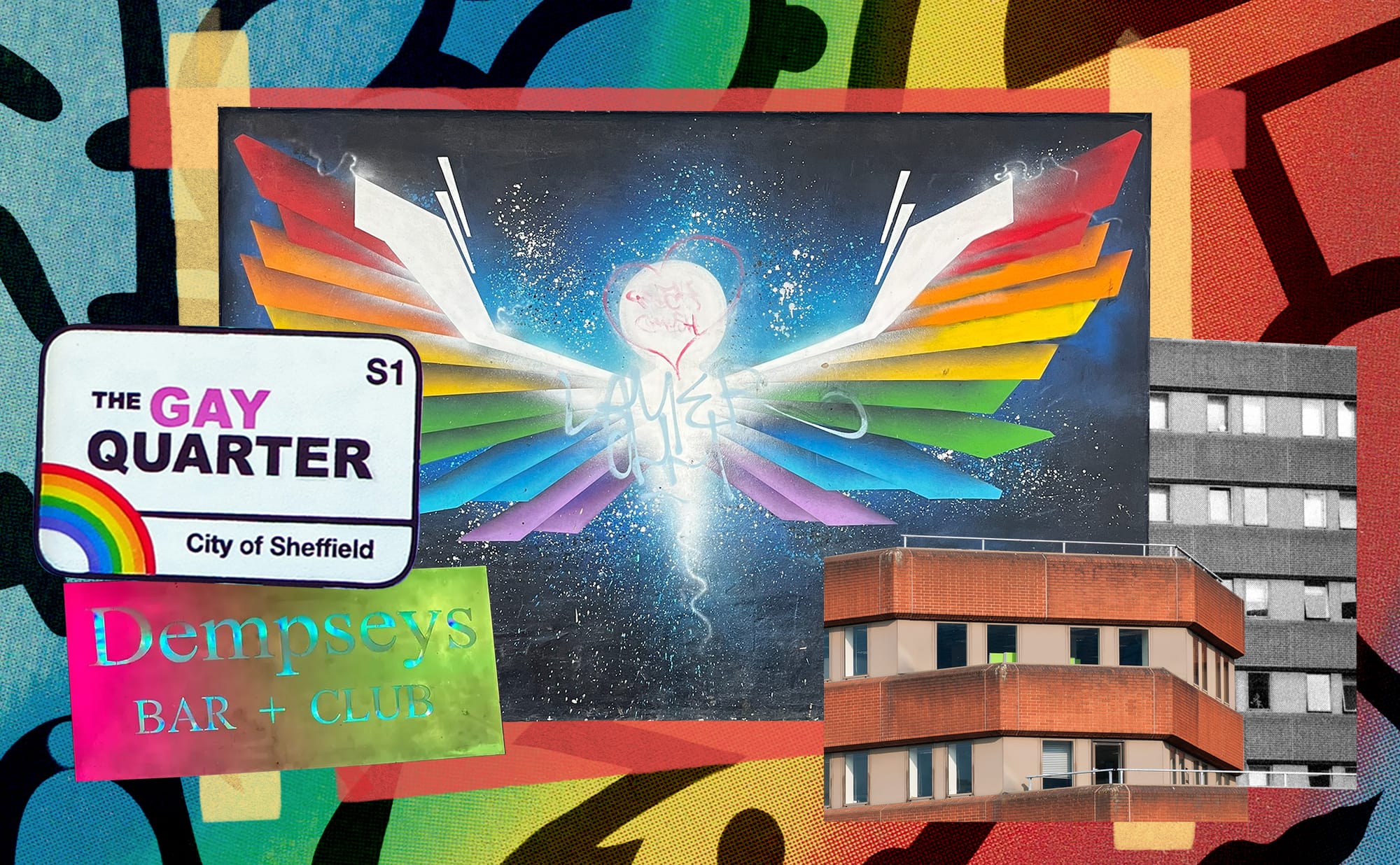
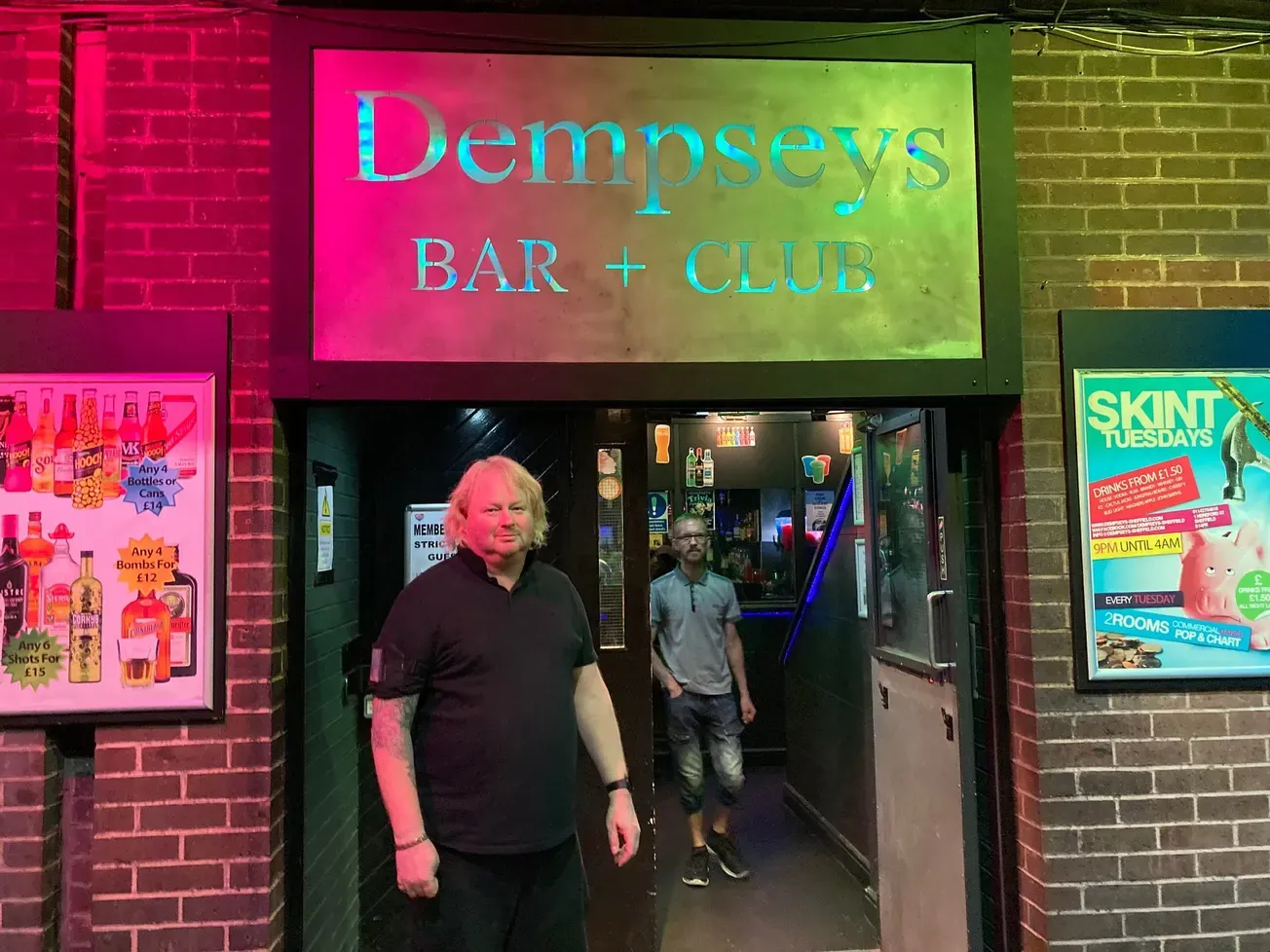
Make your way to the bottom end of the Moor, to the slightly unloved corner in the shadow of the Moorfoot building, and you’ll find the almost lifeless remains of Sheffield’s “Gay Quarter”. When the concept was first launched in 2018, its self-appointed “project manager,” Matt Taylor, suggested it could one day rival Manchester’s Gay Village.
True, there was only actually one LGBT venue in this so-called gay quarter at the time – Dempseys – but that was about to change. Matt's own “modern and funky” bar, Queer Junction, opened its doors to the public later that year, with a gay spa and sauna called Frat House hot on its heels, and he teased that three other neighbouring units would be occupied soon. “It’s surprising that Sheffield has not had a designated area previously," Matt told the press at the time. “This can only be good for our city."
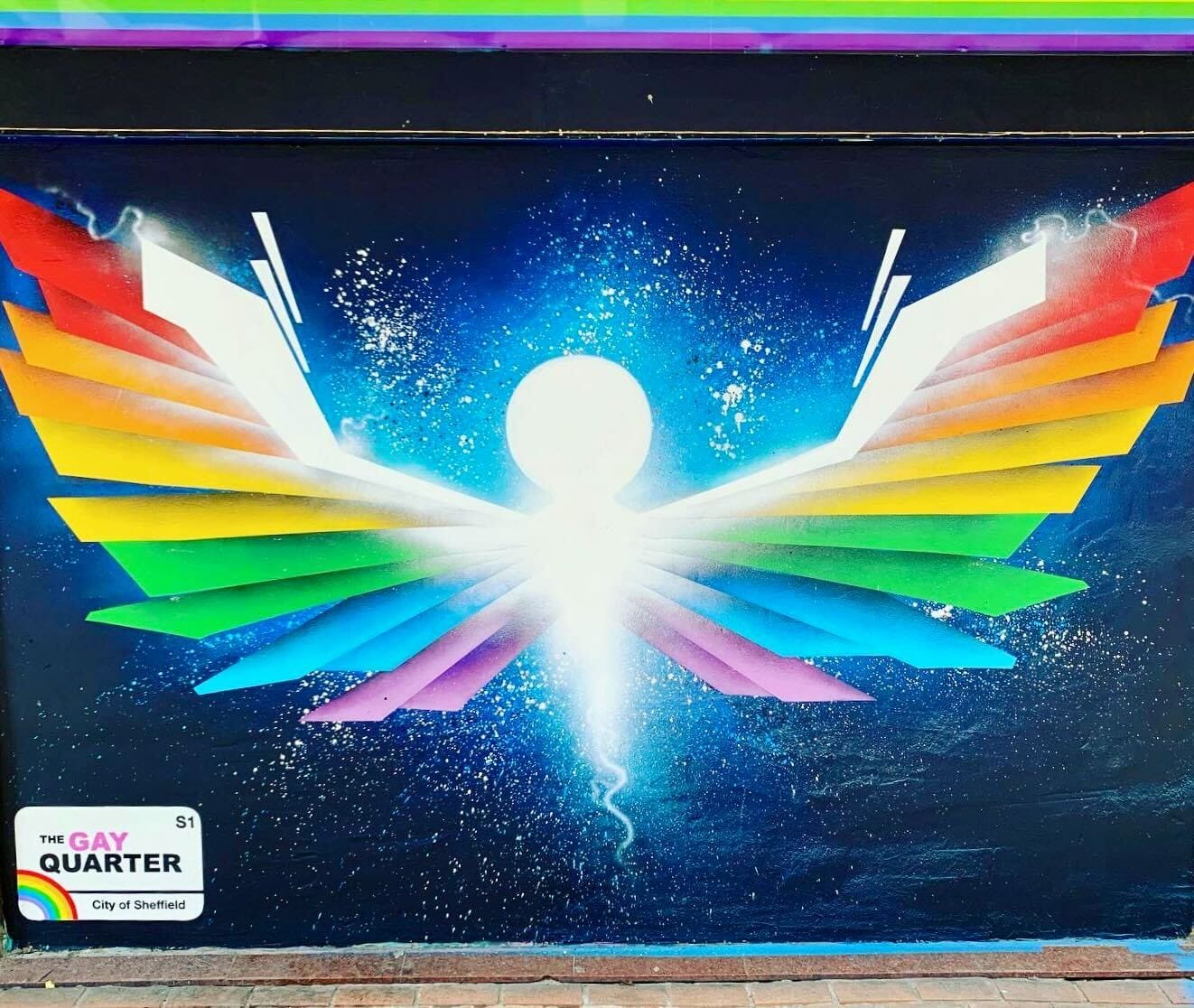
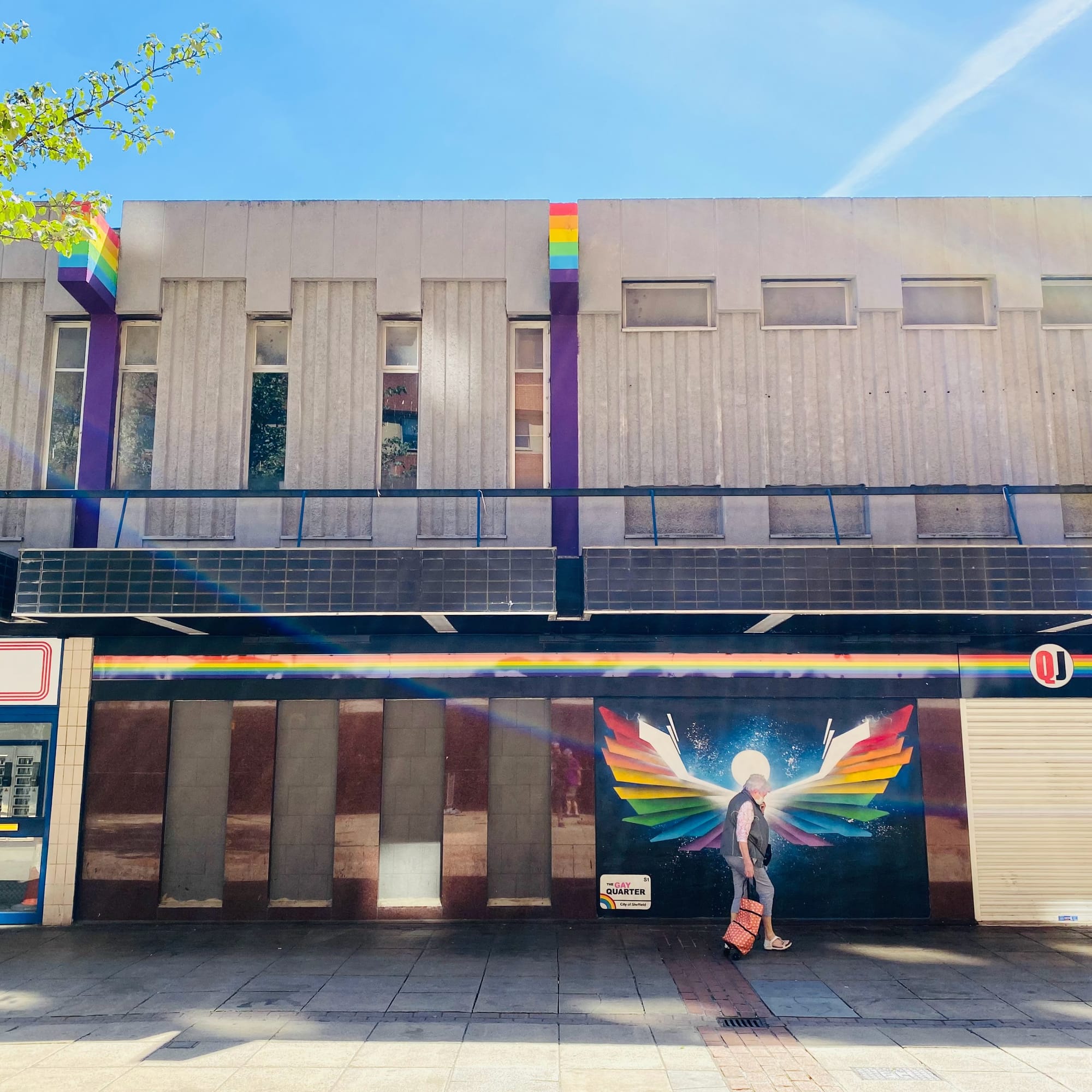
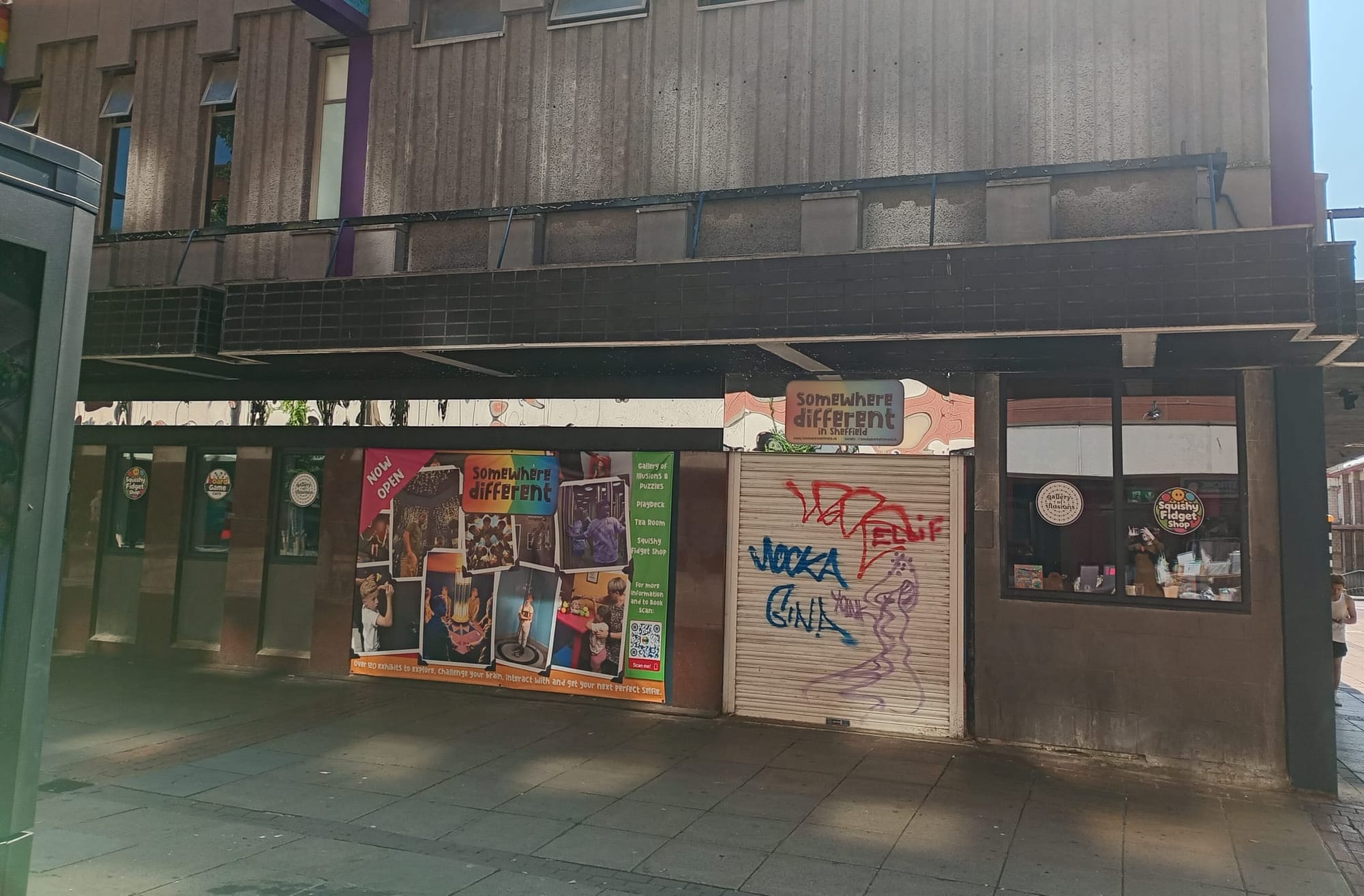
These days, the mural that Matt commissioned to herald the gay quarter’s presence, a faceless angel with outstretched rainbow wings, can no longer be seen. It’s hidden behind a large banner for Somewhere Different — a gallery of illusions, a board game café and a fidget toy shop. Queer Junction gave up the ghost in early 2023, allegedly after years of having “a shotgun held to their heads” by South Yorkshire Police, according to a statement Matt put out. It was unfortunate timing, coming just months after Sheffield councillors voted to formally support the existence of an LGBT quarter in this city.
In less than a decade, Sheffield’s “gay quarter” has ended up right where it was at the start. All that’s left is Dempseys, the city centre’s only LGBT venue, which opens until 6am seven days a week, 365 days of the year. But there are signs of trouble on the horizon that could prove fatal for even this surprisingly resilient institution. Though I’m assured Sheffield council still wants to support an LGBTQ quarter, it seems poised to hammer the final nail in its coffin, in the form of hundreds — and eventually thousands — of new flats on its doorstep.
It’s curious how bad Sheffield’s track record is when it comes to catering for this community. A Reddit comment posted over a decade ago summarises the city’s gay scene as Dempseys, “a tough old cockroach of a bar that refuses to die,” and “a revolving cast of new bars” that “inevitably fail”. Though our city would be hard-pressed to catch up with Manchester, which boasts more than 40 venues in its Gay Village, even Leeds has seven dedicated venues in its “Freedom Quarter”. Sheffield couldn’t even manage to maintain its official Pride event, although a number of smaller celebrations, such as Kelham Pride, have popped up in its place.
So where did it all go wrong for Sheffield’s short-lived gay quarter? And is there anything that can be done to bring it back to life?
Colin Humphreys — one of two owners of the often affectionately disparaged Dempseys — can easily recall when he learned his club was about to become part of Sheffield’s “gay quarter”. It was the first time he met the new neighbour, Matt Taylor, and heard about his grand vision for the area. “He was going to be the saviour of the world,” Colin says, with a raspy chuckle. “He thought he was the gay Andy Burnham.”
Colin, a gruff-voiced 70-year-old, is old enough to remember when the opening of a new gay venue in Sheffield wasn’t greeted with much fanfare. In his youth, he frequented an Attercliffe gay club called The Salutation, later renamed Lydia’s, which “was a rat-infested building with no windows” where you had to knock on the door to gain entry. Was it any good? “It provided a service at the time,” he says.
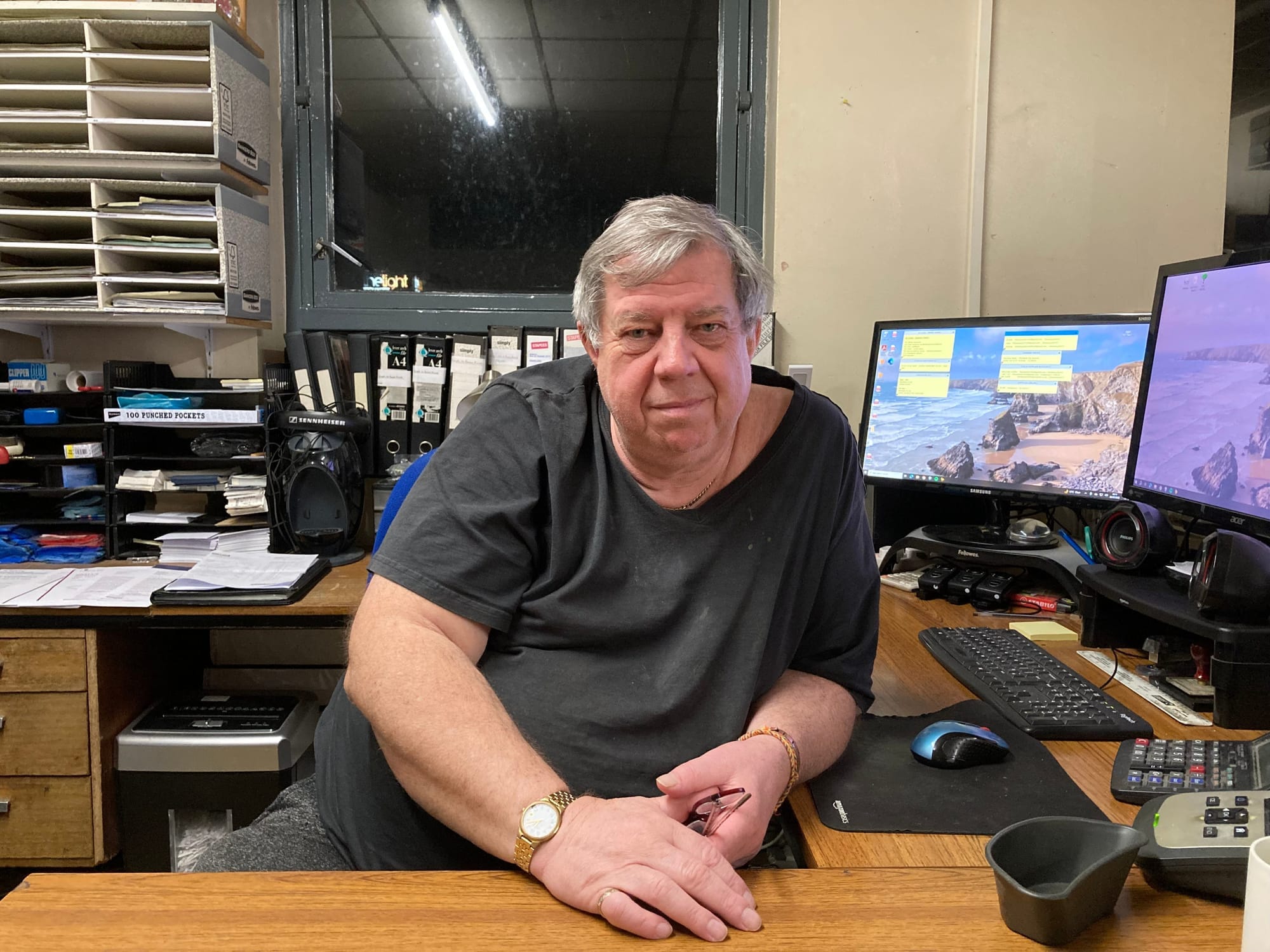
I’m sitting with Colin and fellow Dempseys owner, 62-year-old Kieron Lowry, in the black-walled dancefloor on the building’s first floor, in the middle of a sweltering Monday afternoon. To my right is the venue’s infamous go-go cage, although I’m unused to seeing it with no reveller swivelling around its pole. We’ve come up here for a quiet place to chat, although we probably could have conducted the interview sitting cross-legged on the bar and not inconvenienced anyone too much. When I arrived, there were only two customers in the whole place: a fidgety young man nursing a pint of lager, and an older gentleman in a corner on his own.
Colin and Kieron have been business partners since the 1990s, when they took over a pub in Attercliffe, an area that could have made a convincing case for being the city’s “gay quarter” at the time. (Earlier this year, The Boiler Room, a gay sauna in Attercliffe, was shut down by police after the shocking discovery of “drug-type behaviour”.) In the year 2000, around when Attercliffe’s popularity with the gay community was starting to dwindle, they decided to move to their current building, bringing many of the staff members from their previous venture with them. “The venue had a dance area,” Kieron says, gesturing around us. “So I thought it had more potential than a pub.”
The pair allege they did not receive a warm welcome. In particular, they got the distinct impression many officers within South Yorkshire Police did not approve of an openly gay venue in the city centre, which they claim led to the business being raided on a regular basis. “It was something every single week,” Kieron recalls. “They even reported us to Customs and Excise.” On one occasion in the early 2000s, the pair claim, an officer told them: “I don’t know why you lot don’t go down Attercliffe and swing your handbags at each other there.”
When contacted by The Tribune, a spokesperson for South Yorkshire Police says the force recognises Dempseys’ concerns about its approach in this period. “Should we receive any formal complaint regarding officers’ actions at the time, this would be investigated fully,” they added. In the decades since, “all force training has been reviewed to ensure opportunities to create a more inclusive culture within the organisation are maximised” and SYP has also “introduced a dedicated training package which aims to ensure [it] is an inclusive employer and police service”.
According to Dempseys’ owners, however, it wasn’t until Matt Taylor and Queer Junction arrived that things really started to go south. “Queer Junction brought a lot of trouble down this end of town, which we managed to keep out of our venue,” Colin says. (SYP would likely disagree about how successful they were.) “There were people trying to get in – drug dealers, people with knives – and we had to fight to keep them out for a while.”
Frustratingly, though I’m almost belligerent in my efforts to hear Matt’s side of this story, he proves impossible to interview. Following the collapse of his most recent attempt at running a bar in the “gay quarter” — Retro, which shut earlier this year — he seems to have given up on catering to the community altogether. His new venture, Somewhere Different, the aforementioned “gallery of illusions” which also sells “squishy, fluffy and slimy fidgets”, is based in the unit that once housed Queer Junction.
After the messages I send directly to Matt go unanswered, I eventually approach Somewhere Different on Facebook, asking if someone can put us in touch. Within a few minutes, I receive a reply from an unidentified employee, who insists both that Matt “doesn’t have the time” to talk and also that he “doesn’t work with” them. I’m confident the latter isn’t true — a SheffNews article from May this year describes him as Somewhere Different’s founder — and I’m sceptical about the former, given his new venture only opens two days a week. Though the employee says they will forward my message listing all the allegations Matt may wish to address on to him, I have yet to hear anything else at the time of writing.
I’m therefore left with the story as told by SYP and the owners of Dempseys, who seem to have had a somewhat fraught relationship with their fellow venue. On the one hand, both businesses came to feel they were being targeted by the local police, which arguably united them against a common enemy. On the other hand, at a very early stage, Matt managed to put his new neighbours’ noses out of joint.
“He told us [Queer Junction] wasn’t going to compete as a nightclub, that he wanted to open a bar,” says Colin, referring to early conversations they had with Matt. “We thought it was a good idea because our venue is more orientated towards young people and you need somewhere for people our age to sit and have a chat.” Once Queer Junction opened, however, the pair felt they had been misled. “He completely lied about that because Queer Junction was a nightclub, and it did compete with us,” Colin says. “They tried to encroach on our business by doing exactly the same things that we did,” Kieron adds, a little contempt creeping into his voice
It’s hard to get a sense of whether Queer Junction made much of a dent in their profits, since I’m unable to find anyone willing to admit they used to frequent it. In a now-deleted post on the club’s Facebook page, preserved in an article by The Star, Matt wrote that its opening weekend, at least, had been a resounding success. “The reaction has been very positive, and the feedback we have received says people are wowed when they first enter.” (Wowed is one word for it, given the “modern and funky” venue boasted a painting of the Tardis from Doctor Who on the wall and a Dalek-themed DJ booth.)
There are some signs that Queer Junction proved unpopular with some segments of the community. In a blog post published in August 2018 by journalist and model Harry Browse, he describes an incident where a drag queen allegedly made a poorly-received rape joke during a performance at the venue. Screenshots shared by Browse show Taylor moaning about the customers who complained, describing critics of the venue as “the purple haired mob”, before adding: “Fuck off you cancer!!” (The Tribune reached out to the drag queen named in Browse’s blogpost for comment and received no response.)
The relationship between the two clubs only became even more strained, Colin and Kieron allege, after a disagreement between a doorman from Dempseys and a doorman from Queer Junction. “One of our doormen had exchanged numbers with a woman who had come in,” recalls Colin. “But it turned out that this woman was the ex-girlfriend of the doorman [at Queer Junction]. So four or five guys come down here with knives like gangsters threatening us.” Though I receive no response to my message to Matt, which asks about this and many other allegations, Colin claims the other man apologised at the time.
The ensuing friction between Dempseys, Queer Junction and SYP over rising crime in the Gay Quarter — which led to the Dempseys duo publishing an open letter in February 2022 criticising the force for under-policing the area — was thoroughly aired in the press at the time and hardly needs rehashing here. The end result was that, in November 2022, both venues were asked by SYP to close at 4am for a six-week period, to see if this had any impact on crime rates. Dempseys, despite feeling this request was unfair, reluctantly agreed. Once the trial period ended, the club was allowed to return to their original hours.
The pair claim Matt approached them at the time to see if the two venues could fight the request together. “He wanted to send a solicitor and everything,” Kieron recalls. “But we didn’t want that,” interjects Colin, “because our circumstances were different and he’d had a lot of trouble.” Eventually, after SYP requested that Sheffield council review Queer Junction’s licence following a stabbing, the newer club decided to shut altogether in 2023. At the time, Matt told the Pink News that the club was shutting after having “a shotgun held to our heads” by the local force, although the SYP spokesperson insists the venue “made the decision to close its doors” and that the force “had no involvement” beyond requesting the licence review.
Since then, I’m told crime in the area has reduced. “In recent years, we have worked very closely with Dempseys to address the issues experienced back in 2022, when crime reports at the venue were high,” the SYP spokesperson says. “We have used a problem-solving approach which has used multiple tactics and approaches to address the issues, and as a result, there has been a significant decrease in incidents in or outside the venue.”
These new tactics include additional training for Dempseys’ door staff and installing ID scanners at the venue, plus permanent improvements to CCTV outside the building. “As the longest-surviving LGBTQ+ venue in Sheffield, we recognise and value the standing and critical presence of Dempseys within the night-time economy,” the spokesperson adds. “Importantly, we have a positive working relationship with the venue, which includes weekly correspondence with the venue manager.”
Though he would agree that the crime rate for the area has improved, Colin otherwise sees things very differently. “I would never trust a policeman again,” he tells me. “They’re not interested in the truth; they’re interested in results.”
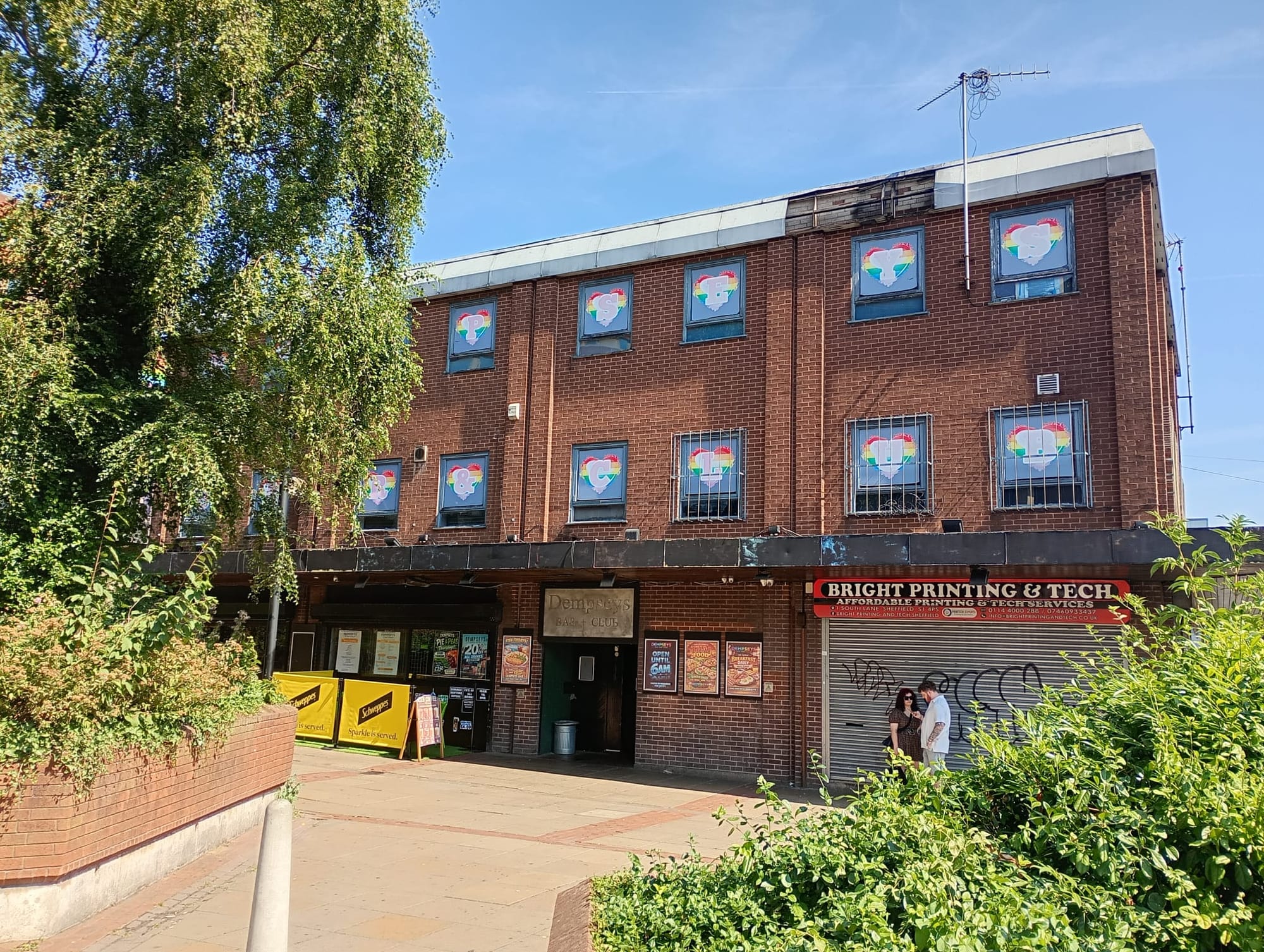
If the crime problem truly has been dealt with, does that mean that Sheffield’s gay quarter is primed for a comeback? After all, at a full council meeting on 20 July 2022, Sheffield’s councillors voted in favour of helping to develop a LGBTQ+ quarter in the city — slightly bizarrely, given one already existed at that time. The motion asked the council’s Economic Development and Skills Policy (EDSP) committee to “consider looking at starting consultation work with the LGBTQ+ community” about this hypothetical quarter.
Almost four years later, it’s clear this consideration of consultation hasn’t progressed very far. According to Lib Dem councillor Barbara Masters, who sat on the committee in question until earlier this year, the LGBTQ+ quarter had been on the proverbial to-do list since January 2023, languishing without any movement whatsoever.
She raised it consistently during that year, she says we speak on the phone, but discussions were always delayed and postponed. Eventually, in February 2024, the committee was informed by officers that consultation was finally being planned, with workshops expected to take place in September 2024. They never happened.
“It really is frustrating,” she says. “Apart from being told that work is ongoing, getting a firm indication of exactly what is happening as part of the work has been quite challenging.” Certainly, Colin and Kieron say no one from the council has approached them to discuss the idea, and I hear the same from local community group Kweer. The Tribune reached out to the council with a number of questions about the LGBTQ+ quarter and why it had stalled but has yet to receive a response at the time of writing.
Labour councillor Minesh Parekh, another former member of the committee, suggests uncertainty around what would be done with the Moorfoot building delayed the plans, although he also points out that the enthusiasm for the quarter seemed to evaporate after the trouble with police. “It’s not become a political priority because of a lack of external pressure,” he admits, suggesting that businesses like Dempseys pushing for it again could give the proposals some oomph once more.
Colin and Kieron, however, say they have no plans to do so, citing their ages. Indeed, they expect that the redevelopment of the Moorfoot building will one day force them out entirely — justifiably, given an artist’s impression of the scheme produced two years ago suggests their building will be flattened to make way for it. If this does happen, they have no plans to relocate.
While certain members of the LGBTQ+ community might roll their eyes at Dempseys, its closure would be a genuine loss. It would leave this city without a single dedicated queer venue, following the closure of others like DINA and omg Sheffield. The closest thing left would be Gut Level, on Chapel Walk – while not explicitly dedicated to the LGBTQ+ community, it does host a lot of queer events.
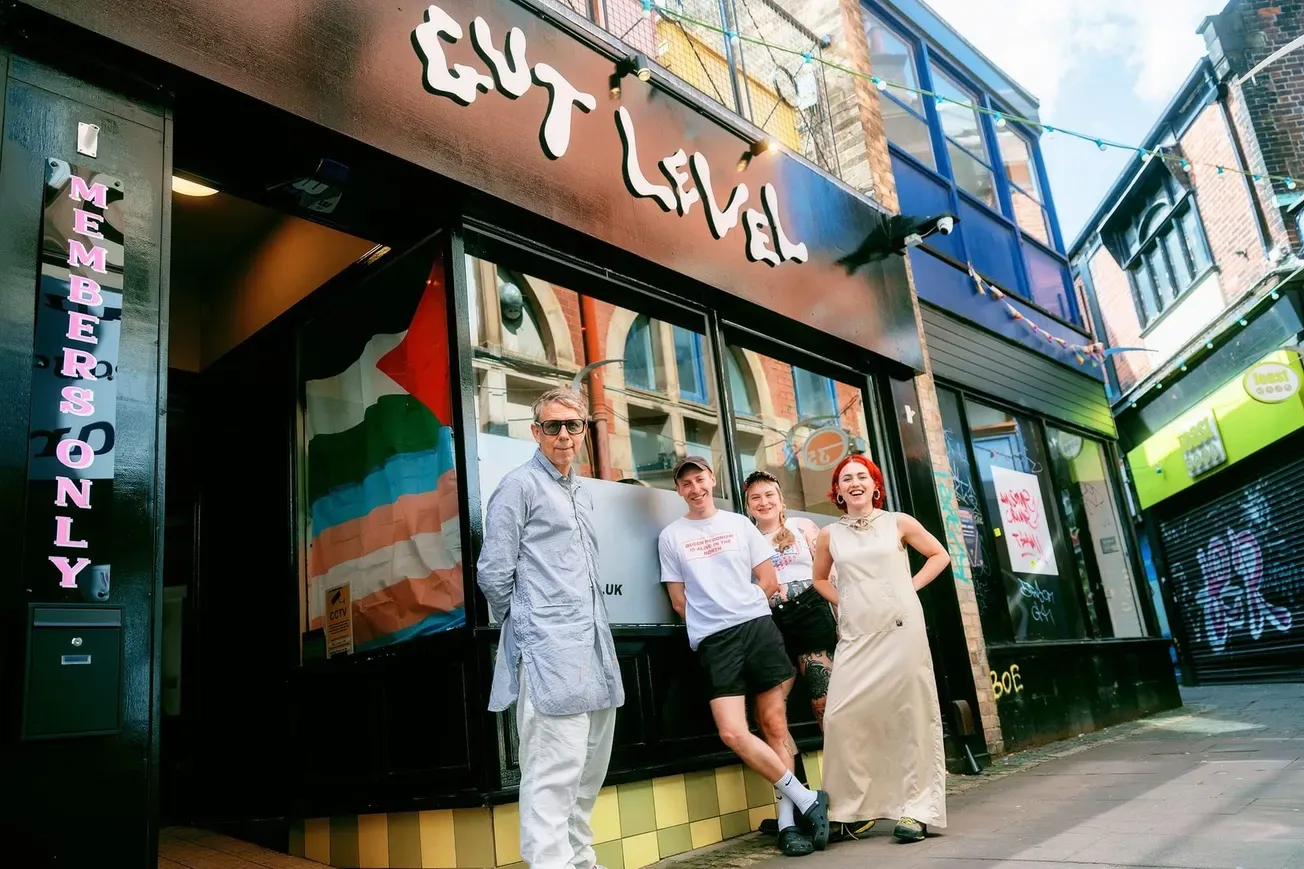
If Dempseys did shut, could Chapel Walk become the new LGBTQ quarter? Frazer Scott, one of the venue’s co-founders, could see it, but feels rather apathetic about the whole concept. “I’ve never spent loads of time in Manchester’s Gay Village or the gay quarter in Leeds,” he says. “I’m more interested in spaces where you can find other queer people, but they’re not necessarily just for queer people.”
He suggests that the reason Sheffield’s gay quarter never took off is that the local LGBTQ+ community connects over shared interests, rather than shared identity markers. “You’ve got groups like Peak Queer Adventures, where people who are into the outdoors can come together. And then there’s Gut Level, which is more of a mixed space for people who are into music.”
If the council does want to push for the development of a LGBTQ Quarter, Frazer says that would need to come with some tangible assistance, not just good wishes. “I really like that Gut Level is next to Juno Books, and I think there’s an opportunity for more queer independent businesses on Chapel Walk,” he concedes. “But unless there's some kind of structural support to establish something, I think we’ll just have to wait to see if something occurs organically.”
Colin and Kieron, meanwhile, say Dempseys will keep going until the day they’re forced to stop. “We’re all right,” Keiron says. “It’s not made us millionaires owning Dempseys, but we were okay before." If push did come to shove, he hopes someone else might step forward to fill the void. "There is still a need for places like this.”
Hi, Dan here. We hope you enjoyed this weekend read about why Sheffield doesn’t have a Gay Quarter. I remember working at The Star when the news of the quarter's arrival was announced with great fanfare in 2018. Eight years later, no one had told the story of why the idea never really got anywhere. That’s where The Tribune comes in. Because of the way we are funded by you, our members, we can commission specialist writers like Alim Kheraj who really know the LGBTQ+ scene and can share their expertise with our readers.
Over the last five years The Tribune has covered many aspects of LBGTQ+ culture, from investigations into why Sheffield doesn't have a Pride and how a local church subjected a young member of their congregation to conversion therapy, to features about the life of gay rights pioneer Edward Carpenter and the story of Sheffield’s first gay bar. If you want us to continue reporting on LGBTQ+ issues, please consider becoming a full member of The Tribune. It costs just £8.95 a month or £89 a year if you pay up front. Thank you.